Best Bobby Pins That Don’t Show or Slip
Top stylists share a well-kept secret. The difference between a hairstyle that falls apart by noon and one that stays flawless all night comes down to a tiny piece of metal. Most people walk into a drugstore, grab the cheapest pack of shiny black pins, and shove them into their hair wavy-side down. By lunchtime, those pins are sliding out, digging into the scalp, and flashing under the office lights.
In my decade behind the chair, I have watched thousands of women struggle with clips that refuse to stay put. The reality is simple. Standard mass-market hair pins lack the tension, coating, and structural design required to hold modern hairstyles. When you invest in premium, professional-grade pins designed specifically for your hair type and color, your styling routine changes completely. You stop adjusting your updos every hour. You get reliable, invisible security that lasts until you take it out at night.
Executive Summary:
Achieving a professional, long-lasting hairstyle requires moving away from generic drugstore clips. This comprehensive guide reveals the industry-tested tools and placement strategies required to keep your hair secure without exposing your styling secrets. You will learn the mechanical differences between traditional pins and modern U-shaped variations, explore real-world performance tests of top professional brands, and master the exact locking techniques used by editorial stylists. Whether managing fine, slick strands that drop every curl or heavy, coarse textures that bend standard metal, this manual provides actionable blueprints to elevate your daily routine. By implementing these specific tools and adjustments, you will eliminate slippage, protect your scalp from damage, and create flawless updos that remain rock-solid through long workdays and high-energy events.
Why Do Standard Bobby Pins Constantly Slide Out of Your Hair?
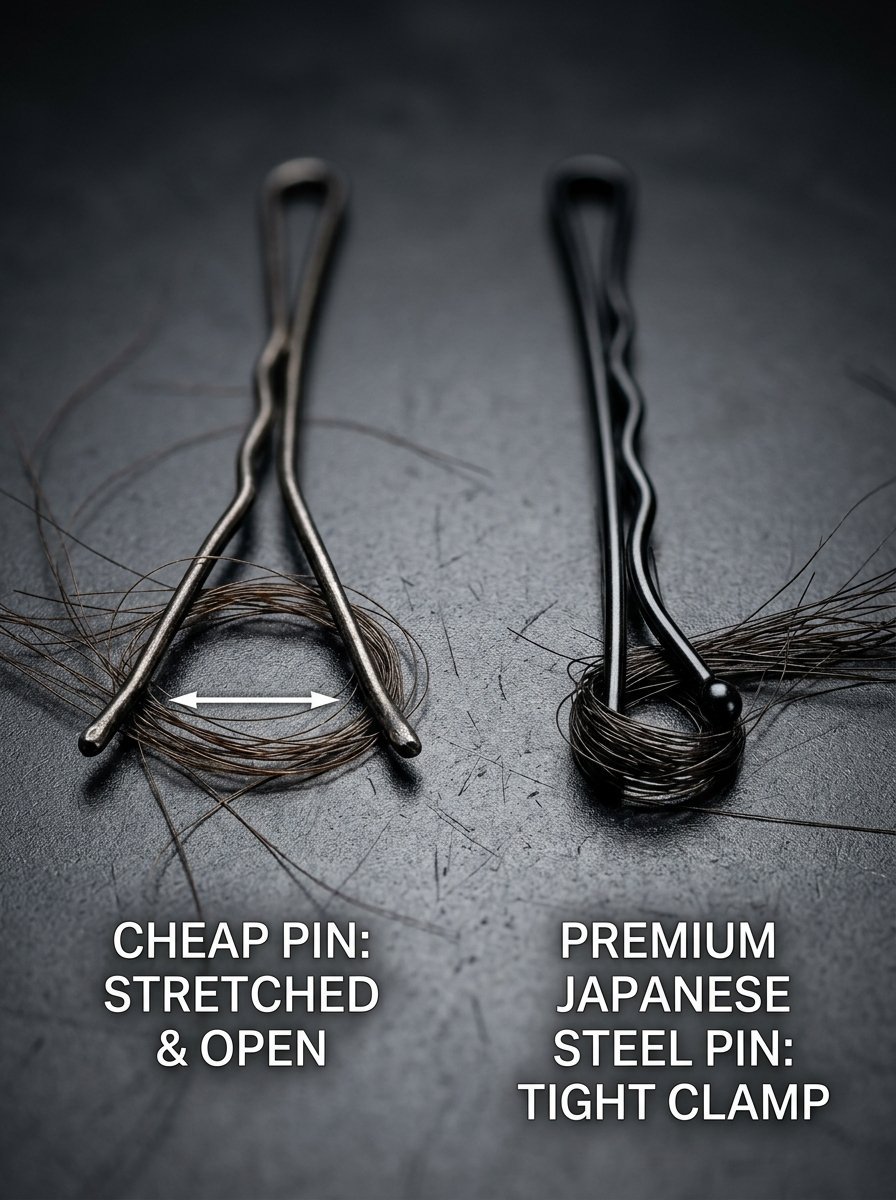
The primary reason your hair drops its structure is poor clamping pressure. Standard retail options use low-tensile wire that permanently stretches open after just two uses. Once the metal loses its spring memory, it can no longer exert the force needed to grip your strands against gravity.
Another massive failure point is the quality of the protective tips. Cheaply manufactured clips feature thin, dipped plastic balls at the ends that peel away quickly. The exposed raw metal edges scrape the scalp, create friction, and slice through the hair cuticle, leading to localized breakage. Professional versions utilize baked-on, spherical nylon tips that remain intact for years, ensuring smooth insertion without snagging.
The slick paint finish on basic pins also works against your style. Without a proper tactile coating, smooth steel simply glides off the hair shaft, especially if you use conditioning oils or silicone-based serums. Premium editorial options feature a matte, rubberized exterior layer that grips the microscopic scales of your hair, creating friction that locks the pin in place.
How to Select the Exact Hair Pin for Your Specific Hair Type
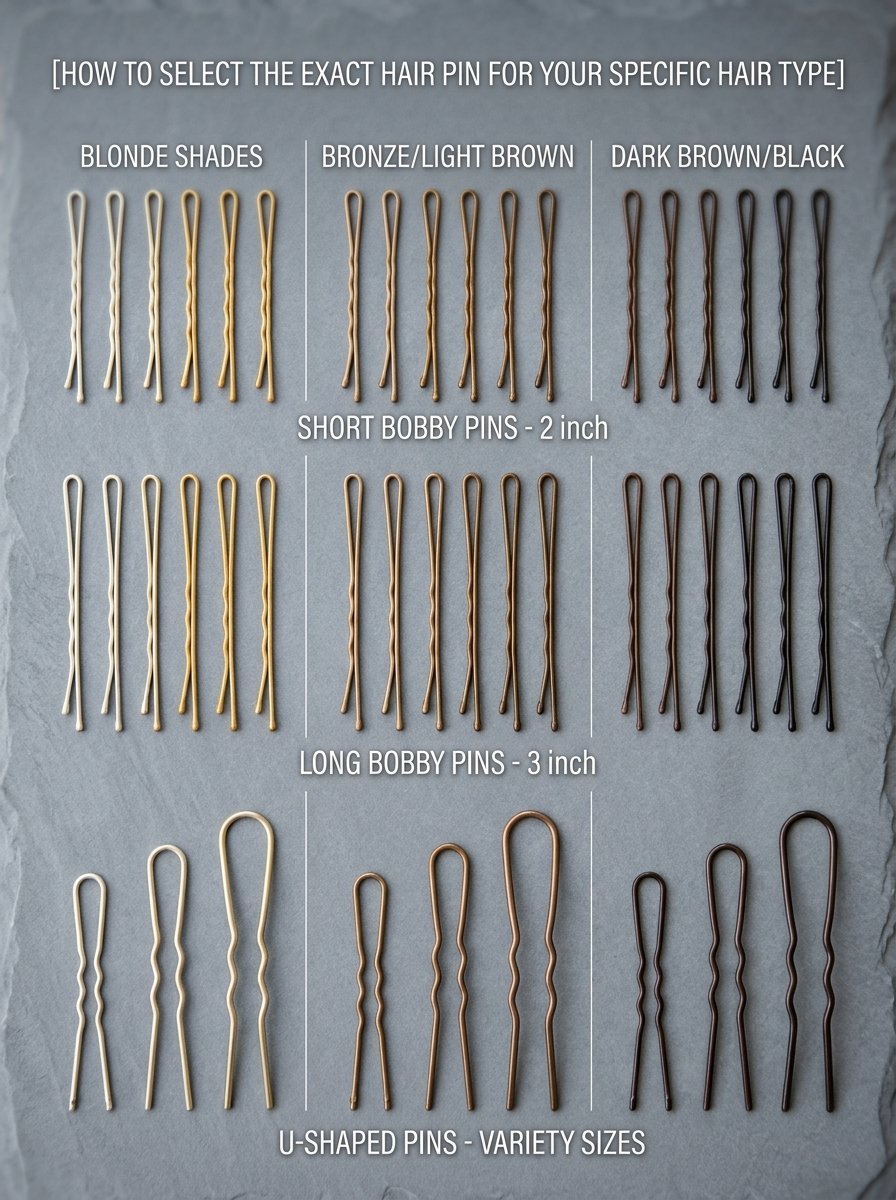
Matching the tool to your specific hair texture prevents styling frustration and unnecessary scalp pressure. Fine, slippery hair requires different structural support than thick, coarse coils.
- Fine, Limp Hair: Needs short, lightweight variations with aggressive internal ridges. Long or heavy pins will weigh down thin sections, pulling the roots flat and exposing the metal line.
- Thick, Heavy Textures: Requires heavy-duty, long industrial steel pins. These options feature wide gap openings that can swallow large amounts of bulk without bending out of shape.
- Textured and Coily Hair: Profits immensely from corrugated, extra-wide pins that nestle into the natural curl pattern, using the hair’s own volume as an anchor.
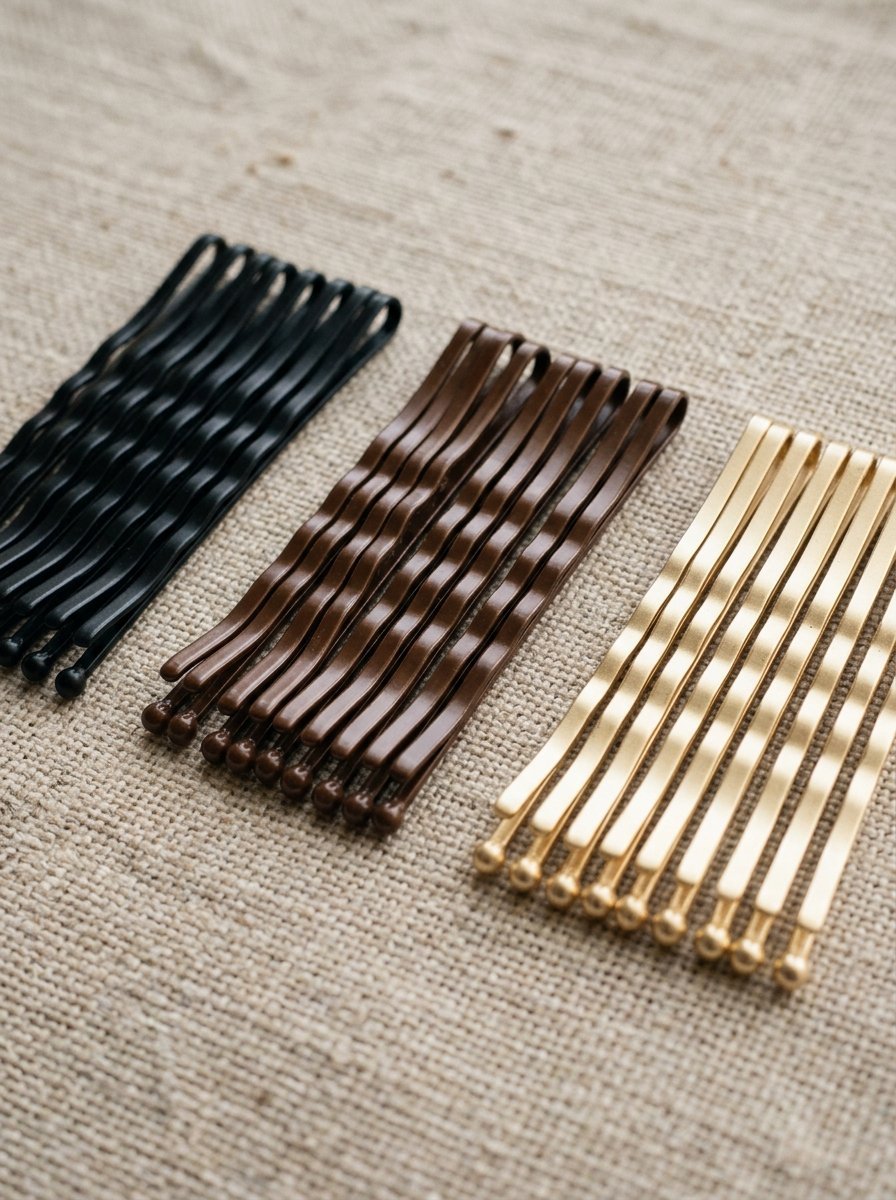
Color matching is the next crucial step for an invisible finish. Never buy generic black clips unless your hair is truly jet black. True brunette tones require deep brown or mocha finishes that absorb light rather than reflecting it. Blonde hair demands champagne or soft gold tones, while redheads need warm copper or bronze options to ensure total concealment.
The Definitive Professional Testing Review of Top Hair Pin Brands
Finding the right tools requires looking past marketing claims. I tested eight major market options over three months on busy wedding clients to see which ones actually hold up.
| Brand & Line | Retail Cost Range | Real Tension Rating | Best Performance Match | Major Drawback |
| Diane Professional | $7 – $9 (per box) | 9.5 / 10 | Heavy, long hair styling | Hard to open initially |
| Meta Grip Premium | $10 – $12 (per tub) | 9.0 / 10 | All-day active wear | Matte finish wears down |
| Marianna Professional | $8 – $11 (per box) | 8.5 / 10 | Daily styling, fine hair | Tips can chip after a year |
| Sta-Rite Cushium | $6 – $8 (per pack) | 8.0 / 10 | Sensitive scalps | Lower overall capacity |
| Bunheads Hair Pins | $9 – $11 (per pack) | 9.8 / 10 | Heavy ballet buns | Too rigid for casual styles |
| Milly Green Tortoise | $12 – $15 (set) | 7.0 / 10 | Decorative top layers | Expensive per unit |
| Scunci Effortless | $4 – $6 (per pack) | 5.5 / 10 | Temporary quick fixes | Stretches out very fast |
| Goody Ouchless | $3 – $5 (per pack) | 6.0 / 10 | Light, casual use | Tips peel off easily |
Meta Grip Premium Roller Pins
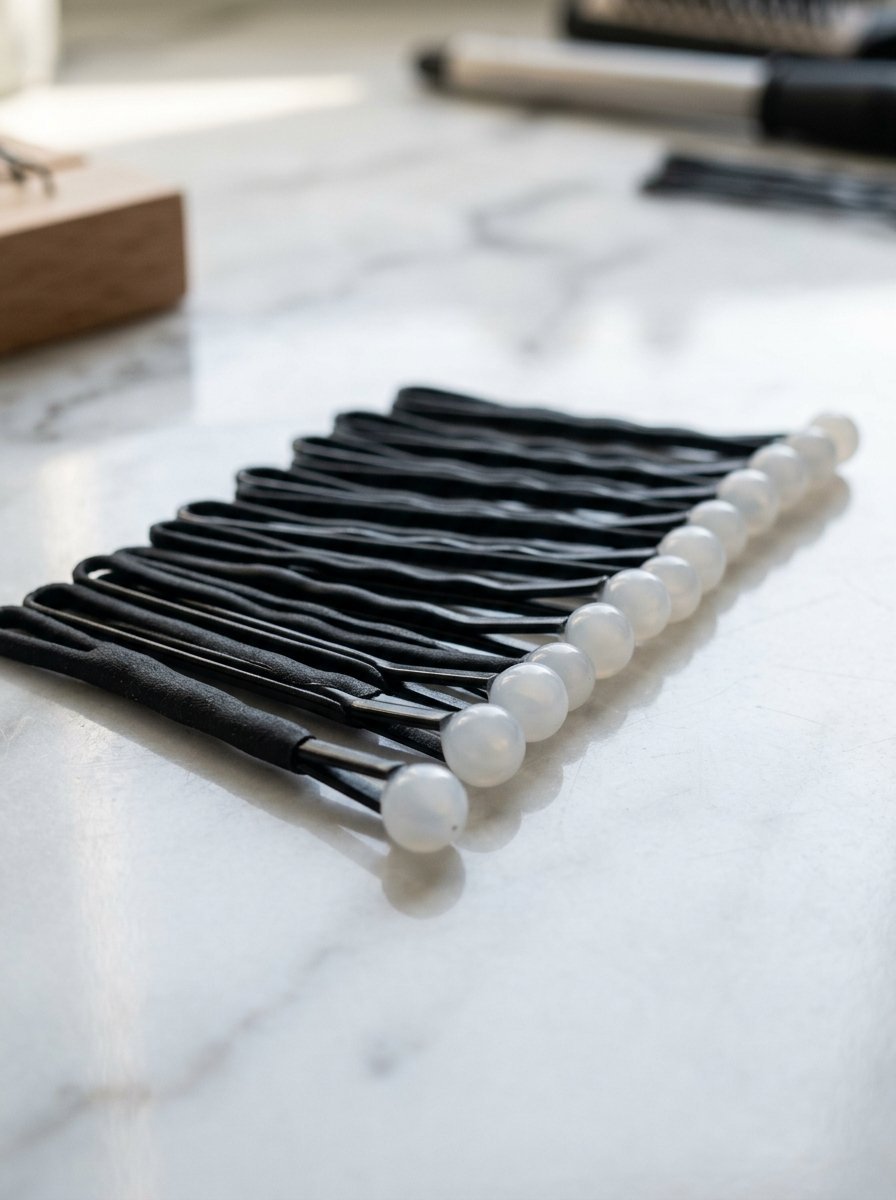
These are the gold standard for session stylists. Made from high-grade Japanese steel, they retain their original shape even after holding thick, heavy sections. The rubberized matte paint layer provides incredible grip on clean, slippery hair, making them excellent for active days.
Diane Professional Long Pins
Measuring three inches in length, these extra-long options are built for heavy lifting. If you are creating large French twists or securing thick extensions, Diane pins deliver the required depth and grip. They feature deep, continuous waves along the side to maximize friction.
Bunheads U-Shaped Professional Pins
Designed specifically for dancers, these heavy-weight U-shaped options provide unmatched security for buns. They do not pinch the hair; instead, they weave through the structural base of the style to distribute weight evenly across the scalp, preventing tension headaches.
Step-by-Step Styling Tutorial for an Invisible, Slip-Proof Lock
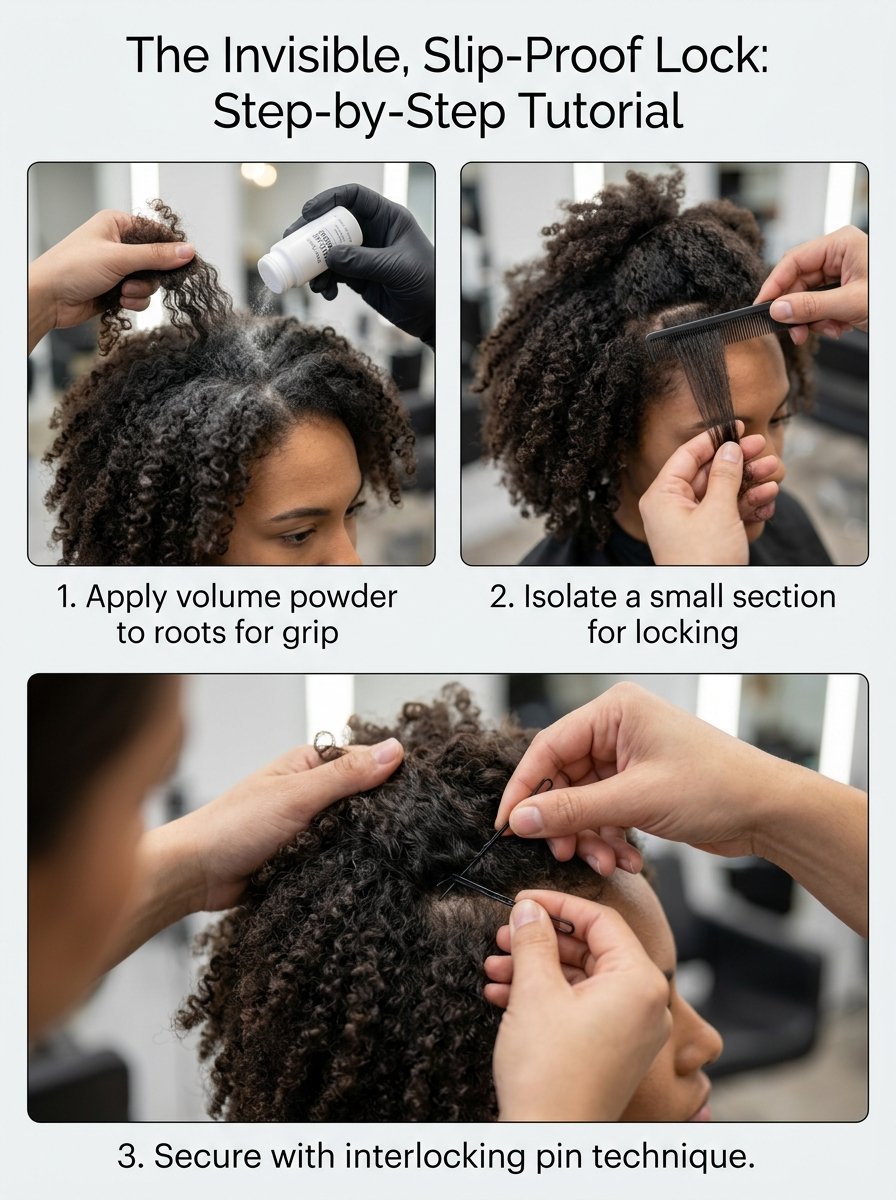
The secret to a rock-solid hairstyle lies in proper application technique rather than using more products. Follow this precise method to lock your hair into place permanently.
1. Prepare the Foundation Texture
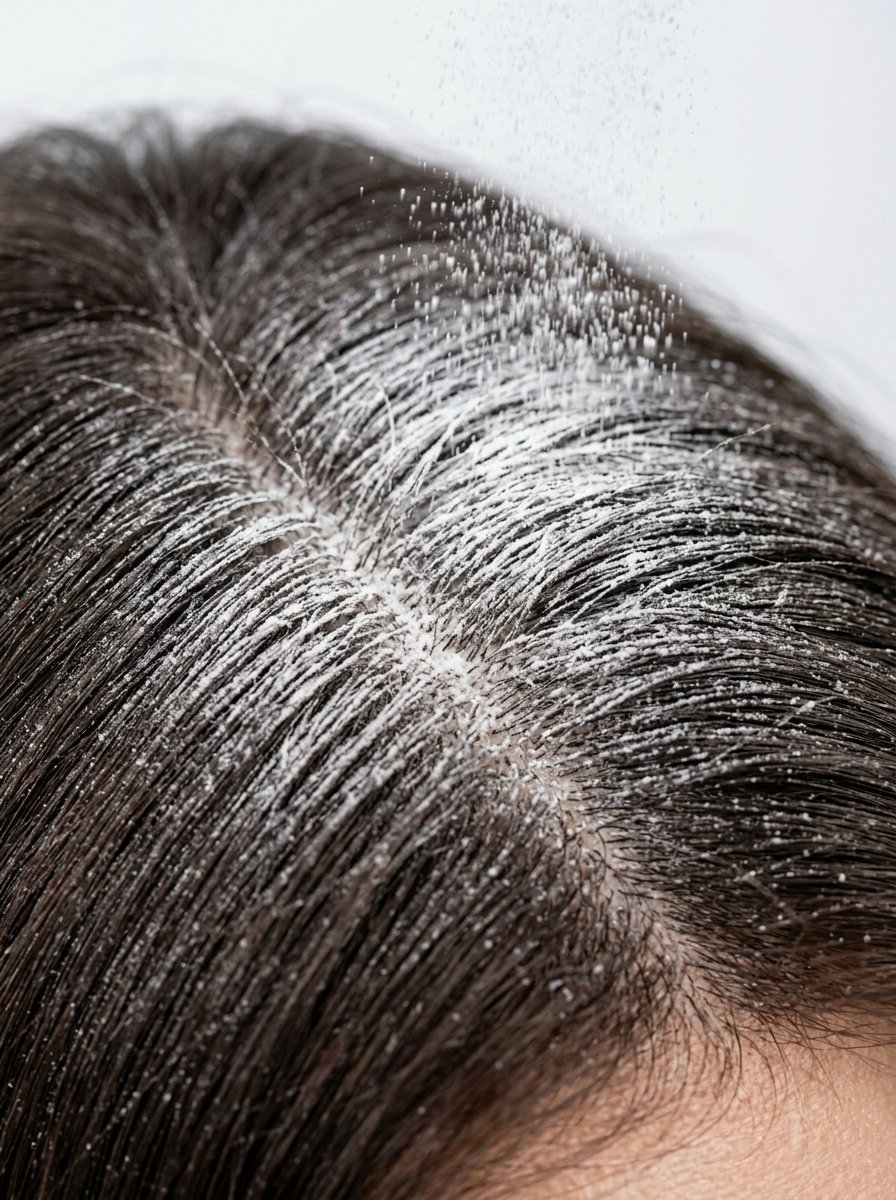
Never try to pin freshly washed, silky hair without adding grit first. Spray the target section with a dry texturizing spray or a light dust of volumizing powder. This thickens the individual strands, creating an anchor point for the metal to grab onto.
2. Face the Wavy Side Against the Scalp
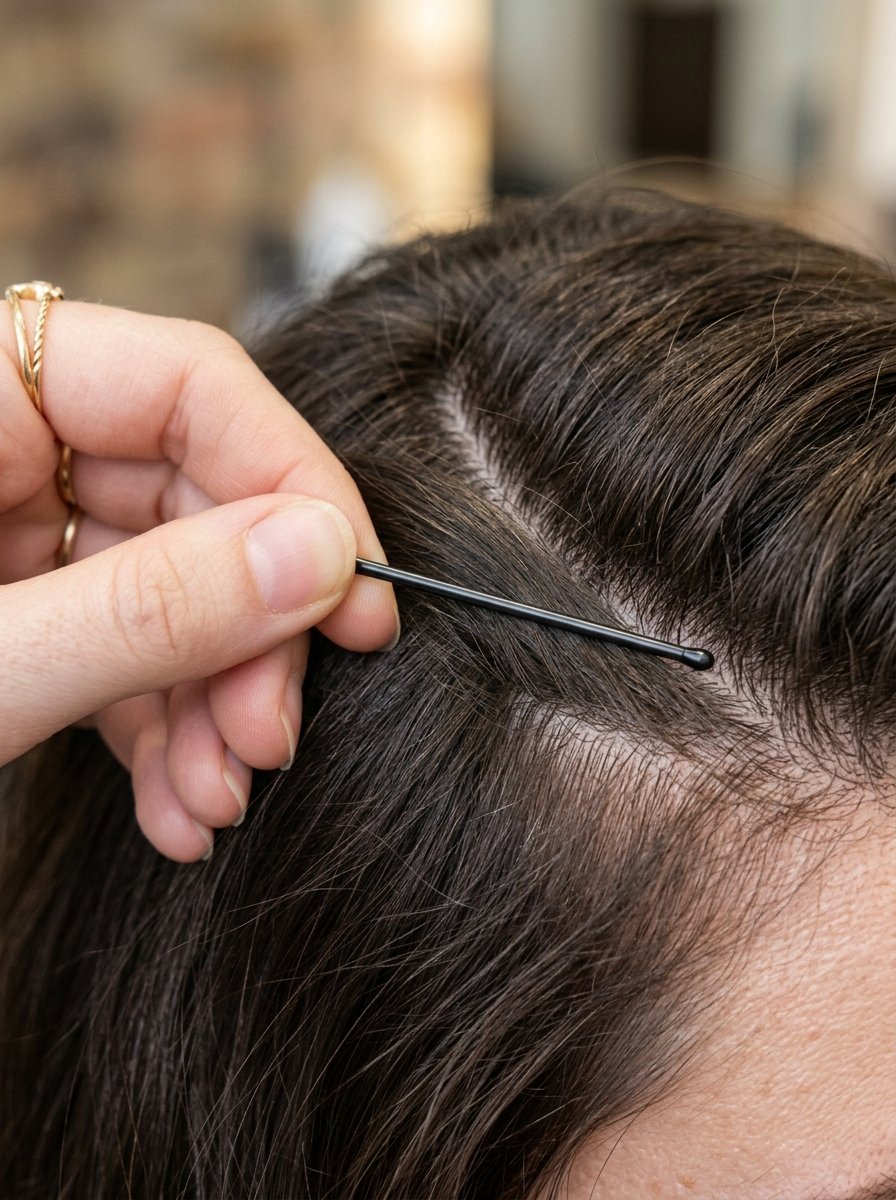
The wavy ridge design is engineered to sit directly against your head. The waves compress the hair underneath, while the smooth flat side holds the top layer down cleanly. Flipping the pin upside down reduces its holding power by half.
3. Utilize the Interlocking X-Method
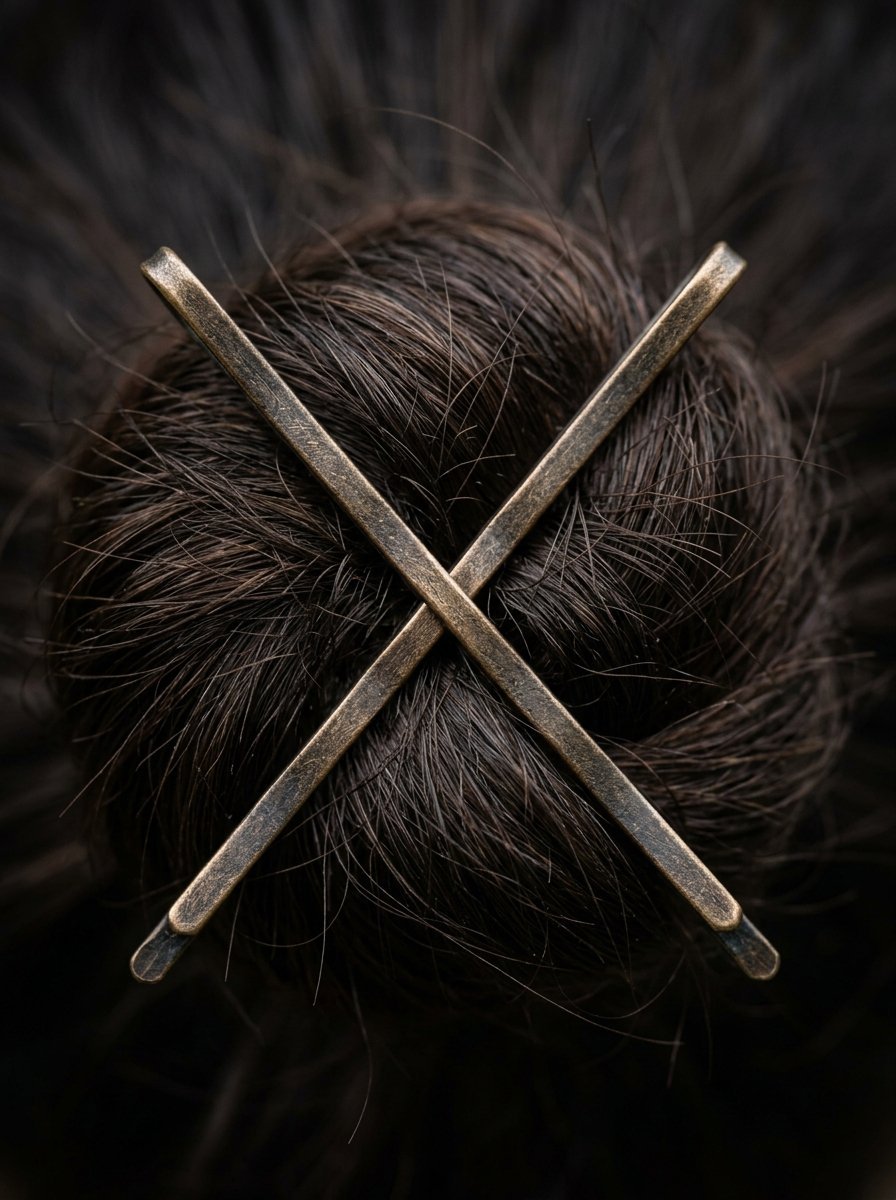
To secure a high-stress area like the base of a pony or a heavy twist, insert the first pin at a forty-five-degree angle pointing downward. Take a second pin and push it across the first one in the opposite direction, creating a clean X-shape. This interlocks the steel bars, making it impossible for either to slide out.
4. Master the Reverse Insertion Movement
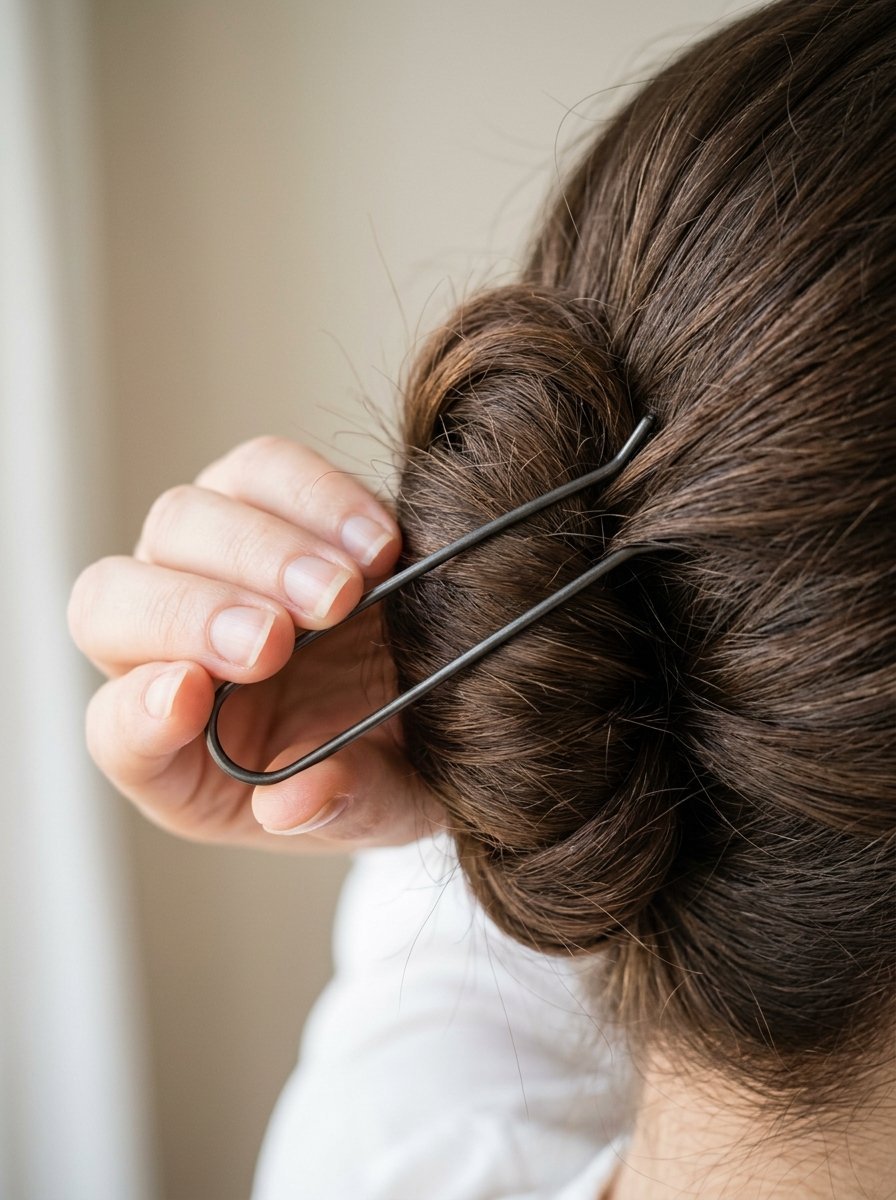
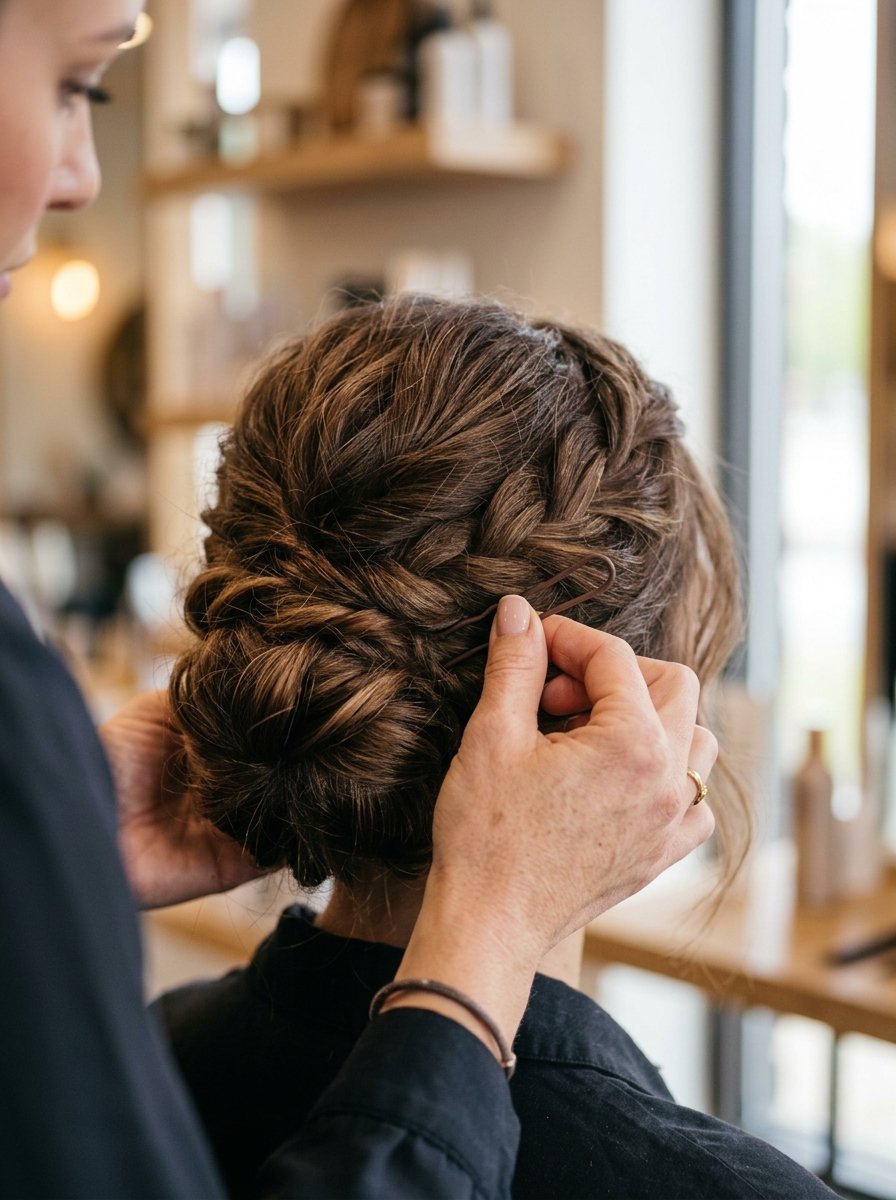
When securing a bun or roll, push the pin outward away from the center of the style first, catching a small piece of the outer hair. Twist the pin one hundred and eighty degrees toward the scalp, then push it deeply inward into the dense core of the style to lock it completely.
The Critical Differences Between Traditional Bobby Pins and U-Shaped Hair Pins
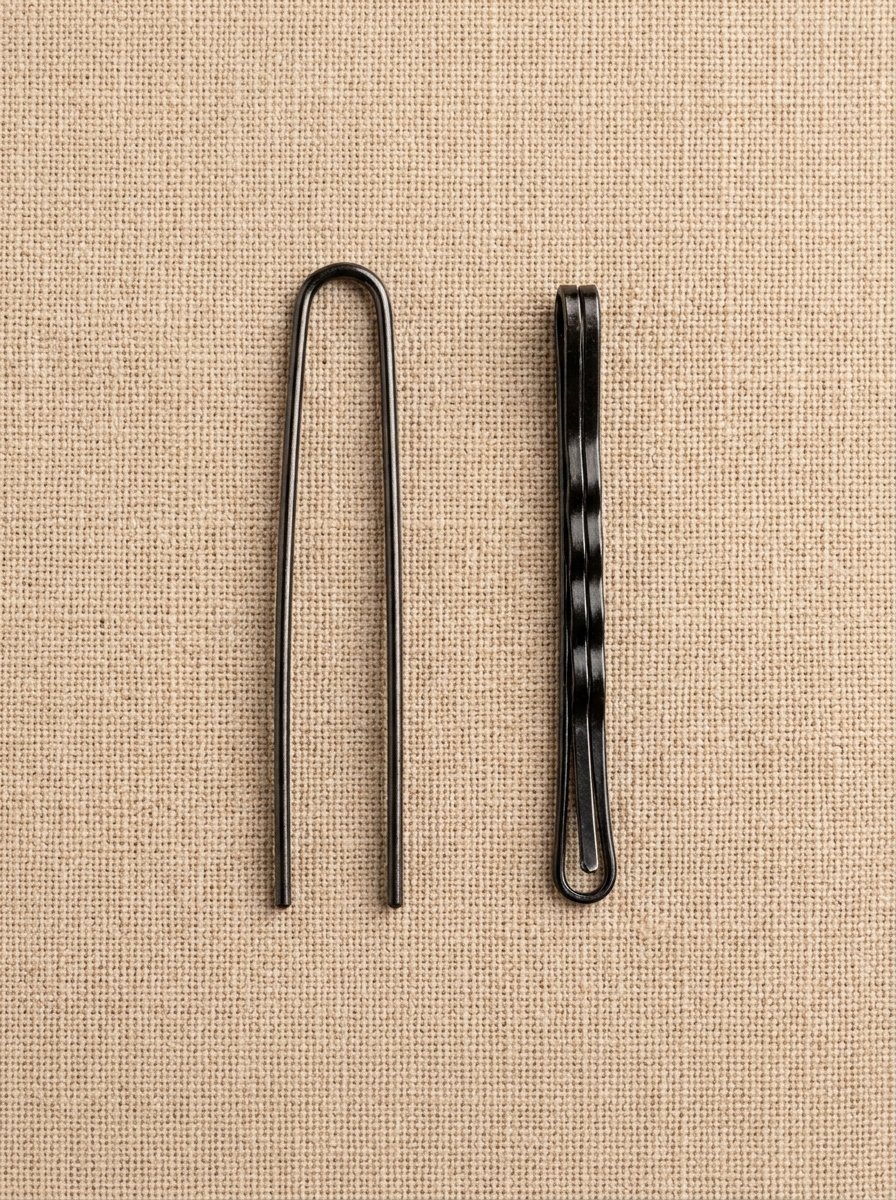
Choosing between a standard bobby pin and a U-shaped pin depends entirely on what you want your hairstyle to do. They serve completely different structural purposes.
Traditional bobby pins are designed with tight, closed prongs that touch from end to end. This design functions as a high-pressure clamp, intended to flat-pin small sections of hair flush against the scalp, secure flyaways, or lock down the ends of braids. Because the compression is concentrated in a tight space, using too many can cause discomfort and flatten out your volume.
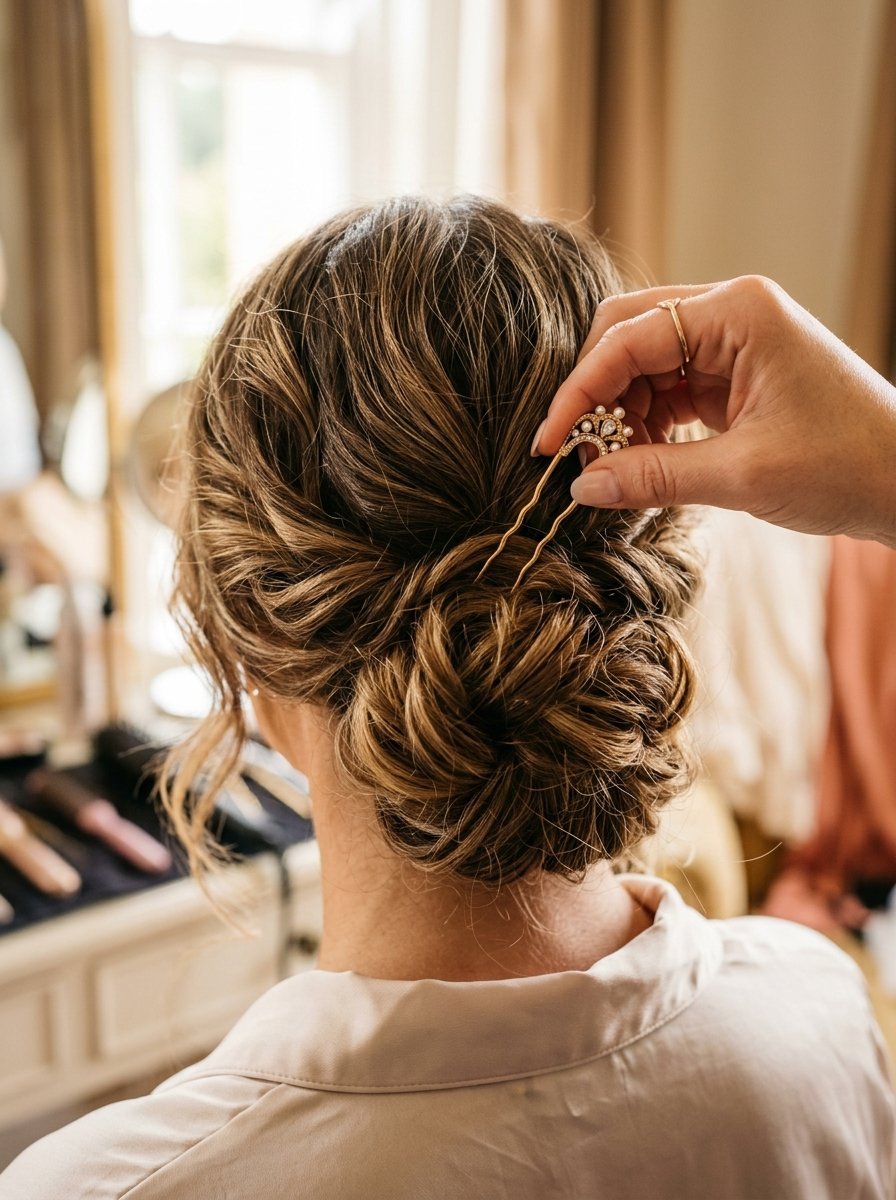
In contrast, U-shaped pins feature wide, open, parallel prongs that do not squeeze together. They secure hair by weaving through the outer layers of an updo and anchoring them into the dense base closer to the scalp. This makes them ideal for maintaining plush, airy volume in messy buns, chignons, or romantic twists without squashing your natural shape.
Real-World Failure Points and How to Fix Them
Even with premium tools, styling mistakes can still cause your look to fall apart. Recognizing these issues early allows you to make quick adjustments.
- Problem: The pin keeps popping out backward away from the scalp.
- Root Cause: You gathered too much hair between the prongs. The steel wire has reached its mechanical elastic limit, causing the metal to spring backward to relieve the tension.
- Solution: Remove the pin, use half the amount of hair, and use two separate pins instead of overloading one.
- Problem: Visible metal showing through your updos.
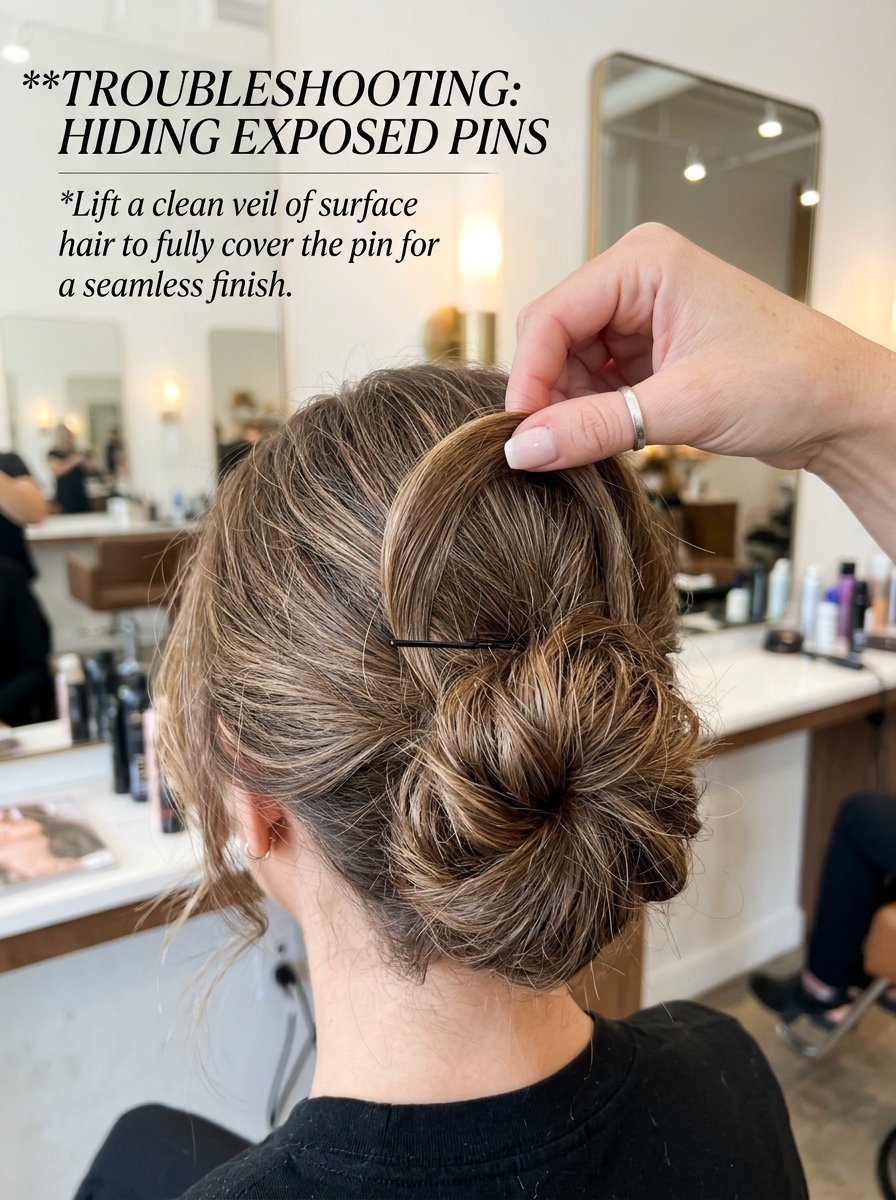
- Root Cause: The pin was pushed straight down over the top layer of hair.
- Solution: Use your fingers to lift a tiny veil of surface hair, slide the pin underneath into the base structure, and let the top veil fall naturally over the metal to hide it completely.
Frequently Asked Questions
Should you open a bobby pin with your teeth before inserting it?
No. Using your teeth damages your enamel and strips away the protective nylon tips of the pin. More importantly, pulling the prongs wide apart stretches the metal spring past its recovery point, permanently weakening its grip before it even touches your hair. Slide the pin directly into the hair using your fingertips to split the prongs slightly.
Why does my scalp hurt after wearing pins for a few hours?
Scalp pain occurs when too much hair is pulled into a single clip, creating localized tension on the hair follicles. It can also happen if the sharp metal tips scrape against your skin because the protective coatings have worn off. Switch to heavy-duty U-shaped pins to distribute the weight of your updo more evenly.
How do you clean and maintain hair accessories to prevent rust?
Hair pins collect oils, sweat, and hairspray residue, which degrades their coating over time. Soak your clips in warm water mixed with a few drops of clarifying shampoo once a month. Wipe each one completely dry with a microfiber cloth immediately to prevent rust, and store them in a dry container rather than a humid bathroom.
Can you reuse professional hair pins indefinitely?
Professional high-tensile steel options last significantly longer than drugstore packs, but they do have a limit. Test them by squeezing the prongs together; if the tips do not spring back to touch each other cleanly, the metal memory is spent. Discard stretched pins to keep your styles from slipping.
What is the best way to secure fine hair without using hairspray?
Use dry texturizing powders or matte clay at the roots to create natural grip. Select shorter, lightweight blonde or brunette-matched pins, and use the interlocking X-method to lock the strands mechanically without relying on stiff chemical sprays.
Why do pins slip out of clean hair so easily?
Freshly washed hair is smooth, hydrated, and lacks natural oils or friction. The metal prongs have nothing to grip onto, causing them to slide down the hair shaft. Style your hair on the second day after washing, or add grip using a dry sea salt spray before pinning.
Are plastic hair pins better for your hair than steel options?
Plastic options are gentler on sensitive scalps and completely rust-proof, but they lack the clamping pressure of high-tensile steel. Use plastic pins only for light, casual lounge styles or in wet environments like the shower. Rely on professional steel for complex, long-lasting updos.
How do I know if I need a long or short bobby pin?
Choose based on the thickness of the hair section you are securing. Short options work best for securing small details, fine side fringes, or the ends of braids. Long, heavy-duty variations are necessary for securing the main weight of thick twists, heavy buns, or dense hair extensions.
Can hair pins cause permanent hair loss or thinning?
Consistently pinning hair tightly in the exact same spot every day can cause traction alopecia, a form of gradual hair loss caused by constant pulling on the roots. Vary your hairstyles, avoid pushing clips too tightly against the scalp, and give your hair breaks between structured updos.
What color pin should I use for highlighted or balayage hair?
Match the pin to the shade of the hair at the roots where the clip will actually sit. If your roots are dark brown and your ends are blonde, choose deep brunette options so the base blends seamlessly into your scalp area.
Is it necessary to spray bobby pins with hairspray before using them?
This is a popular internet tip, but it is unnecessary if you use high-quality, rubberized matte pins. Hairspray creates a sticky surface that can cause strands to glue themselves to the metal, leading to hair snaps and breakage when you pull the pin out at night.
What should I do if my hair is too thick for standard updos?
Switch your toolkit completely from traditional bobby pins to long, industrial-grade U-shaped pins and thick hair rubber bands. Create a secure base using the rubber bands first, then weave the U-shaped pins into the elastic foundation to distribute the weight safely.
Final Steps for Styling Confidence

Securing an elegant style does not require an entire box of cheap clips or half a can of stiff hairspray. True styling confidence comes from understanding the physics of hair movement and using professional-grade tools designed for the job. By upgrading to high-tensile, color-matched pins, using the wavy side down, and mastering the interlocking X-method, you can create beautiful updos that stay put all day. Try these adjustments during your next styling session, and enjoy a flawless, secure look that lasts.

Sarah Mitchell — Founder & Editor-in-Chief
Sarah Mitchell is the founder and editorial voice behind Hair Level Up. A licensed cosmetologist with more than 15 years of experience, she has styled A-list celebrities for editorial shoots and red carpets, with work featured in Vogue, Elle, and Harper’s Bazaar. Early in her career, she trained under the legendary hairstylist Oribe in New York, an apprenticeship that still shapes her editorial eye today. Sarah founded Hair Level Up in 2020 after one bad haircut convinced her that women deserved a destination that felt like a magazine, taught like a stylist, and inspired like an art gallery. She oversees every story from concept to publication, guided by a simple belief: a good story teaches you something, but a great one makes you feel beautiful while it does.