
Fine Hair Care for Beginners: A Routine That Builds Volume
Most people with fine hair make the same mistake. They load up on heavy masks and thick oils to fix limp strands. This causes the exact opposite of what they want. Fine hair has a small diameter per strand. Heavy products sit on top of the hair shaft. Gravity pulls the hair down, leaving it flat against the scalp within hours.
Getting real fullness requires a shift in strategy. You must focus on weightless moisture and scalp health. This guide breaks down the exact steps to transform flat strands into bouncy, thick-looking hair.
For those seeking extra lift, using velcro rollers can help you achieve thick-looking hair for any event.
Executive Summary
Fine hair requires a specialized care routine that cleanses effectively without stripping moisture. This long-form guide provides an actionable, step-by-step framework designed for beginners to build immediate volume and long-term hair health. You will learn the exact product selection rules, washing techniques, and targeted styling methods that prevent limp strands.
By adjusting your washing frequency, utilizing scalp clarification, and applying lightweight hydration, you can increase visual thickness. The article covers essential tools, common failure points, and a structural weekly routine to ensure consistent results.
Why Does Fine Hair Get Flat So Fast?
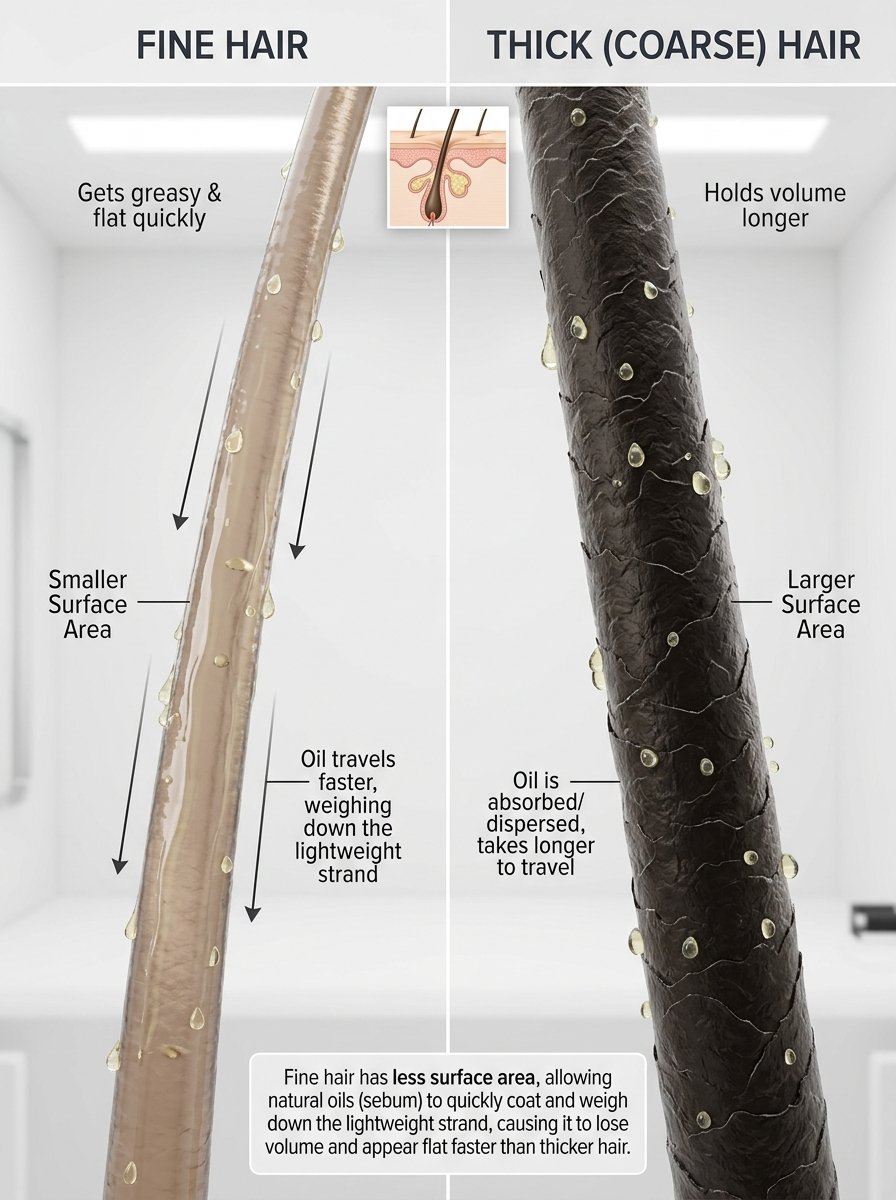
Fine hair gets oily quickly because of anatomy. Each hair follicle has an attached sebaceous gland. This gland produces natural oil called sebum. People with fine hair typically have more hair strands per square inch than people with coarse hair. More strands mean more oil glands pumping sebum onto the scalp.
The smooth, narrow surface of fine hair allows oil to travel down the shaft effortlessly. Within 24 hours, this buildup weighs down the roots.
In my experience, trying to strip this oil with harsh clarifiers daily causes a rebound effect. The scalp panics, senses dryness, and produces double the oil. I used to shampoo twice a day to fight the grease. My hair became brittle, yet my roots stayed flat. The solution is regulating the scalp environment, not stripping it bare.
1. Switch to a Weightless Cleansing Method
Standard shampoos often contain heavy conditioning agents like silicone. Dimethicone is a common culprit. It coats the hair to create shine, but it acts like a lead weight on fine strands. You need a formula that cleanses the scalp completely while leaving zero residue behind.
Look for bottles labeled as volumizing, clarifying, or balancing. These formulations contain smaller molecular weights that rinse away completely.
- Pre-wash step: Brush your hair thoroughly while it is dry. This moves oils from the scalp down to the dry tips and prevents tangles during washing.
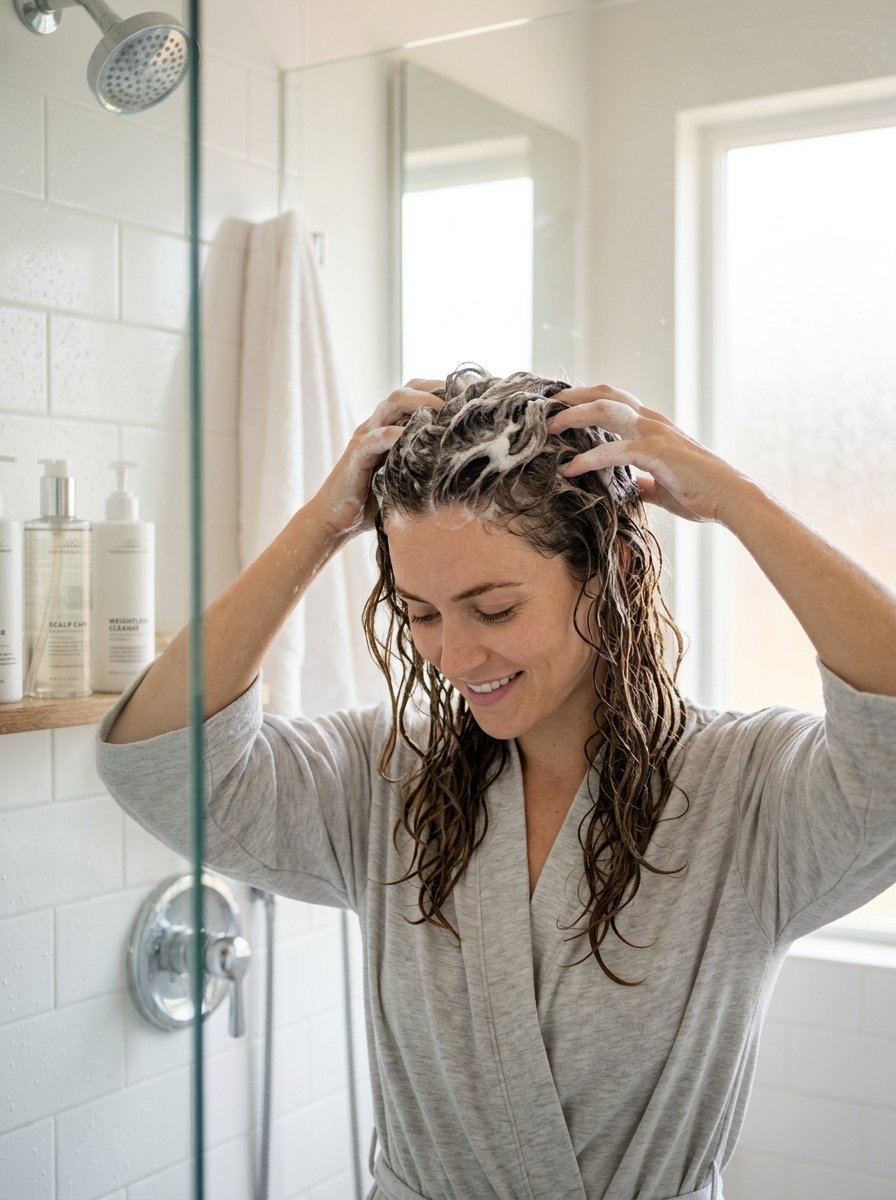
- Application: Apply shampoo only to the scalp. Massage with your fingertips to break up oils. Let the lather run through the ends naturally as you rinse.
- Water temperature: Use lukewarm water. Hot water stimulates the sebaceous glands to produce more oil.
2. Master the Low-Zone Conditioning Rule
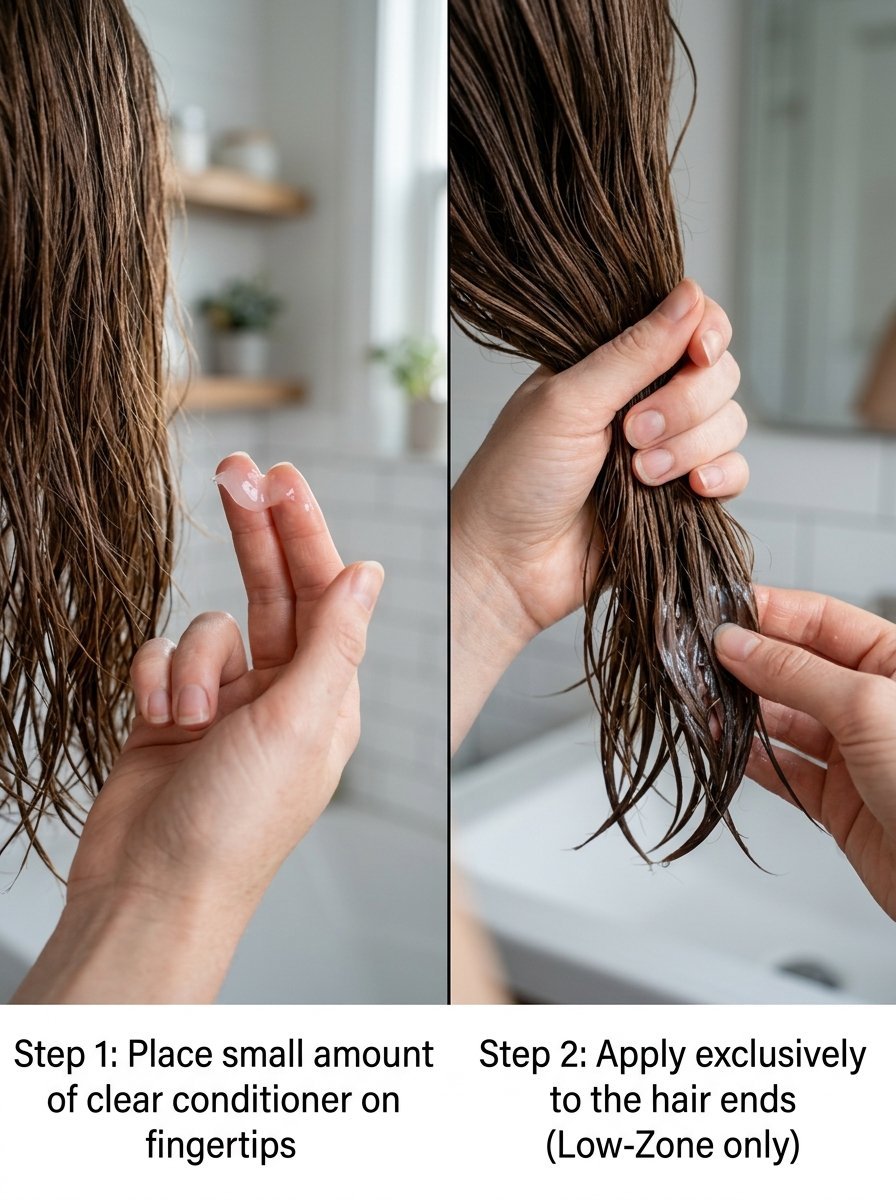
Conditioner is necessary for fine hair to prevent breakage, but placement is everything. Never let conditioner touch your scalp or the upper half of your hair. The scalp produces enough natural sebum to lubricate the roots.
Apply a nickel-sized amount of lightweight conditioner from the ears down to the tips.
- Product selection: Choose formulas containing hydrolyzed proteins or lightweight humectants like glycerin. Avoid products listing shea butter, argan oil, or coconut oil near the top of the ingredients list.
- Rinse timing: Leave the conditioner on for two minutes. Rinse with cool water to close the hair cuticle, which creates natural shine without adding weight.
3. Implement a Weekly Scalp Clarification Routine
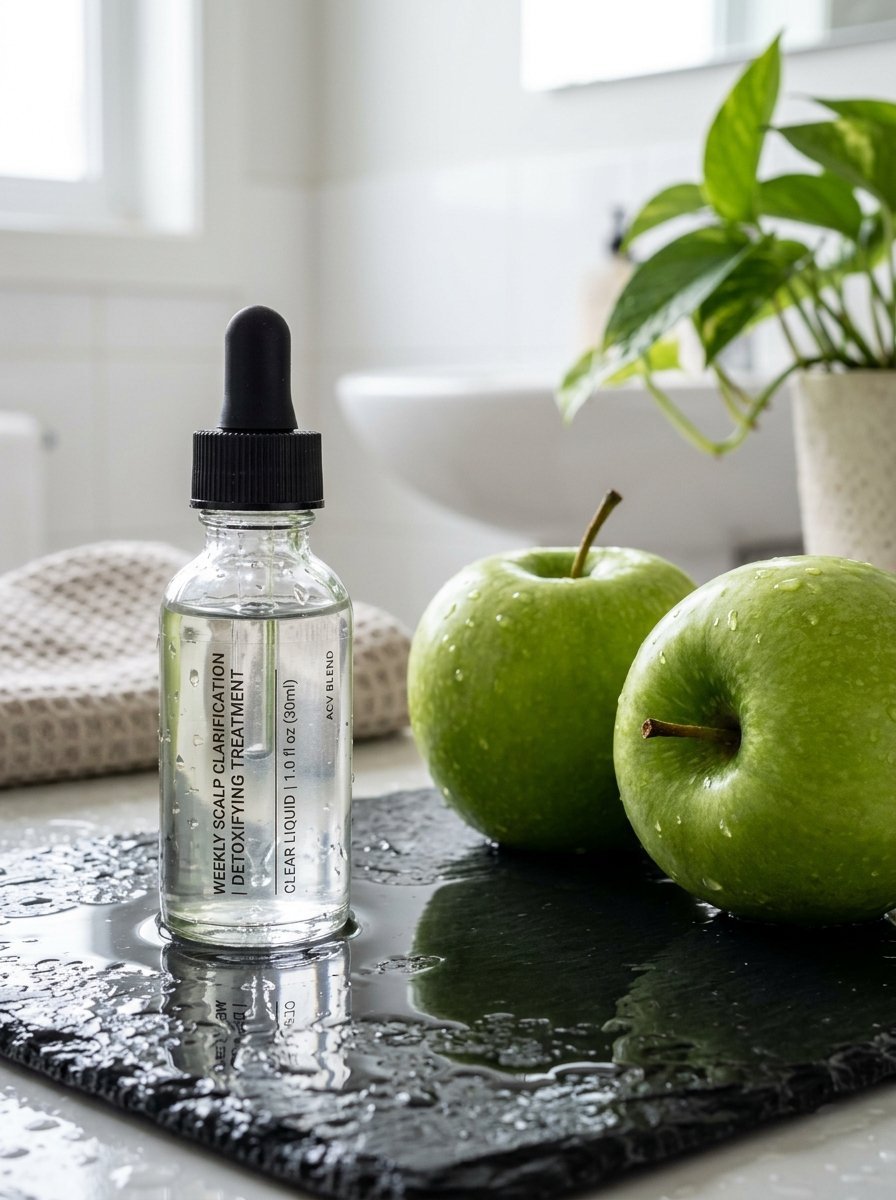
Product buildup, hard water minerals, and dead skin cells collect at the root base. This forms an invisible crust that glues hair down at the scalp. A standard shampoo cannot dissolve this layer. You need a dedicated clarifying treatment once per week.
I noticed a dramatic change in my hair bounce when I added an apple cider vinegar rinse every Sunday. It broke down the styling product film without drying my ends.
- Salicylic acid scrubs: Excellent for oily scalps. They dissolve excess sebum inside the follicle opening.
- ACV rinses: Great for hard water buildup. They restore the natural pH balance of the scalp.
4. Use the Blotting Method for Drying

Fine hair is incredibly weak when wet. Rubbing it vigorously with a standard cotton towel creates friction. This roughs up the cuticle, causing frizz and micro-breakages that make hair look thinner.
- The alternative: Use a microfiber towel or an old cotton t-shirt.
- The action: Press and squeeze the hair sections gently. Do not twist or rub.
- The benefit: This leaves the hair cuticle smooth and flat, preserving the natural strength of the strand.
5. Apply Volumizers Only to Damp Roots
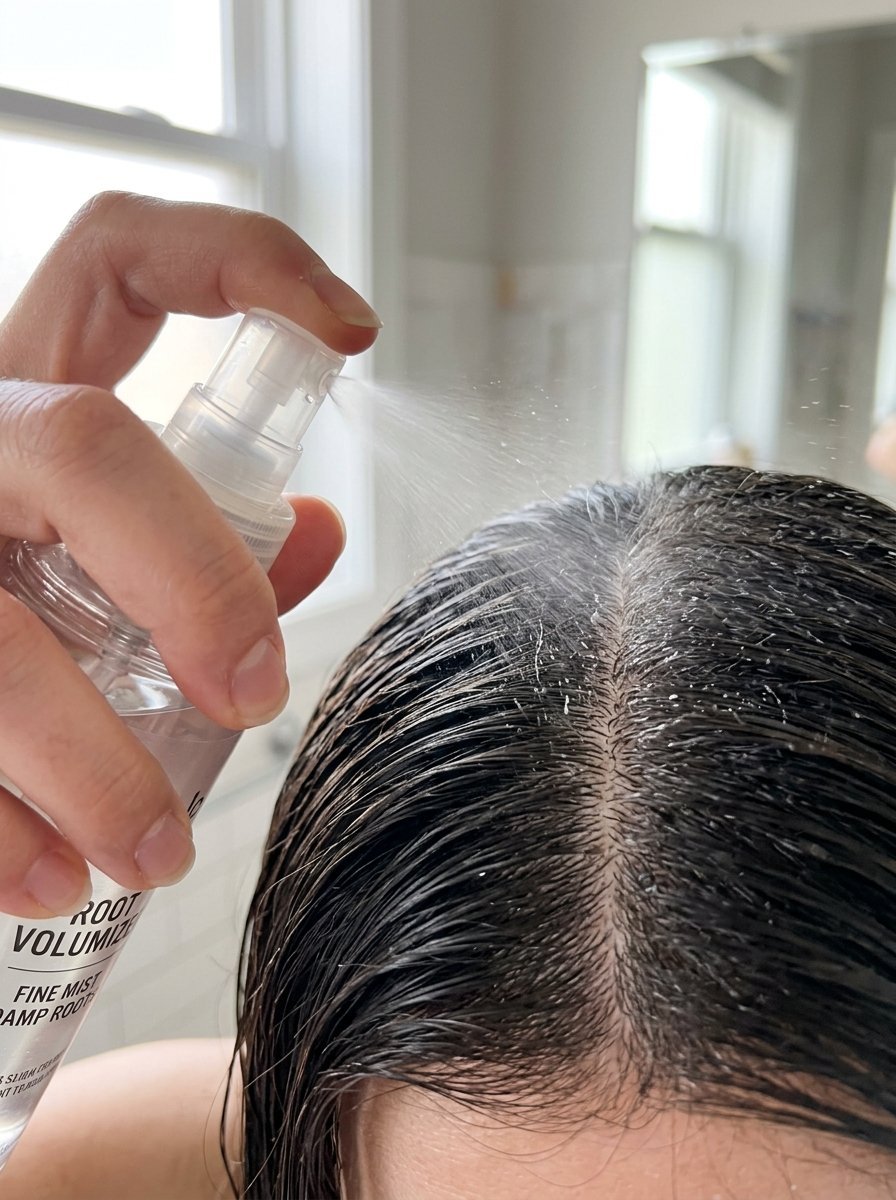
Volumizing sprays, mousses, and root lifters work by creating space between individual hair strands. They contain polymers that coat the base of the hair, making it stiff enough to stand up away from the scalp. They only work correctly when applied to damp hair.
If you apply these products to dry hair, they create a sticky, matte texture that clumps strands together, making the hair look sparser.
- Mousse application: Disperse a golf-ball-sized amount into your palms. Use a wide-tooth comb to rake it through the roots.
- Liquid root sprays: Section the hair at the crown. Spray from 6 inches away directly onto the scalp area.
6. Flip Your Part and Blow Dry Upside Down
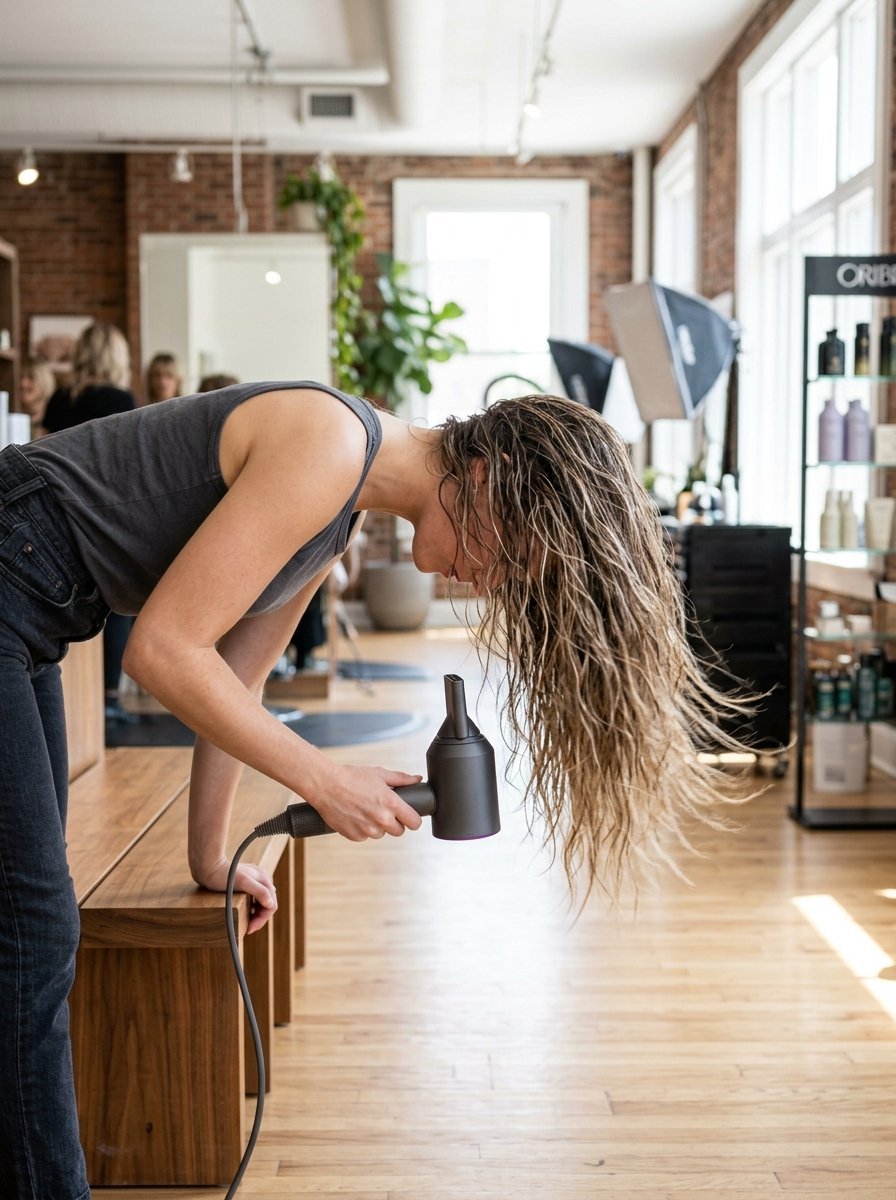
The direction your hair grows determines how it lays. If you part your hair in the exact same spot for years, the roots train themselves to lay flat in that direction.
- The upside-down technique: Flip your head upside down while blow-drying. Direct the warm air from the roots to the ends. This forces the hair follicles to dry in an upward, vertical position.
- The finish: Once the hair is 90% dry, flip back over. Part your hair on the opposite side of your normal part. The roots will resist the new direction, creating instant volume at the front hairline.
7. Choose Hair Oiling Tips Specialized for Fine Strands

Hair oiling is highly popular for hair growth, but standard methods will ruin a fine hair routine. Heavy applications of castor oil or olive oil require three rounds of shampoo to remove, which destroys the hair quality.
- The fine hair oiling method: Use lightweight molecular oils like rosemary oil diluted in jojoba oil or grapeseed oil. Jojoba mirrors the scalp’s natural sebum, so it absorbs easily without leaving a greasy coating.
- Frequency: Limit oiling to once per week before a wash day. Leave it on for a maximum of 45 minutes.
Fine Hair Product Selection Matrix
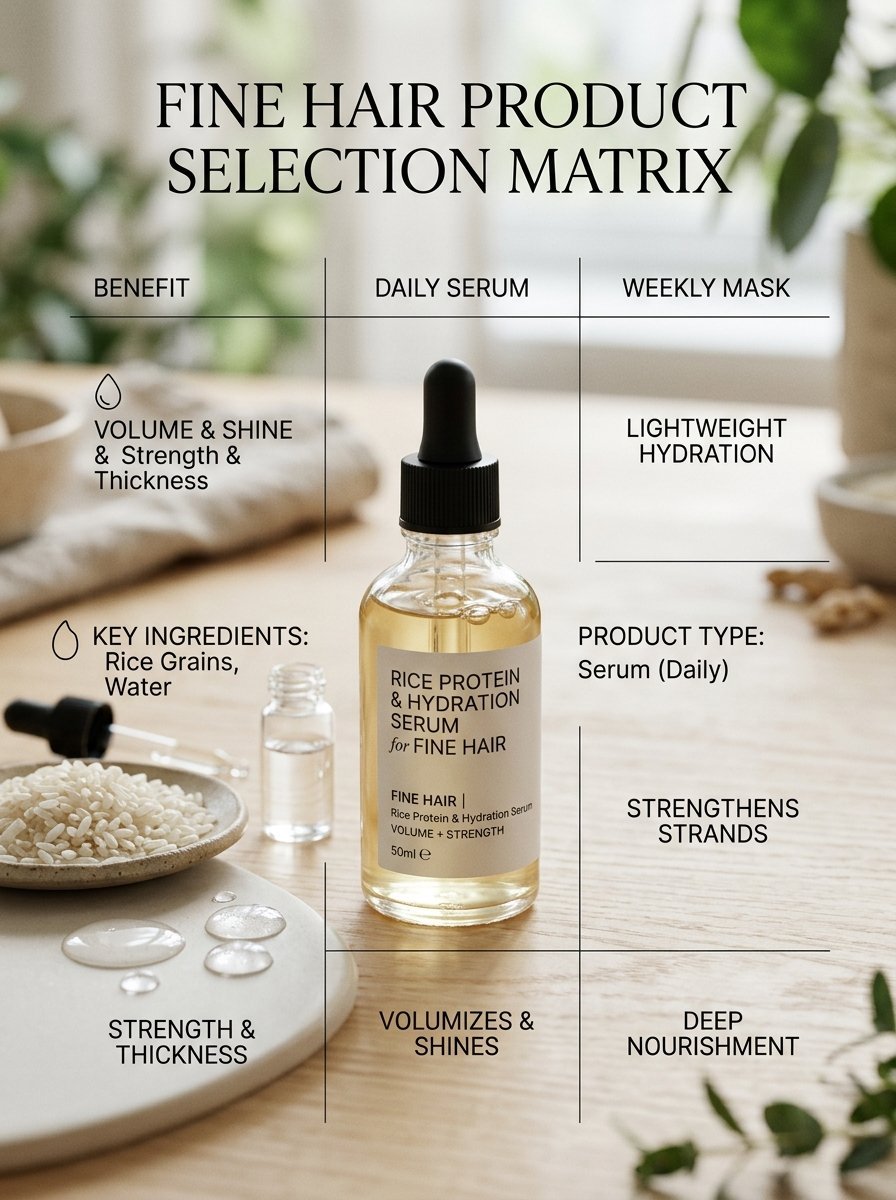
Choosing the right formulas requires reading the ingredient deck carefully. Use this reference to distinguish between products that build volume and products that cause flat hair.
| Product Category | Volume Building Ingredients | Weighting Ingredients to Avoid |
| Shampoo | Sodium Lauroyl Methyl Isethionate, Cocamidopropyl Betaine, Rice Protein | Dimethicone, Cyclomethicone, Cetyl Alcohol |
| Conditioner | Behentrimonium Chloride, Glycerin, Hydrolyzed Wheat Protein | Shea Butter, Coconut Oil, Petroleum |
| Styling | Polyquaternium-11, PVP/VA Copolymer, Tapioca Starch | Argan Oil, Mineral Oil, Beeswax |
Troubleshooting Limp Hair: Common Failure Points
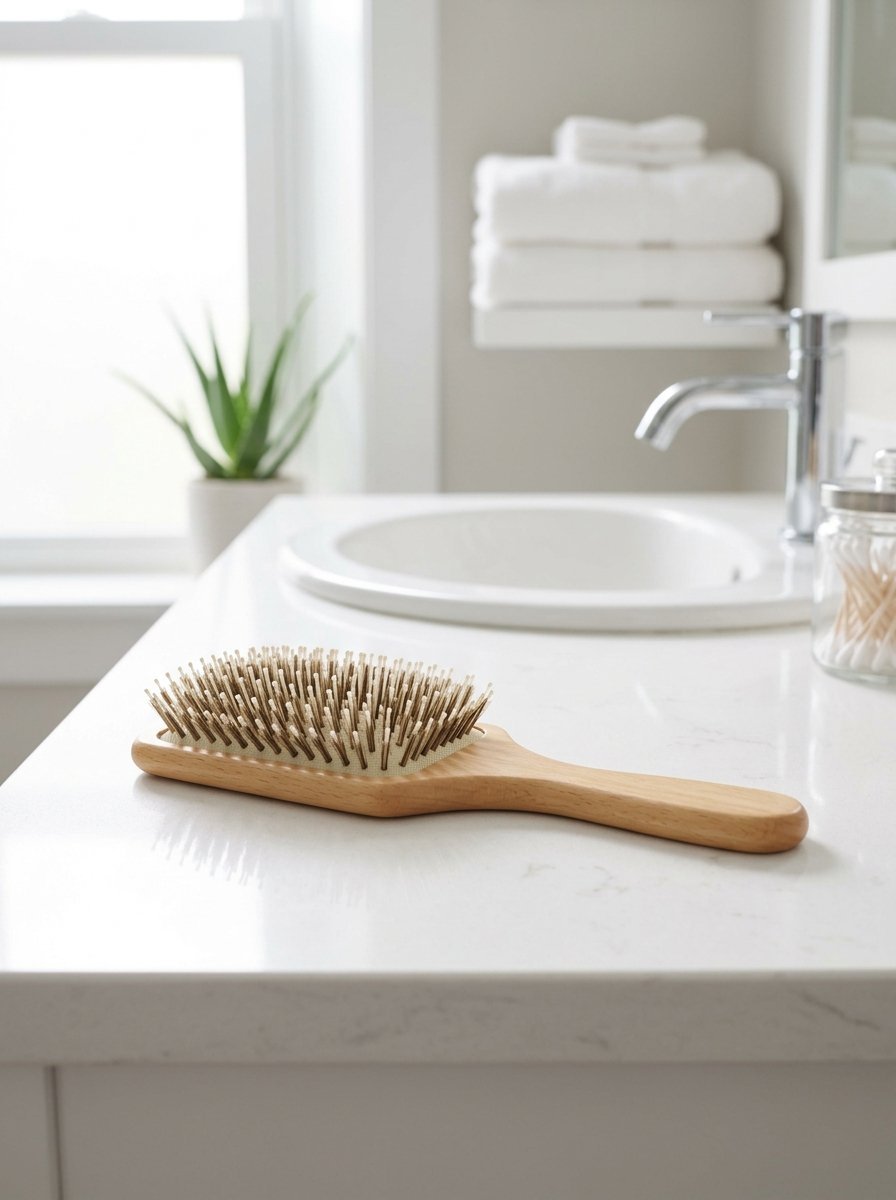
If your hair remains flat despite using volumizing products, look closely at your styling habits.
- Using too much product: Fine hair requires micro-doses. Start with half the amount recommended on the bottle wrapper.
- Air drying without support: Letting fine hair air dry means gravity pulls the wet, heavy strands flat against the scalp. Use a few creaseless clips at the root line to hold hair up while it dries naturally.
- Neglecting the hairbrush brush: Dirt and oil collect on brush bristles. Brushing clean hair with a dirty brush transfers old oils right back to your roots. Wash your hairbrushes once every two weeks with warm water and shampoo.
Frequently Asked Questions
How often should beginners wash fine hair?
Most beginners with fine hair need to wash every other day. Washing daily can trigger overproduction of sebum, while waiting three days allows oil to smother the roots and cause hair shedding. Find a balance by using a starch-based dry shampoo on the intermediate day.
Does cutting fine hair shorter make it look thicker?
Yes. Long fine hair grows heavy, dragging the roots down. A blunt cut at the shoulders or collarbone removes the dead weight, allowing the strands to bounce up and appear significantly denser. Avoid heavy layering, which thins out the perimeter line.
Can I use dry shampoo every day to maintain volume?
No. Dry shampoo contains powders that absorb sebum, but it does not remove dirt. Using it multiple days in a row creates a heavy paste on the scalp. This clogs hair follicles, stops healthy hair growth, and causes itching. Limit use to once between regular wet washes.
Is rice water safe for fine hair volume?
Rice water contains proteins that fill in gaps in the hair cuticle, providing temporary stiffness and volume. However, fine hair handles protein poorly if overused. Limit rice water rinses to once every two weeks to avoid brittle texture.
Why does my fine hair look thinner after using oil for growth?
You are likely using too much oil or failing to wash it out completely. The residual oil film causes individual strands to clump together. When fine hair clumps, it reveals more scalp, creating the optical illusion of thinning hair. Always use lightweight oils and wash thoroughly.
Should I skip conditioner entirely if my hair is very flat?
Never skip conditioner. Fine hair tangles easily, and untangling dry, unconditioned hair leads to immediate breakage. Instead, use a lightweight, rinse-out formula or a spray-on leave-in conditioner applied strictly to the bottom two inches of hair.


Sarah Mitchell — Founder & Editor-in-Chief
Sarah Mitchell is the founder and editorial voice behind Hair Level Up. A licensed cosmetologist with more than 15 years of experience, she has styled A-list celebrities for editorial shoots and red carpets, with work featured in Vogue, Elle, and Harper’s Bazaar. Early in her career, she trained under the legendary hairstylist Oribe in New York, an apprenticeship that still shapes her editorial eye today. Sarah founded Hair Level Up in 2020 after one bad haircut convinced her that women deserved a destination that felt like a magazine, taught like a stylist, and inspired like an art gallery. She oversees every story from concept to publication, guided by a simple belief: a good story teaches you something, but a great one makes you feel beautiful while it does.