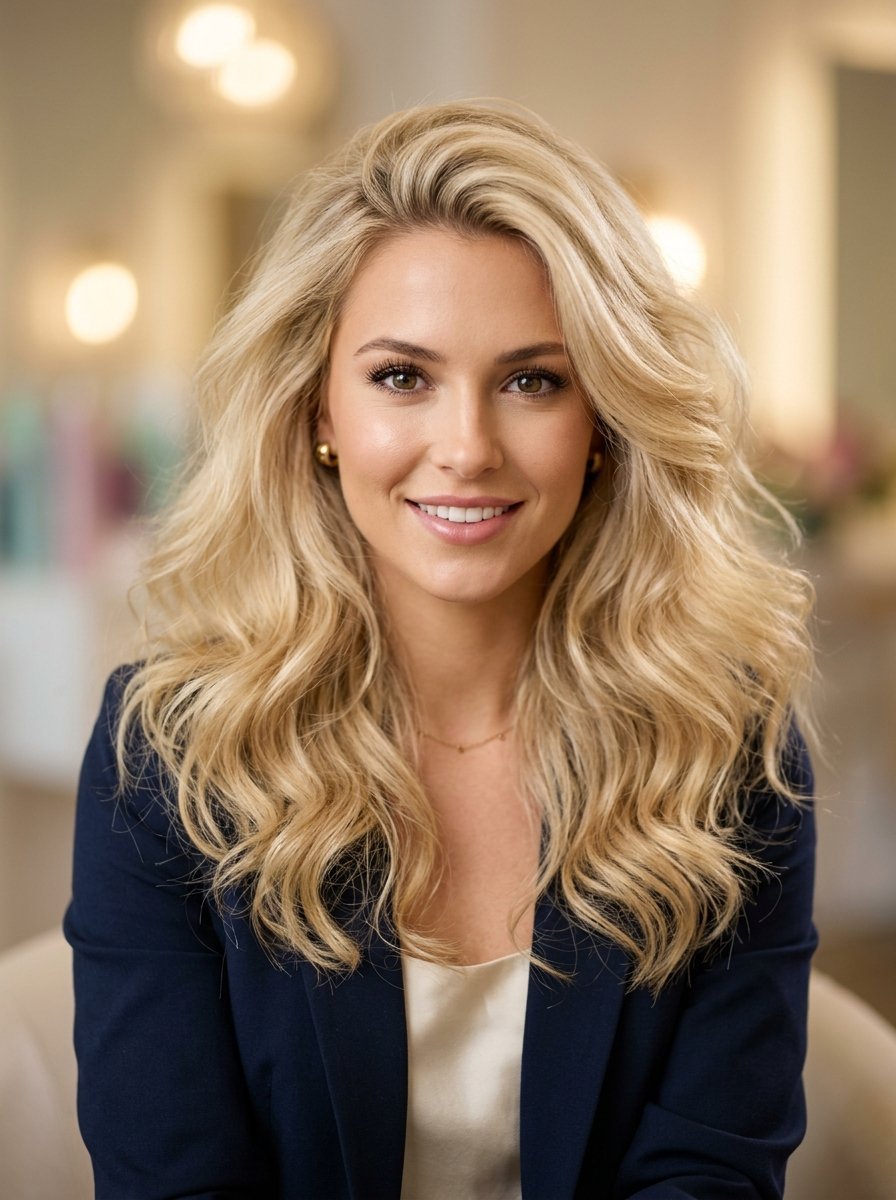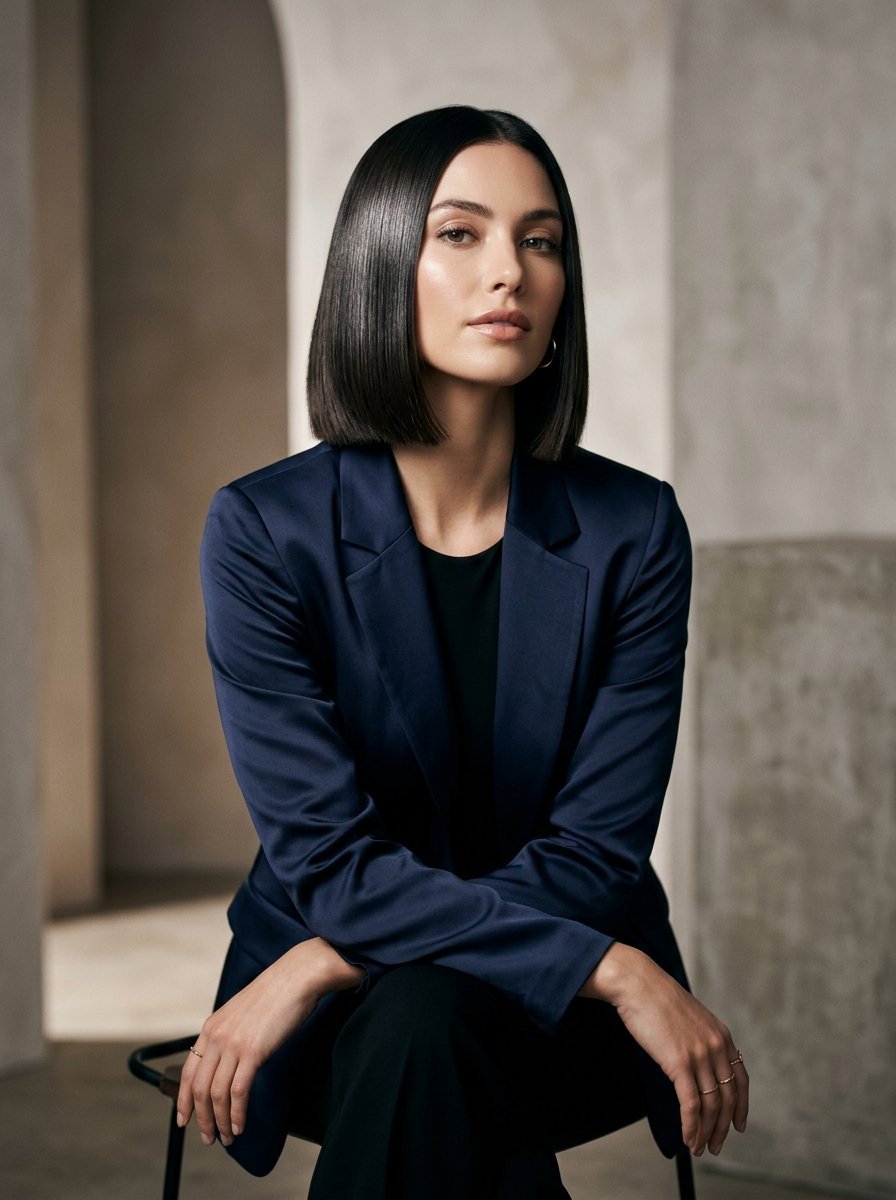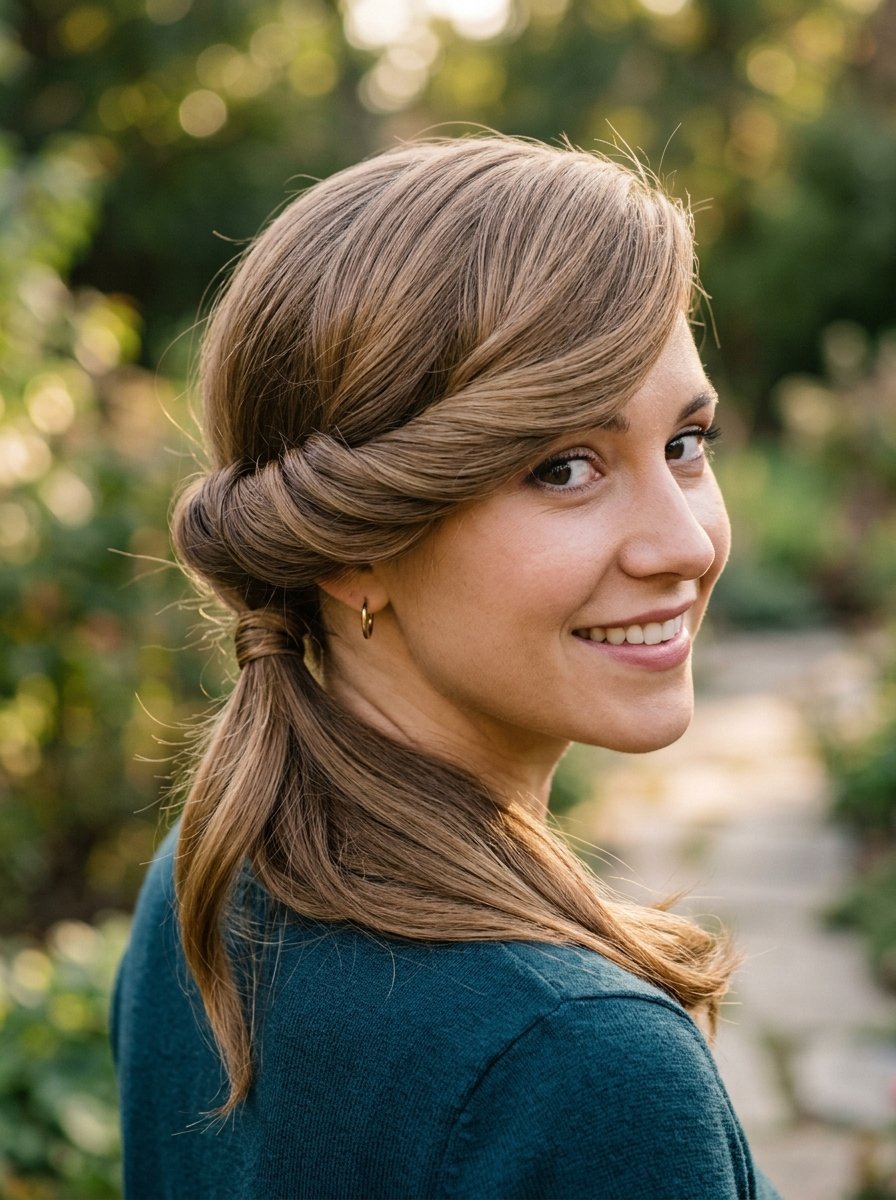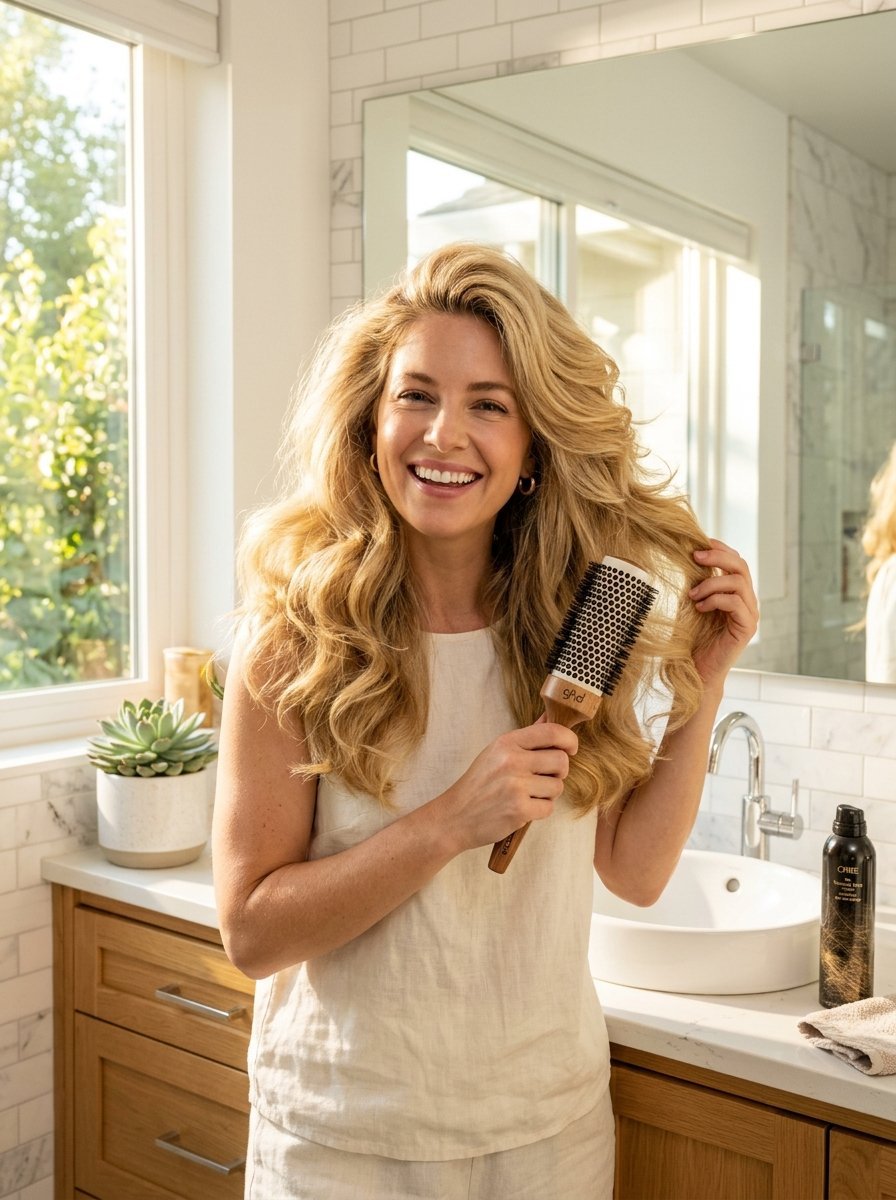

25 Hairstyles for Fine Thin Hair That Add Instant Volume
Fine strands require strategic texturizing. When hair lacks density, standard straight cuts create a flat appearance. The secret to creating fullness lies in altering the internal shape of the haircut. Layering removes weight from the mid-lengths, allowing the hair to lift. This structural change alters how light hits the head, creating the optical illusion of density.
A successful cut uses graduation to build weight in specific zones. By combining short layers with a solid baseline, the hair gains structural integrity. This approach prevents the ends from looking sparse while maximizing movement at the crown.
Executive Summary
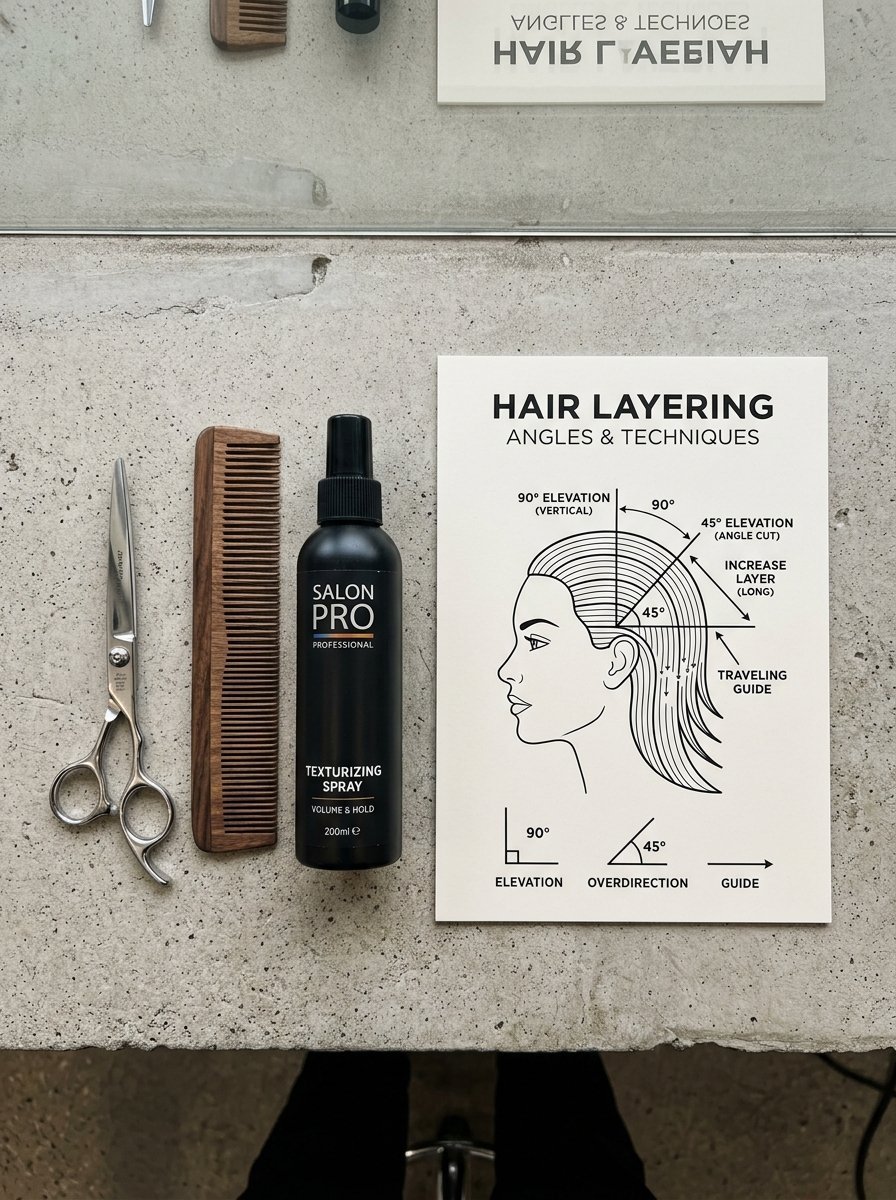
Fine hair requires a balance between weight removal and perimeter retention. This guide analyzes 25 volumizing haircuts designed to maximize fullness.
- Key structural techniques: Shag variations, blunt perimeters, and internal texturizing.
- Core benefits: Immediate root lift, low daily styling requirements, and split end prevention.
- Primary considerations: Face shape compatibility, texture matching, and maintenance schedules.
The following framework breaks down each style by architectural blueprint, lifestyle fit, and maintenance needs.
1. Classic Shag Haircut
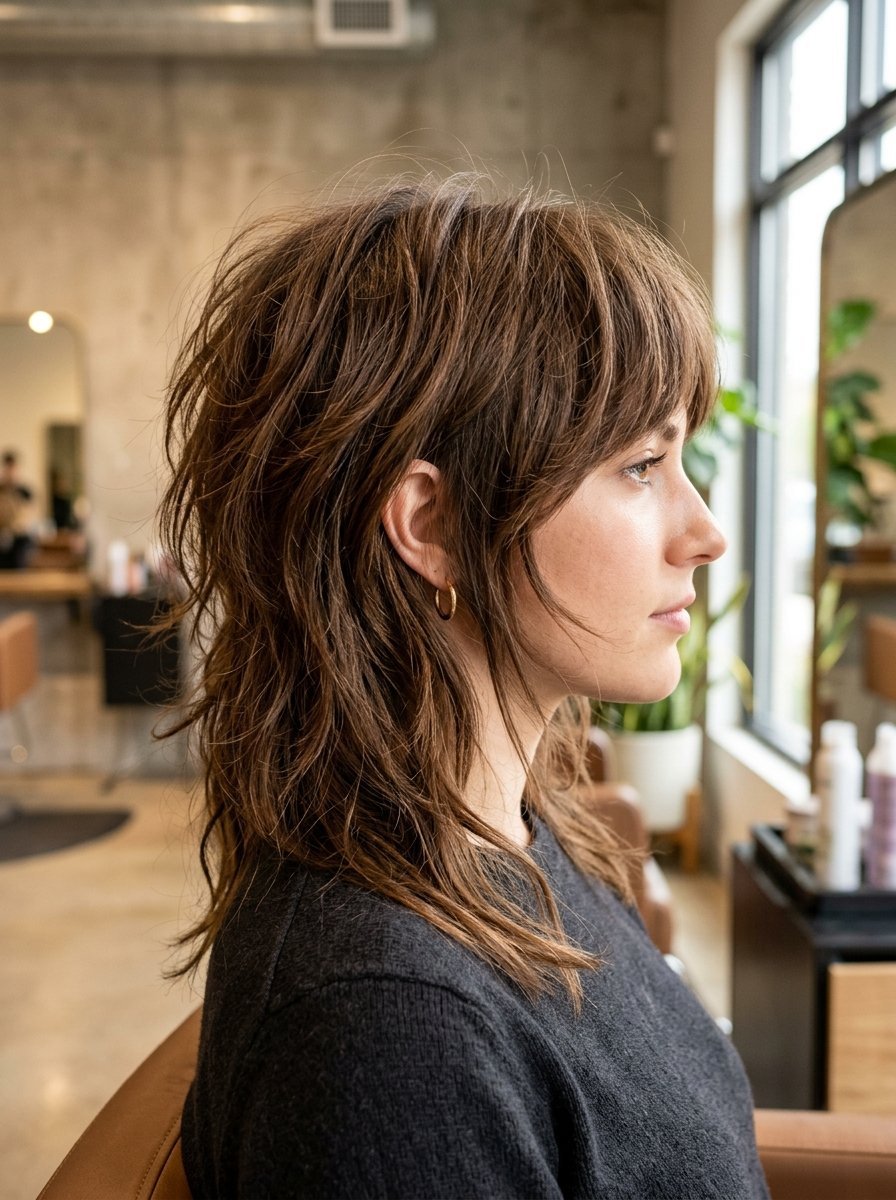
The classic shag uses shorter layers around the crown to create natural elevation. By removing weight from the top sections, the hair lifts away from the scalp. This style works well because it retains perimeter thickness while introducing internal movement.
In my experience, keeping the lowest three inches of the perimeter blunt stops the cut from looking thin. The volume comes from the shorter crown pieces bouncing against that solid foundation.
- Best For: Heart and oval face shapes.
- Maintenance: Trim every six weeks to keep crown layers crisp.
- Styling Time: Five minutes with a sea salt spray.
2. Short Shag

The short shag targets individuals who want immediate fullness without the weight of long hair. This variation focuses the layering around the cheekbones and ears. The shorter length creates a stronger upward push, making it an excellent choice for very fine textures.
I tried this specific style on a client who complained her hair felt flat by midday. By shortening the overall length to the collarbone and pieces around the face, her style lasted sixteen hours without drooping.
- Best For: Square and round faces needing vertical elongation.
- Maintenance: Six to eight weeks.
- Styling Time: Air dry with a lightweight mousse.
3. Textured Short Shag Haircuts
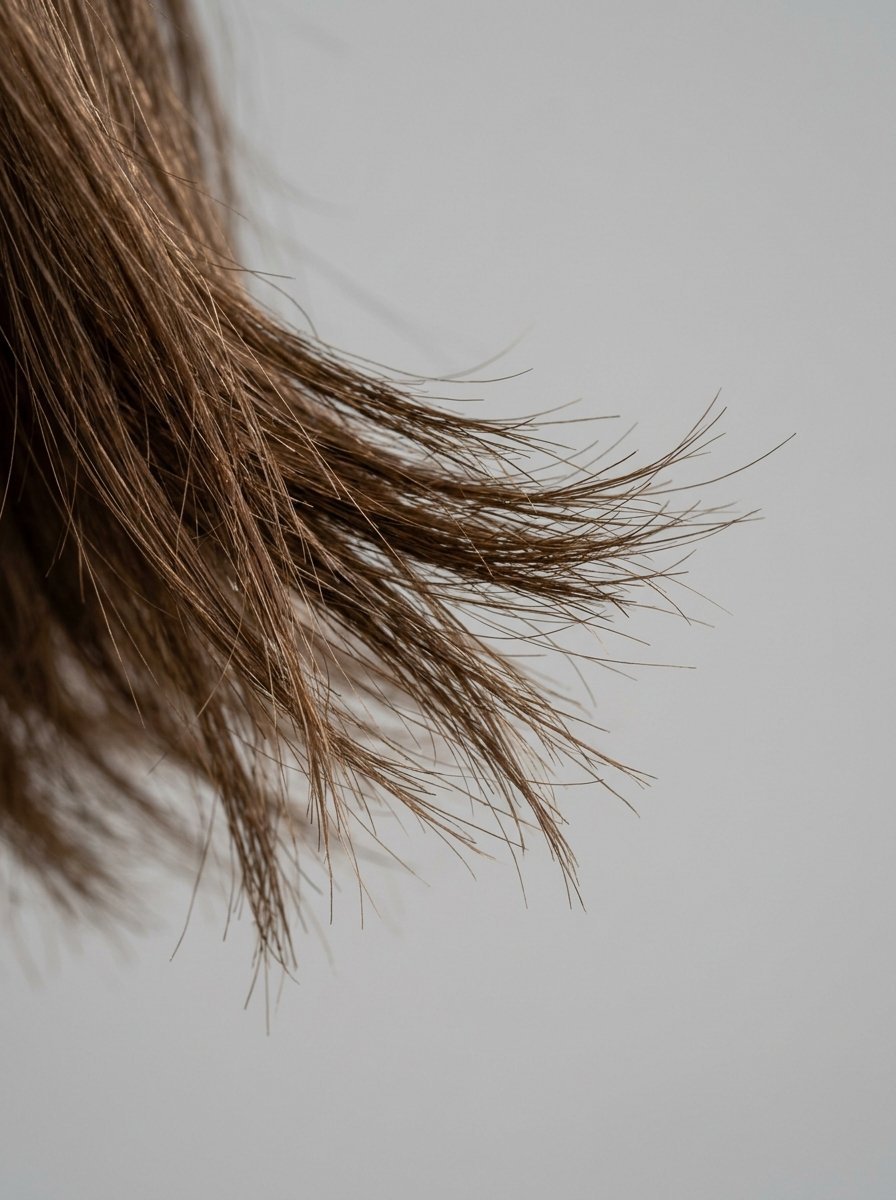
This style uses point-cutting techniques on a short base to create jagged, distinct pieces. Instead of blunt lines, the ends are cut vertically. This separation prevents strands from nesting together, which causes hair to look flat.
- Best For: Naturally wavy or straight fine hair.
- Maintenance: Regular five-week trims to prevent shagginess from becoming messy.
- Styling Time: Rough dry with a blow dryer, finish with texturizing paste.
4. Modern Haircuts with Internal Layers
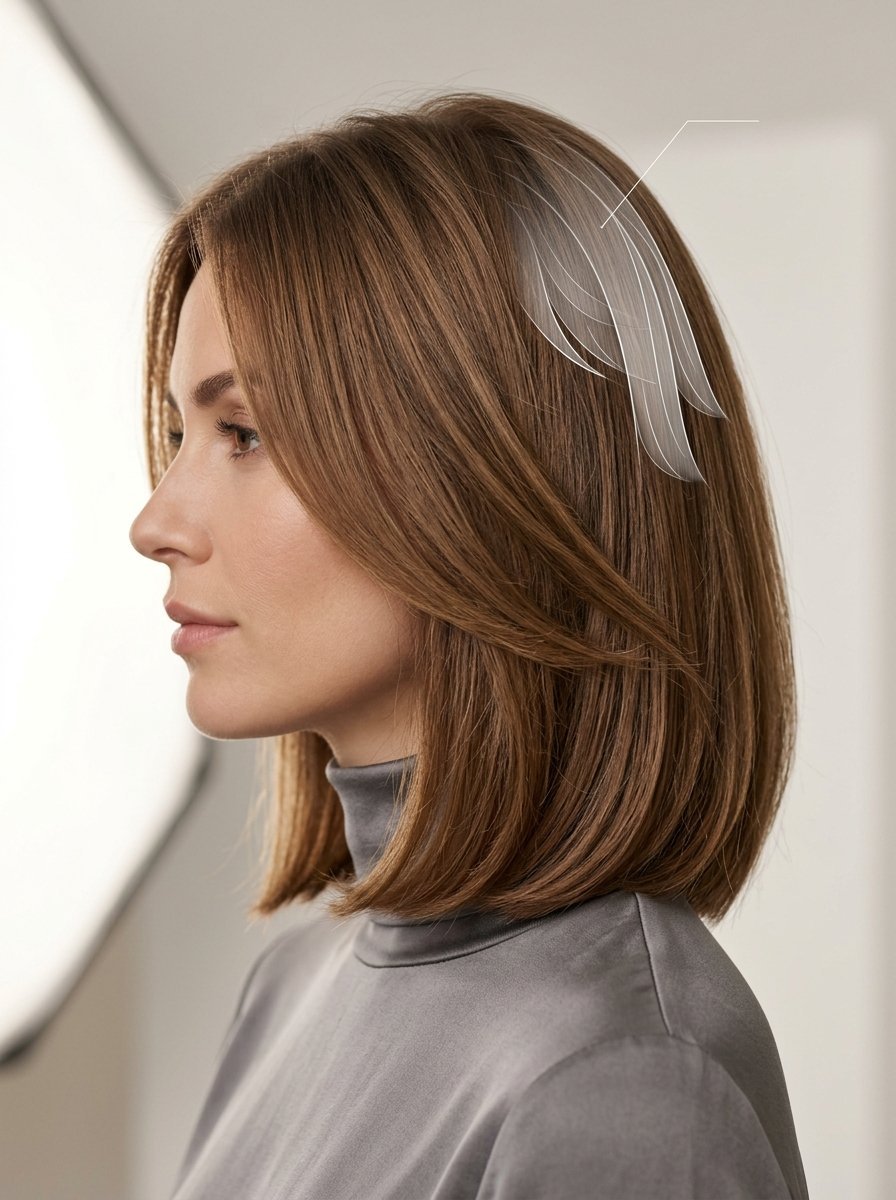
Modern volume cuts rely on hidden internal layers. The top layer of hair stays relatively long and smooth, while shorter pieces sit underneath. These hidden pieces act as a scaffolding system, pushing the top layer upward.
I’ve seen this work across multiple age groups because it offers the illusion of a one-length cut while delivering the volume of a layered style. It provides structural support without visible lines.
- Best For: Individuals who prefer sleek, polished styles.
- Maintenance: Seven to nine weeks.
- Styling Time: Round brush the crown section for two minutes.
5. Easy Hair Cuts for Daily Volume
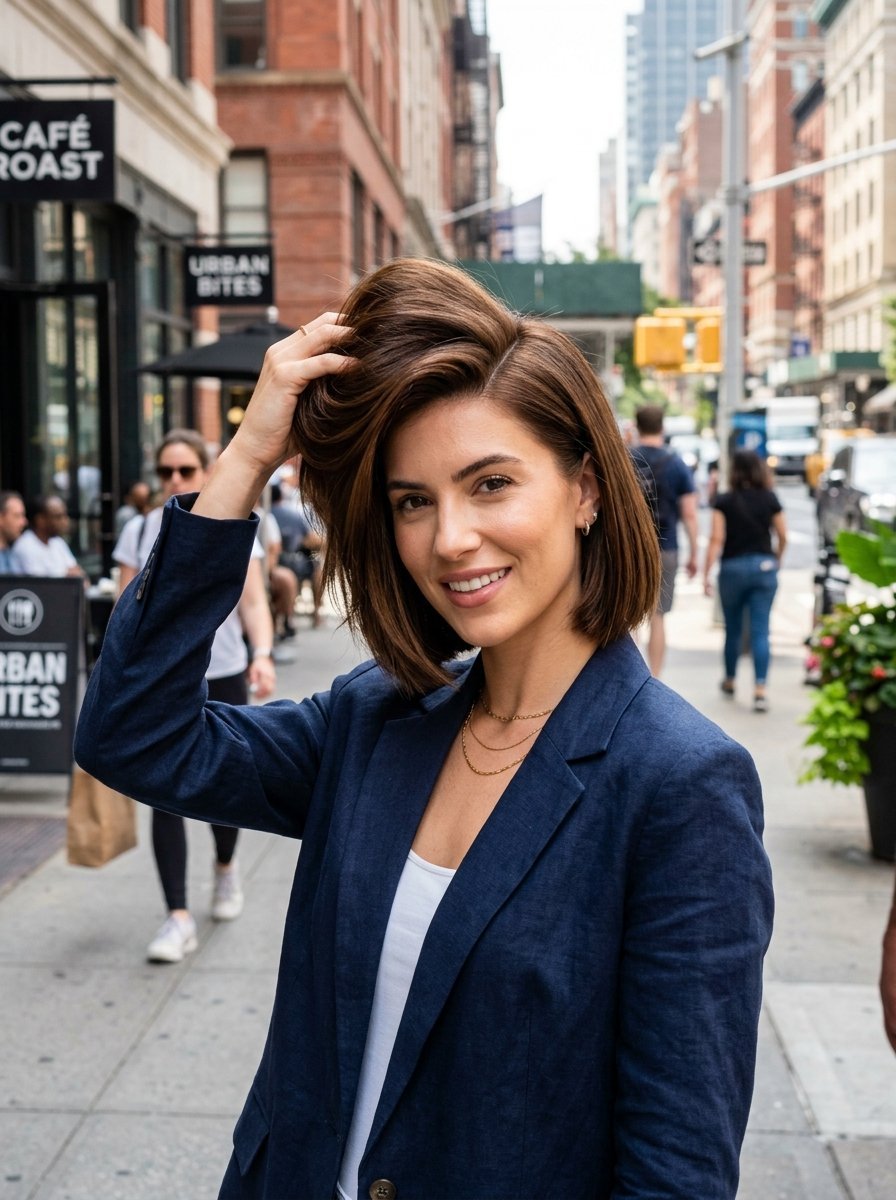
The blunt bob with a deep side part requires minimal effort for maximum payoff. Flipping the hair to one side forces the roots into an unnatural direction, creating instant lift at the hairline.
- Best For: Busy professionals.
- Maintenance: Eight weeks to maintain the crisp perimeter line.
- Styling Time: Two minutes to flip and apply dry shampoo.
6. Low Maintenance Hair Wolf Cut

The wolf cut combines the texture of a shag with the silhouette of a mullet. For fine hair, this means dramatic short layers on top that taper into softer lengths. The extreme contrast creates the appearance of density at the roots.
- Best For: Gen Z and millennial style preferences.
- Maintenance: Ten weeks; grows out naturally due to the undone texture.
- Styling Time: Diffuse on low heat with a curl cream.
7. Hairstyles Over 50 Pixie Shag

As hair ages, individual strands often become finer. The pixie shag addresses this change by keeping the length above the shoulders. Shorter hair is lighter, meaning gravity cannot pull it down flat against the scalp.
I noticed a major shift in confidence when a long-time client transitioned to this cut. Her styling time dropped significantly, and her hair looked twice as thick around her crown where thinning was most apparent.
- Best For: Fine hair experiencing mature thinning.
- Maintenance: Four to five weeks to maintain the clean neck contour.
- Styling Time: Finger-style with a pea-sized amount of lightweight wax.
8. Modified Thick Hair Cuts for Fine Strands
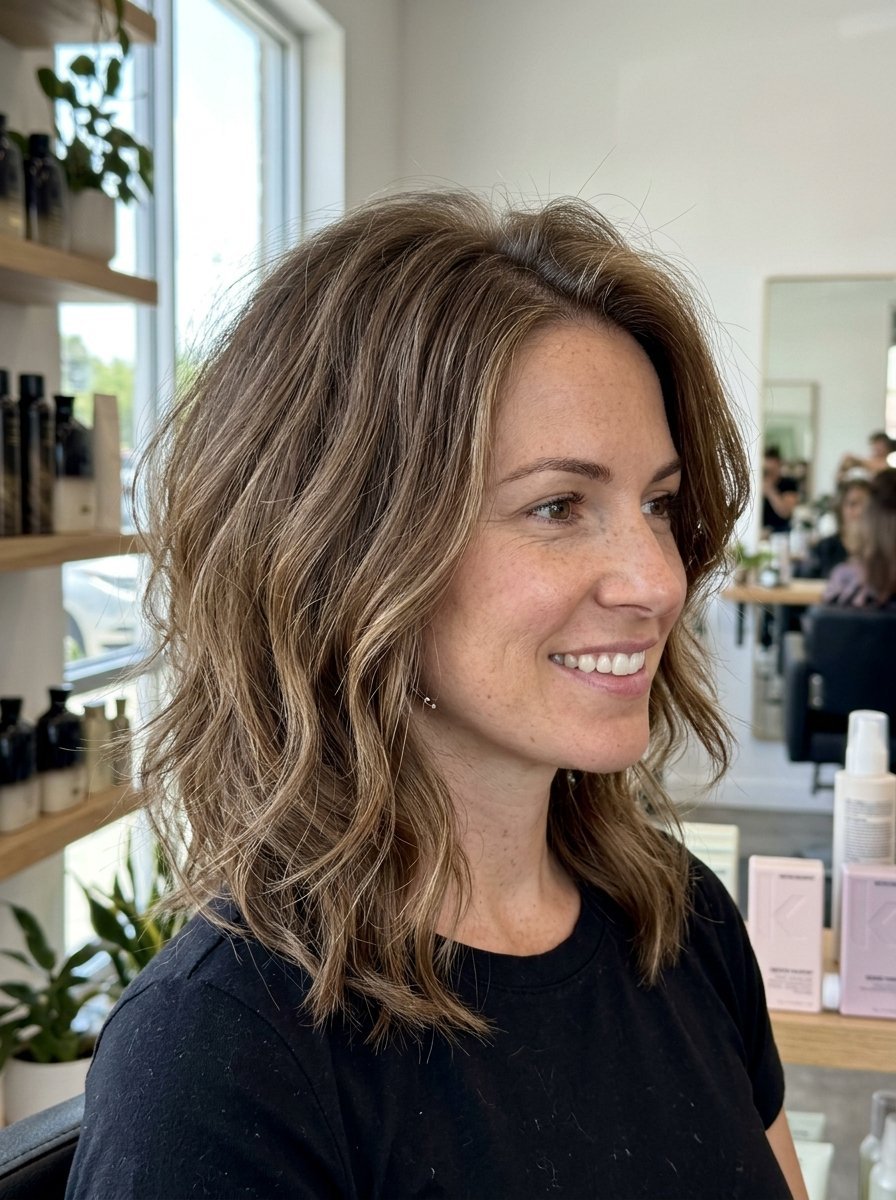
This technique borrows the perimeter shapes of thick haircuts but adapts the interior. Instead of thinning out the hair, the stylist uses slide-cutting to create channels. These channels let the fine strands sit into pockets, creating bulk.
- Best For: Medium density hair with very fine individual strands.
- Maintenance: Six to seven weeks.
- Styling Time: Blow dry with a ceramic paddle brush.
9. Choppy Lob
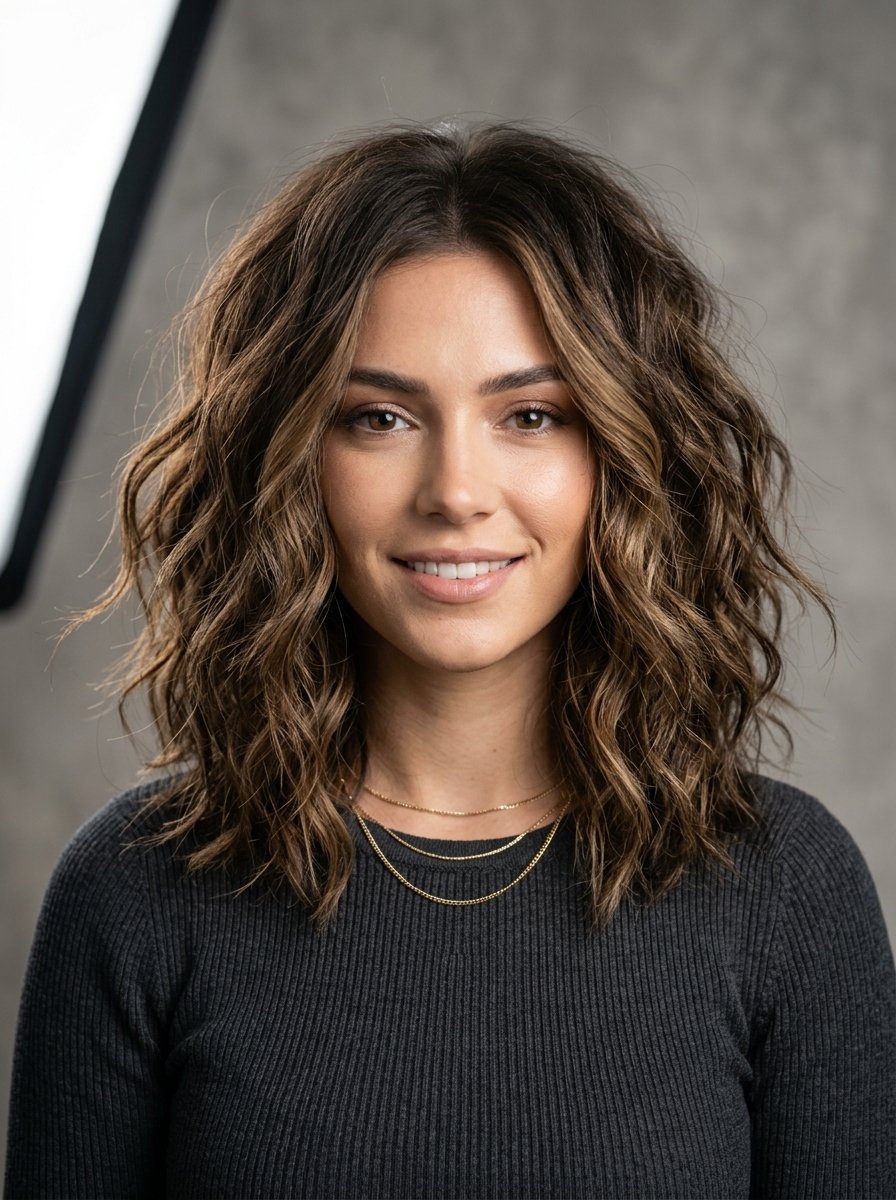
The choppy long bob lands right at the shoulders. The weight of the length is broken up by blunt, point-cut ends. This contrast creates horizontal width, which makes fine hair look wider and fuller from the front.
- Best For: Round and oval faces.
- Maintenance: Eight weeks.
- Styling Time: Alternating curling iron directions for messy texture.
10. Wispy Fringe Shag

Adding a wispy fringe pulls hair forward, creating immediate visual volume around the face. The bangs are cut with variable lengths, allowing them to piece out naturally without looking sparse.
- Best For: High foreheads or long face shapes.
- Maintenance: Three to four weeks for the fringe trim.
- Styling Time: One minute with a mini flat iron.
11. Razor Cut Bob
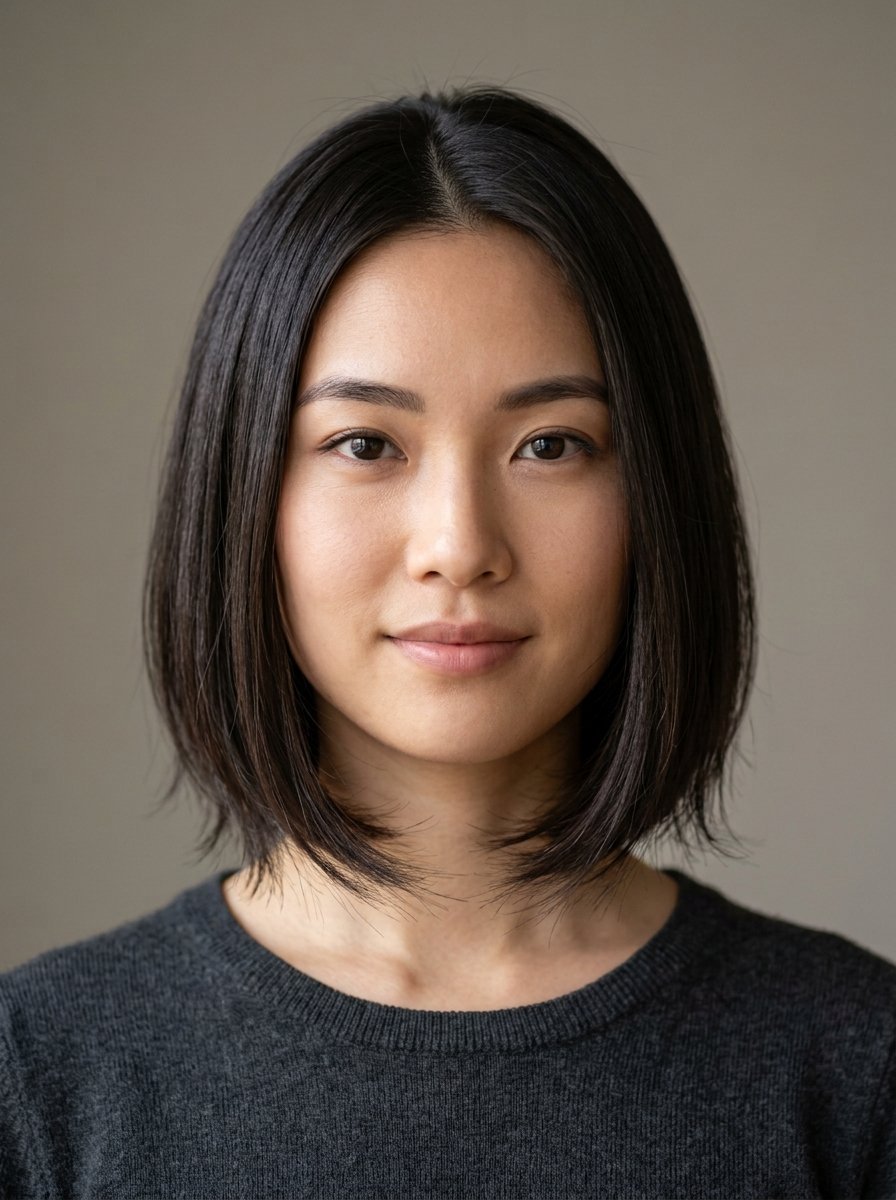
Using a straight razor instead of shears creates tapered ends that slide past each other. This movement creates a soft, airy texture that adds fullness to the sides of the head.
- Best For: Completely straight fine hair.
- Maintenance: Six weeks; razor edges can split faster on fragile hair.
- Styling Time: Wash and go with a featherweight leave-in conditioner.
12. Asymmetrical Pixie
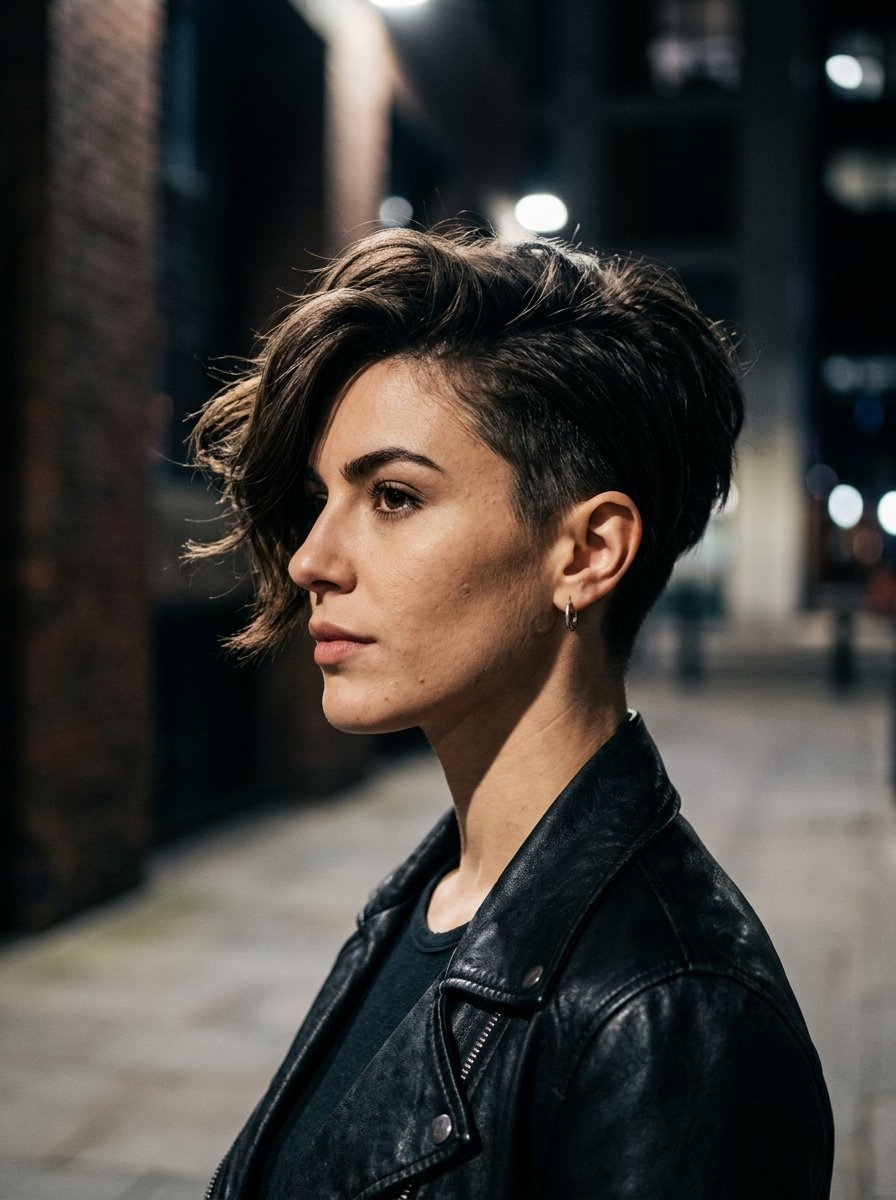
An asymmetrical pixie features one side cut short to the scalp while the other side retains length. The drastic weight shift creates an immediate focal point, drawing attention to the volume of the longer section.
- Best For: Bold styles and sharp jawlines.
- Maintenance: Four weeks to keep the short side clean.
- Styling Time: Blow dry the long side forward with a flat brush.
13. French Bob with Micro Bangs

The French bob hits right at the jawline line, curving slightly inward. Paired with micro bangs, this style frames the face tightly, making the hair look dense and compact.
- Best For: Fine, straight hair types.
- Maintenance: Five weeks.
- Styling Time: Air dry, tuck behind ears while damp to create a natural wave.
14. Long Layers with Blunt Ends
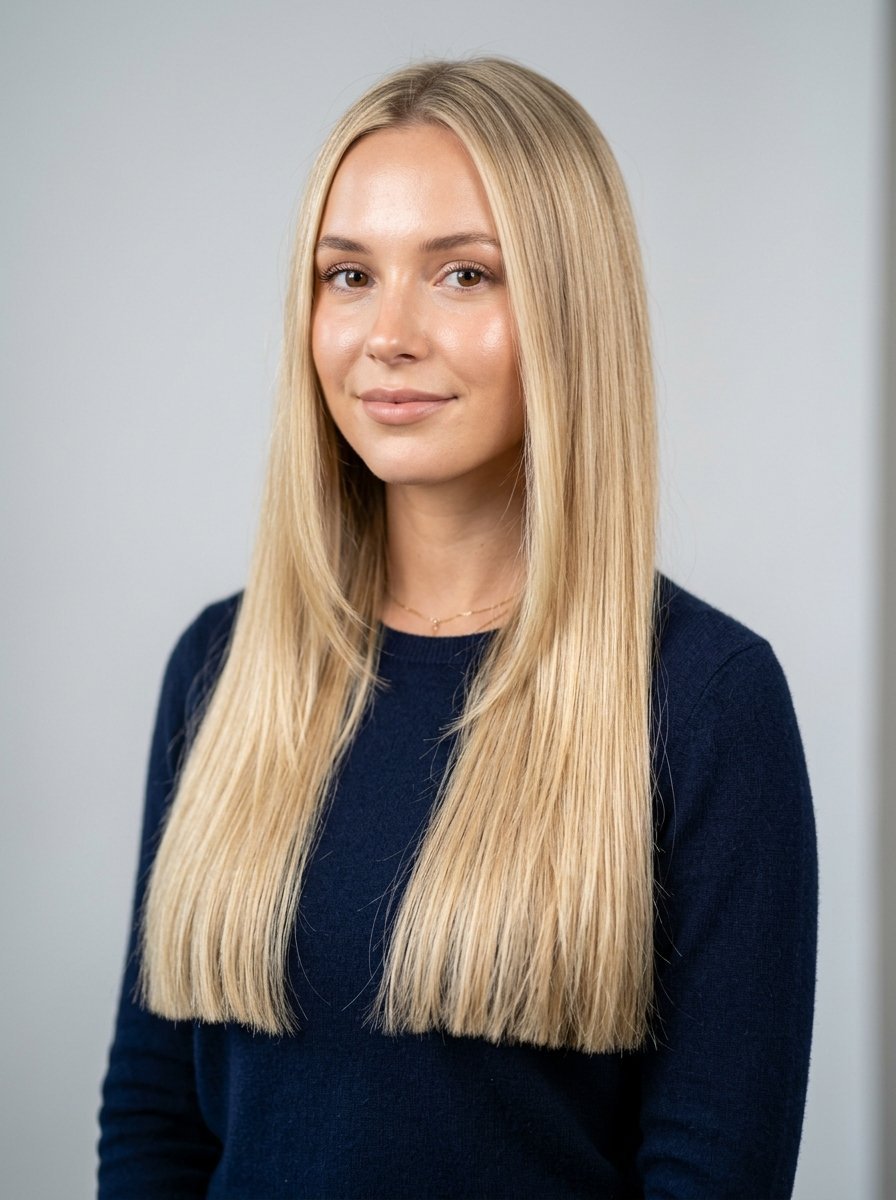
For those who refuse to cut their hair short, long layers combined with a blunt base provide a compromise. The layers start below the chin to add movement, while the baseline remains strictly straight to preserve density.
- Best For: Individuals transition from long flat hair.
- Maintenance: Eight to ten weeks.
- Styling Time: Ten minutes with large velcro rollers.
15. The Collarbone Shag

This length rests directly on the collarbone. As the hair hits the bone, it naturally pushes outward, creating horizontal volume. The shag layering enhances this effect by adding texture throughout the mid-lengths.
- Best For: All face shapes.
- Maintenance: Eight weeks.
- Styling Time: Spray with texturizing liquid, scrunch, and go.
16. Curtain Bangs with Face Framing

Curtain bangs sweep outward like a curtain, creating a sweeping line that adds width across the cheekbones. The accompanying layers blend down into the perimeter, preventing flat sides.
- Best For: Oval and square face shapes.
- Maintenance: Six weeks.
- Styling Time: Blow dry bangs backward using a medium round brush.
17. Feathered Nape Pixie
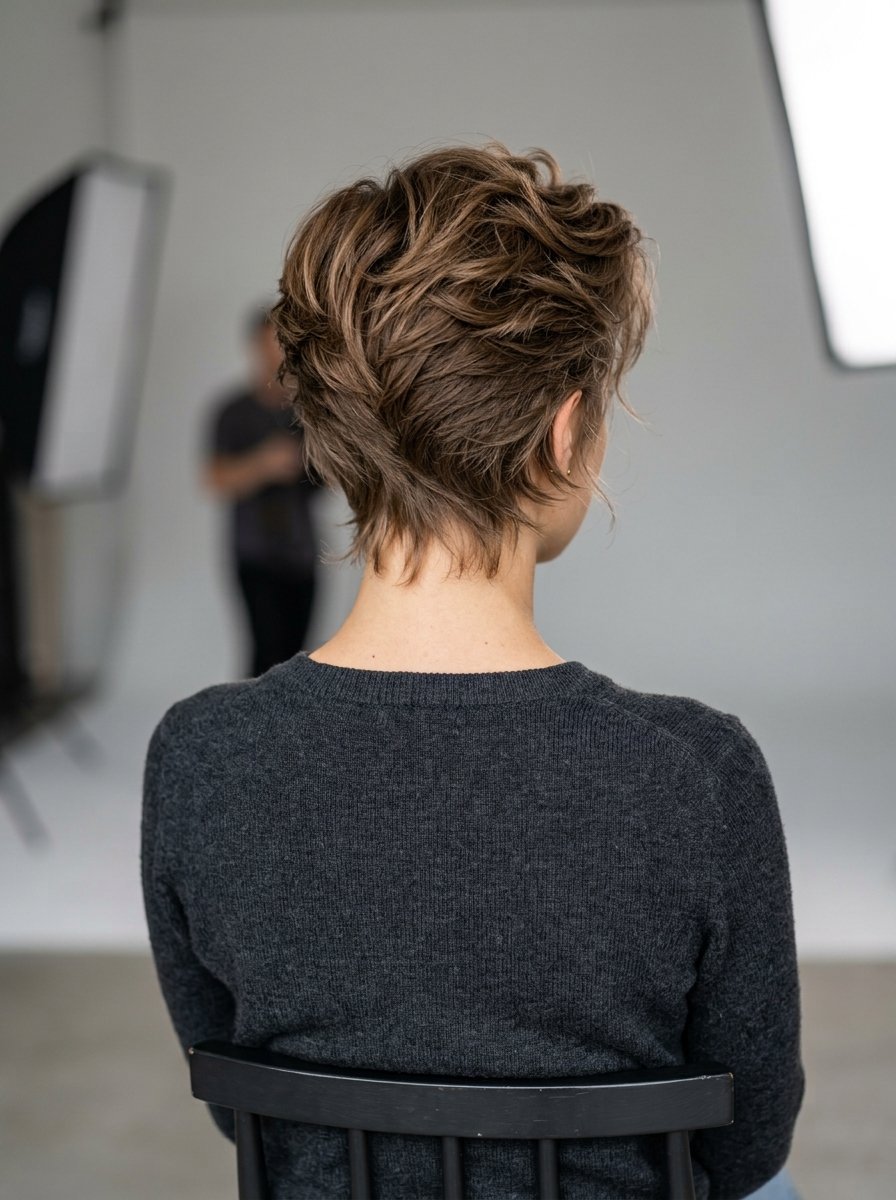
This cut keeps the volume focused entirely at the top and back of the head. The nape is cut close and feathered, which contrasts with the longer, voluminous pieces on the crown.
- Best For: Petite facial features.
- Maintenance: Four weeks.
- Styling Time: Towel dry, apply root lifter, smooth with fingers.
18. Ghost Layered Cut
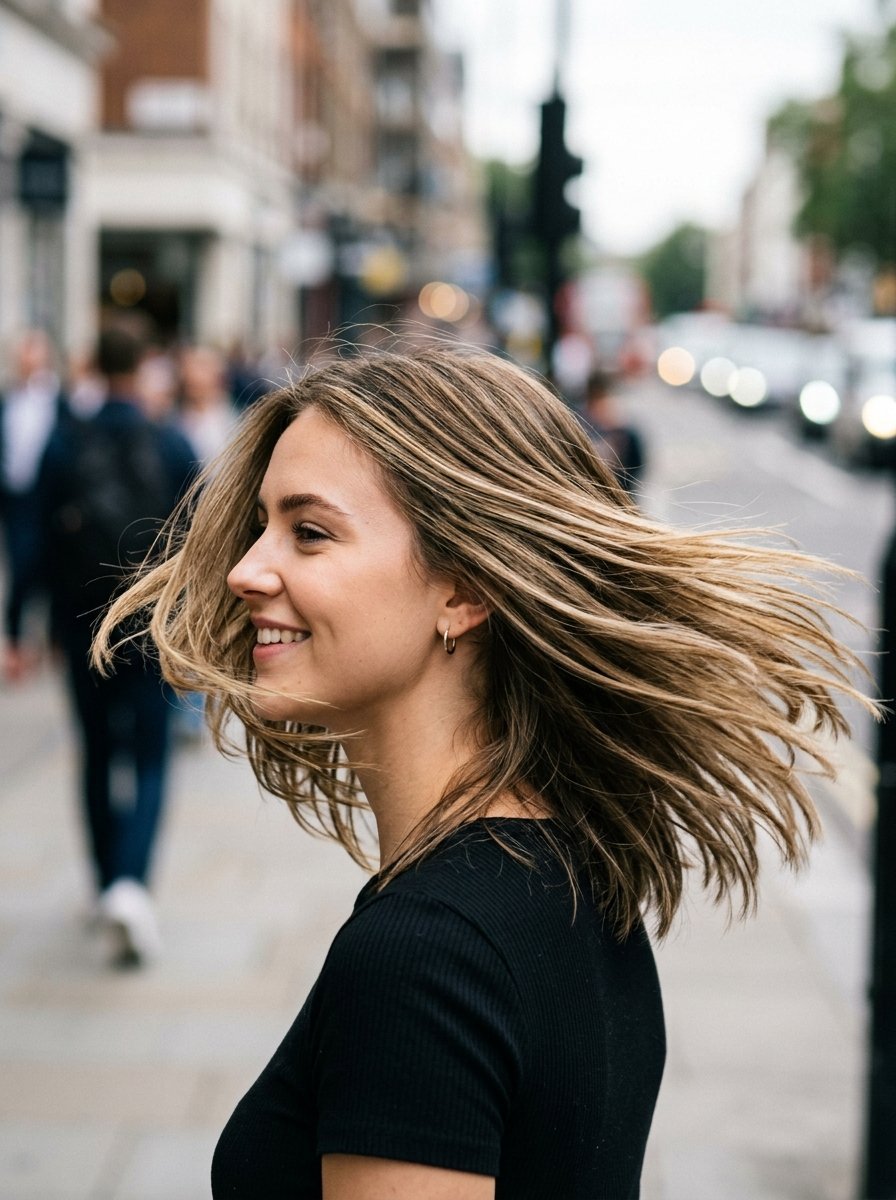
Ghost layers are exceptionally thin layers cut into the interior of the hair. They are invisible when the hair is still, but when you move, they create separation and elevate the top strands.
- Best For: Sleek, straight hair types that want movement without texture lines.
- Maintenance: Ten weeks.
- Styling Time: Standard rough dry.
19. Stacked Inverted Bob
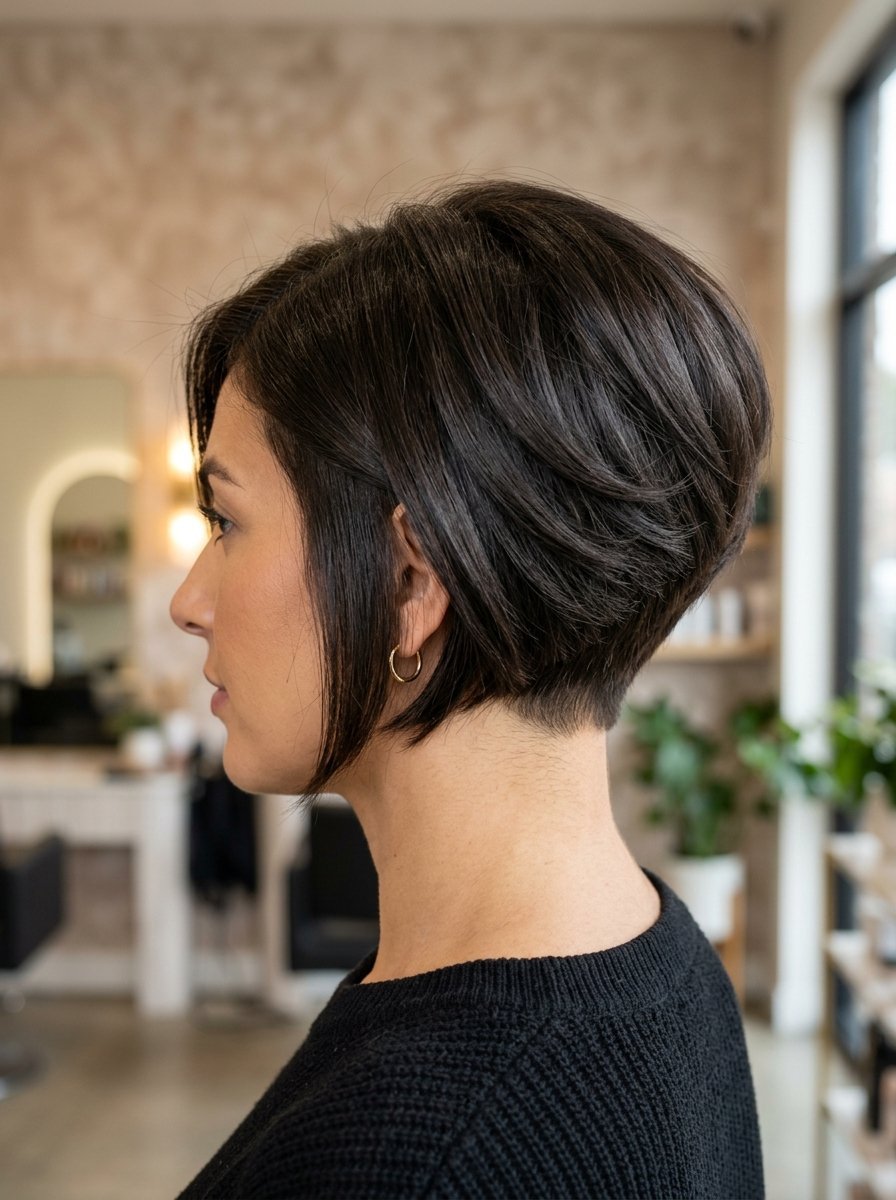
The stacked bob uses graduated layers at the back of the head to create a wedge shape. This graduation naturally forces the hair outward and upward, creating a permanent volumized silhouette.
- Best For: Fine hair with fine density.
- Maintenance: Five weeks to keep the stacked angle sharp.
- Styling Time: Five minutes with a small round brush at the back.
20. Disconnected Undercut Pixie
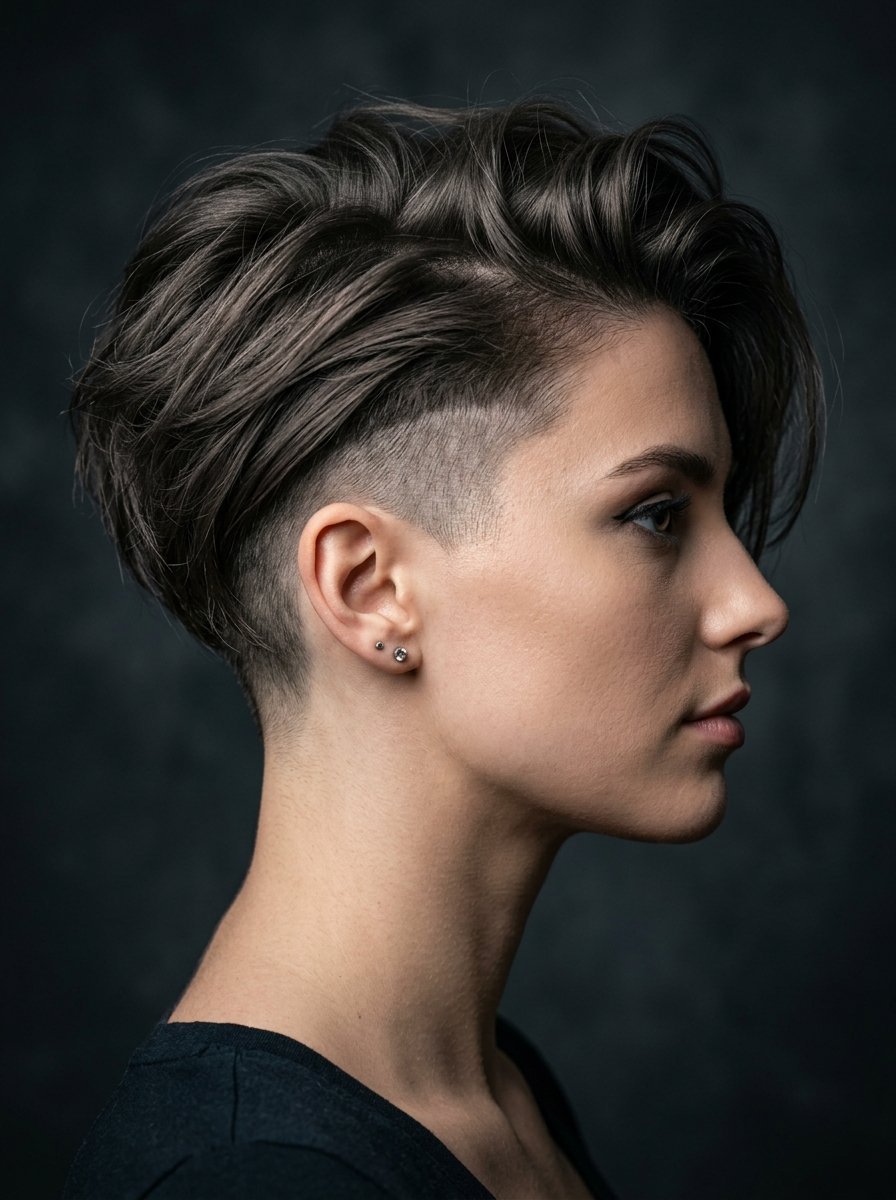
By shaving or closely clipping one or both sides underneath, you remove flat hair that pulls the top down. The remaining top sections fall over the undercut, appearing significantly thicker.
- Best For: Thick density with fine hair strands.
- Maintenance: Three to four weeks for the shaved sections.
- Styling Time: Blow dry top sections forward with volume paste.
21. Shaggy Midi Cut

The midi cut sits between the shoulders and chest. Shaggy, chaotic layers are cut from the eyes downward. This distribution spreads volume evenly along the length of the face.
- Best For: Oblong face shapes.
- Maintenance: Eight to twelve weeks.
- Styling Time: Diffuse with a volume foam.
22. Texturized A-Line Cut
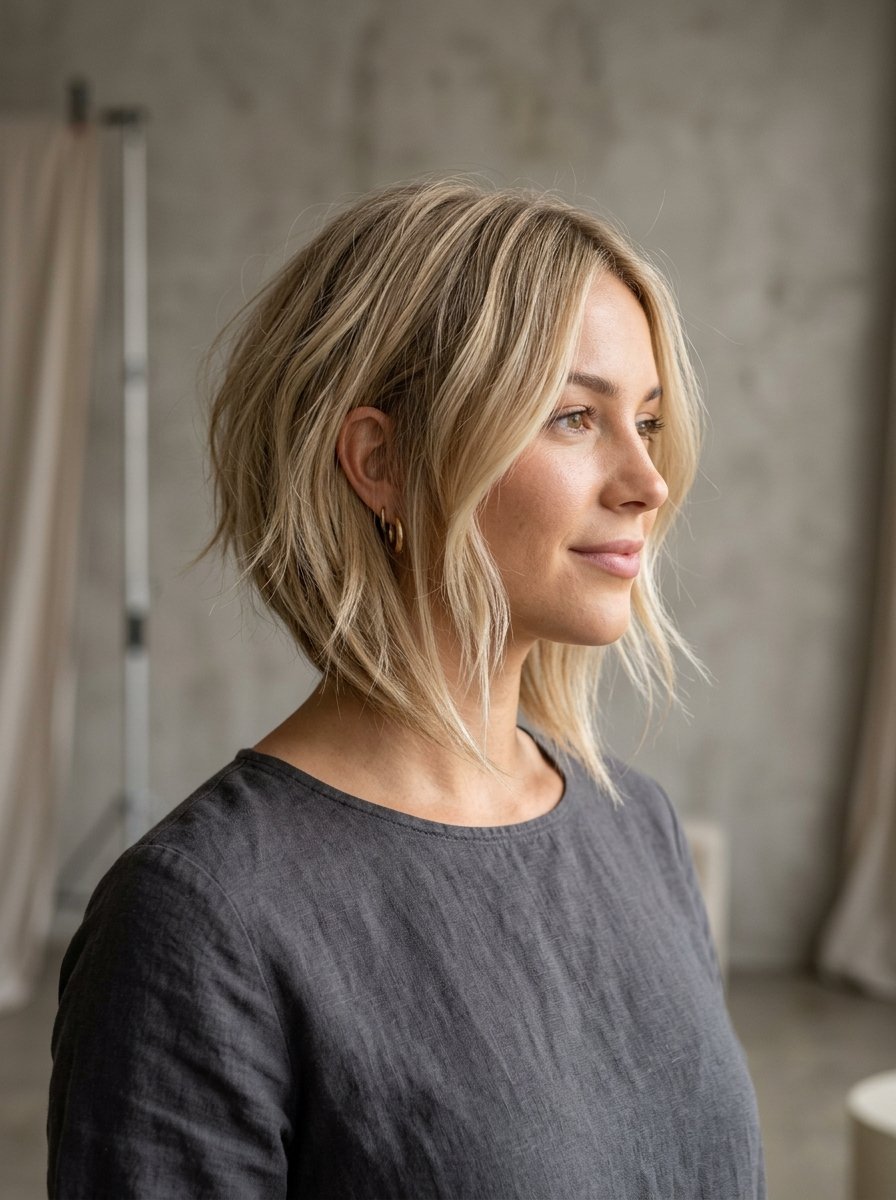
An A-line cut is shorter in the back and longer in the front. Adding texturizing cuts to the interior removes the stiff look common with classic bobs, allowing the hair to bounce naturally.
- Best For: Round face shapes.
- Maintenance: Six to eight weeks.
- Styling Time: Flat iron the ends slightly, shake out at the roots.
23. Curly Shag for Fine Curls

Fine curls can easily succumb to the triangle shape, where the bottom is wide and the top is flat. A curly shag utilizes vertical layering to distribute the curls evenly, building height at the crown.
- Best For: Type 2C to 3B fine curls.
- Maintenance: Eight weeks.
- Styling Time: Hooded dryer or diffuser with a hard-hold gel.
24. Blunt Pageboy Cut

The pageboy features a solid, curved perimeter that rolls slightly under. Because there are zero layers, every single strand travels to the bottom baseline, maximizing the absolute thickness of the perimeter.
- Best For: Retro styles and fine, straight hair.
- Maintenance: Five weeks to keep the rounded edge precise.
- Styling Time: Smooth with a large round brush.
25. Angled Lob with Pointed Ends
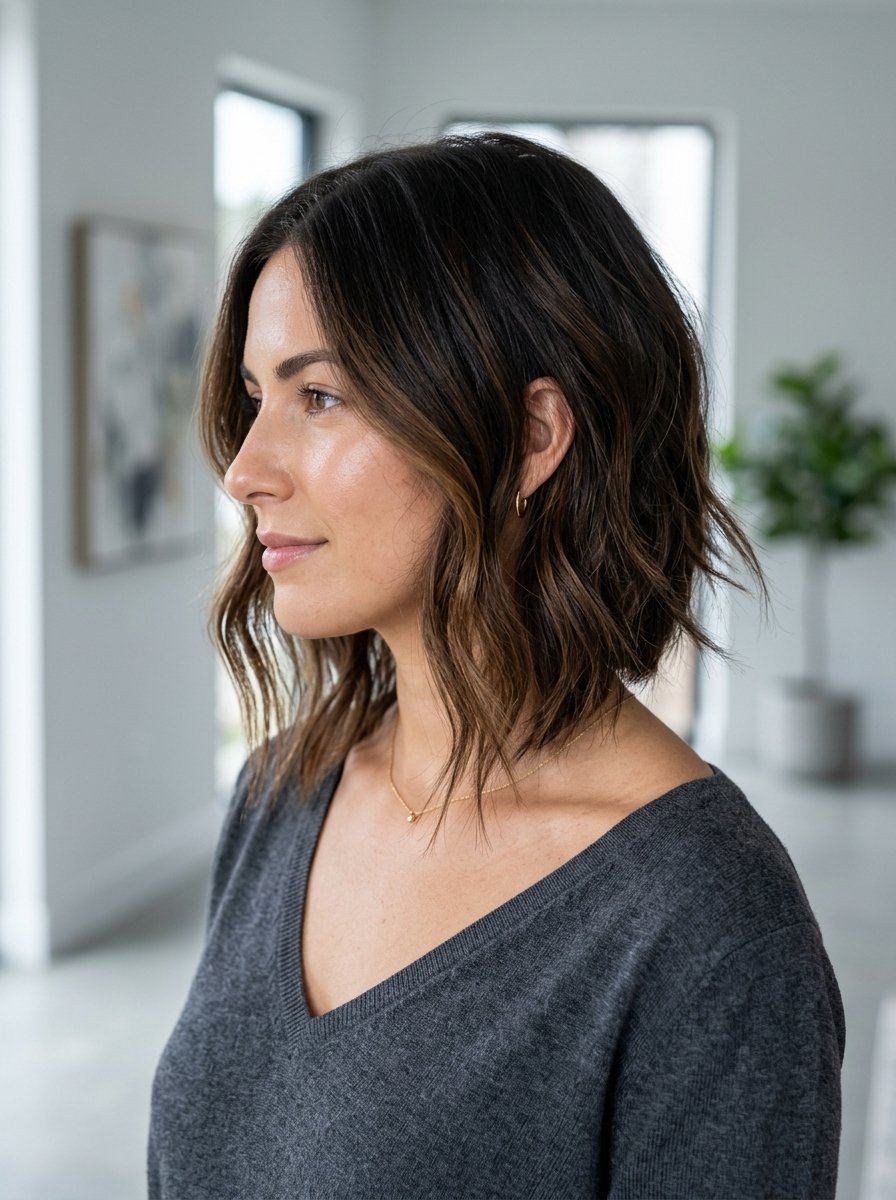
The angled lob drops forward sharply toward the collarbone. Point-cutting the last inch prevents the cut from looking heavy, allowing the ends to swing freely and create dynamic volume.
- Best For: Heart-shaped faces.
- Maintenance: Seven weeks.
- Styling Time: Rough dry, then piece out the ends with a dry oil spray.
Haircut Comparison Framework
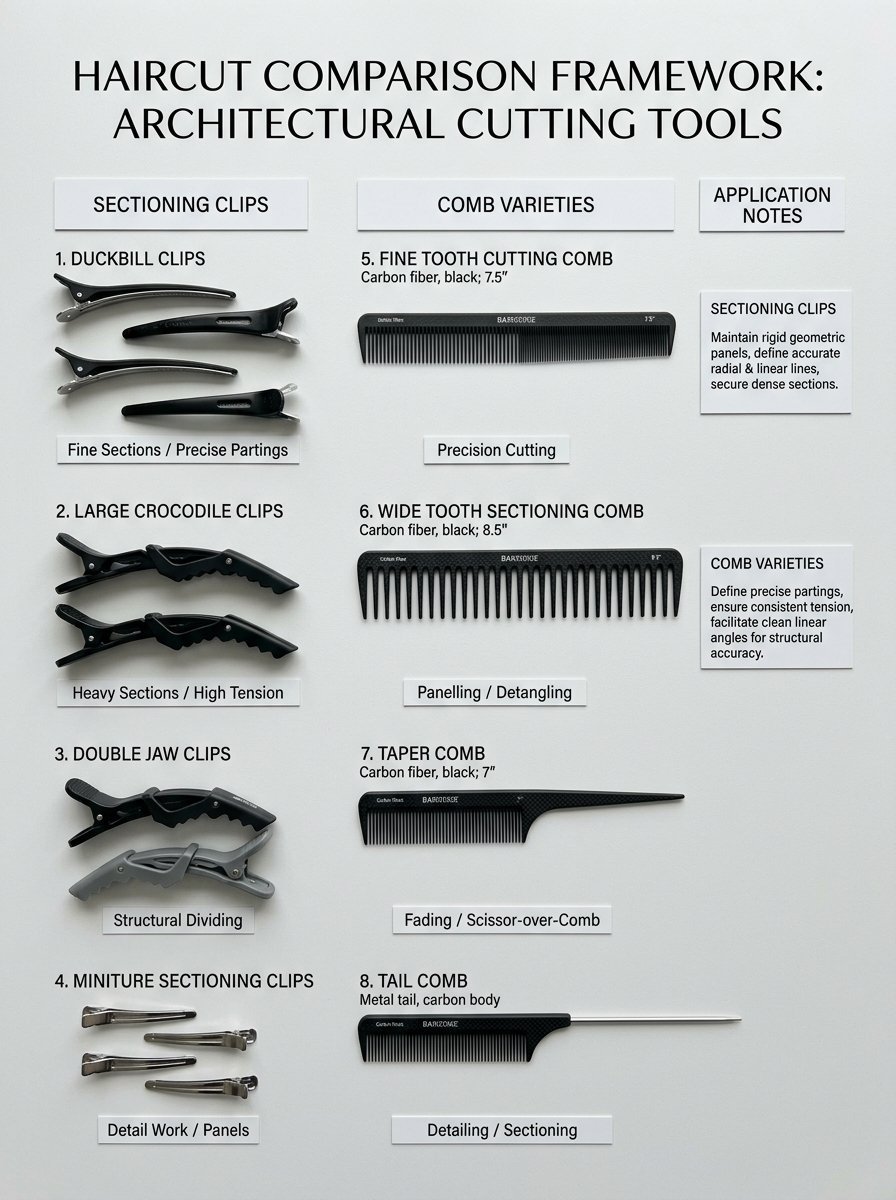
Choosing the correct style depends on balancing your available styling time against how often you can visit the salon. The table below outlines the core metrics for the primary style families.
| Cut Category | Main Volume Zone | Maintenance Window | Ideal Hair Texture | Best Product Match |
| Shag Family | Crown and Mid-lengths | 5 to 7 Weeks | Wavy to Coarse Fine | Sea Salt Liquid |
| Bob Family | Perimeter Baseline | 6 to 8 Weeks | Straight to Fine | Volumizing Spray |
| Pixie Family | Total Head Elevation | 4 to 5 Weeks | All Textures | Matte Pomade |
| Lob Family | Face Framing Sides | 8 to 10 Weeks | Straight to Wavy | Root Lifting Mousse |
Frequently Asked Questions
Do layers make fine hair look thinner?
If layers are cut too deeply or too high without a solid base, they will make the perimeter look sparse. However, strategic interior layers support the top hair, creating volume without removing critical weight from the bottom.
How often should fine hair be cut to preserve volume?
Fine hair splits easily, and split ends cause strands to lock together and flatten. Trimming every five to seven weeks keeps the ends clean, lightweight, and capable of holding volume.
Can long hair hold volume if it is fine?
Long hair faces the challenge of gravity. The weight of the length pulls the roots flat. If you want length, use internal ghost layers and maintain a strict blunt perimeter to balance weight with movement.
What styling products work best for fine shags?
Avoid heavy oils, silicones, and thick creams. Opt for lightweight mousses, dry texturizing sprays, and liquid root lifters that dry down matte without leaving a heavy residue.
Does a deep side part help with thin hair?
A deep side part shifts hair from its natural growth pattern, creating immediate mechanical lift at the front hairline. It mimics volume instantly without requiring heat styling.
Should razor cuts be avoided on fine hair?
A brand-new, sharp razor creates exceptional texture on straight fine hair. However, a dull razor can fray the cuticle, leading to split ends. Ensure your stylist uses a fresh blade.
What is the difference between fine hair and thin hair?
Fine hair refers to the small diameter of individual strands. Thin hair refers to the low density of hairs per square inch on the scalp. You can have dense fine hair, or sparse thick hair.
How do curtain bangs affect volume?
Curtain bangs shorten the hair right around the eyes and cheekbones. This weight removal allows the front sections to bounce upward, giving the illusion of a thicker front hairline.


Sarah Mitchell — Founder & Editor-in-Chief
Sarah Mitchell is the founder and editorial voice behind Hair Level Up. A licensed cosmetologist with more than 15 years of experience, she has styled A-list celebrities for editorial shoots and red carpets, with work featured in Vogue, Elle, and Harper’s Bazaar. Early in her career, she trained under the legendary hairstylist Oribe in New York, an apprenticeship that still shapes her editorial eye today. Sarah founded Hair Level Up in 2020 after one bad haircut convinced her that women deserved a destination that felt like a magazine, taught like a stylist, and inspired like an art gallery. She oversees every story from concept to publication, guided by a simple belief: a good story teaches you something, but a great one makes you feel beautiful while it does.