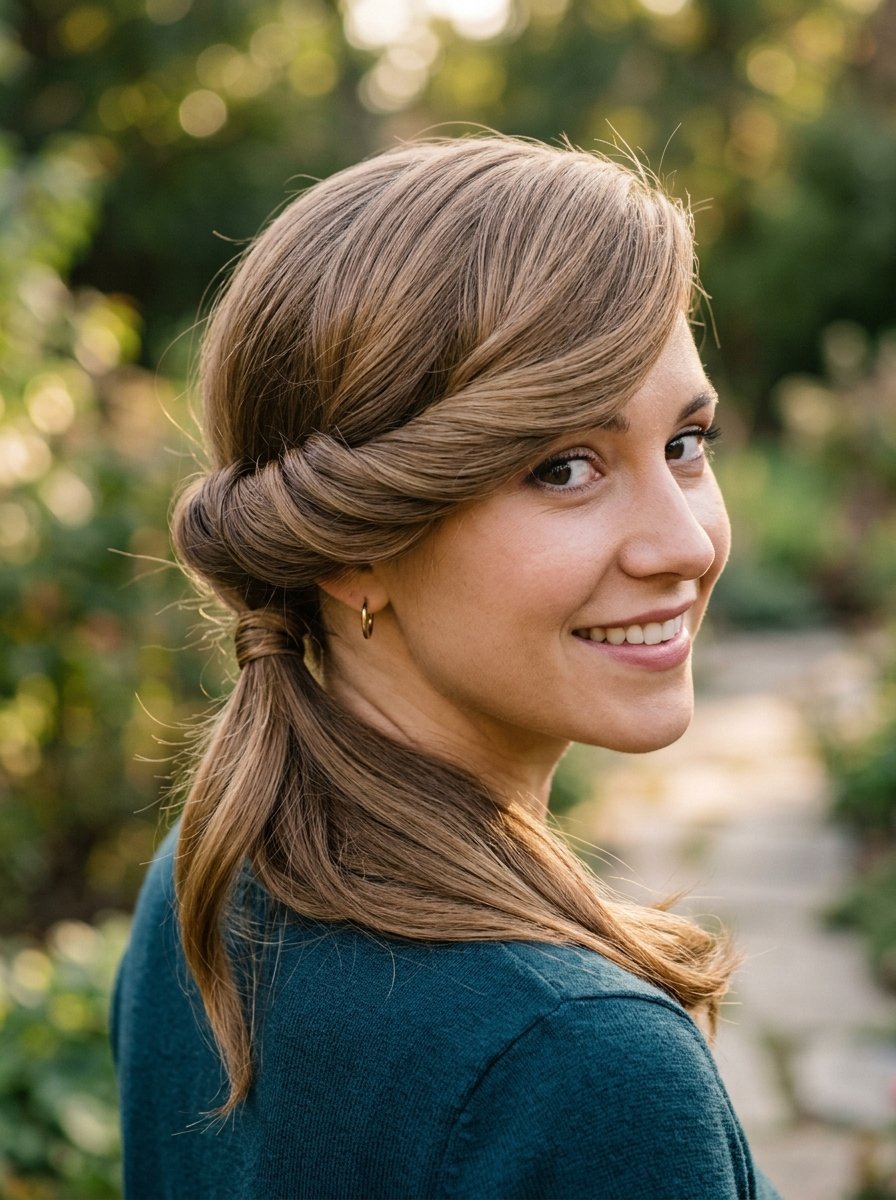
Stop the Squish: 15 Winter Hairstyles for Fine Hair That Defy Static
Cold air outside meets blasting indoor heaters. Your fine hair goes completely flat. Then you pull off your favorite wool scarf, and your strands instantly fly toward the ceiling like a science experiment.
Fine hair has a structural vulnerability. It lacks the natural weight to resist environmental changes. When the air dries out, friction strips electrons from your clothing, transferring them to your hair. Because fine strands are light, this tiny electric charge forces them to repel each other. They lift, separate, and create that chaotic frizz we all dread.
In my experience running a boutique salon, clients try to fix this by drowning their roots in heavy oils. That approach just leaves you with greasy, weighed-down hair by noon. The secret lies in strategic styling and weightless hydration. You need shapes that contain the hair without sacrificing movement. You need silhouettes that look chic even when friction strikes.
The following framework outlines the exact 15 hairstyles that protect fine strands from winter flatness and static cling.
1. The Crown-Braided Low Chignon
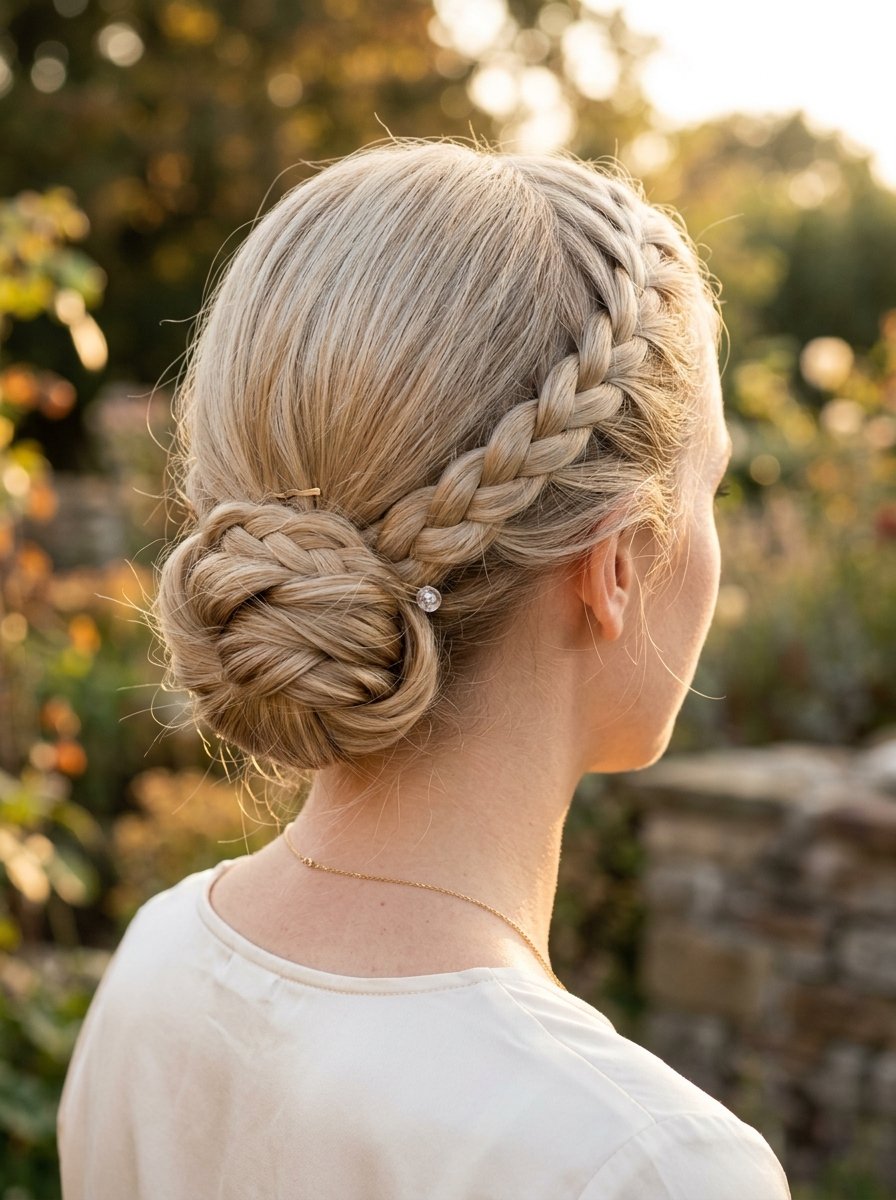
This style keeps your strands locked down at the nape of your neck, removing the loose surface area that interacts with scarf fabrics.
Start by parting your hair down the center. Create two clean three-strand braids starting from just behind your ears, moving down toward your shoulders. Secure the ends with clear elastics. Pull the remaining back section of your hair into a low ponytail. Twist that ponytail into a tight, flat bun and pin it securely with u-pins.
Take the left braid, wrap it over the top of the bun toward the right side, and tuck the tail underneath. Repeat this with the right braid, wrapping it in the opposite direction.
- Mix three drops of lightweight argan oil with a pea-sized amount of water in your palms before braiding. This provides a weightless barrier against dryness.
- It stops friction before it starts by burying the fragile ends of your hair inside the structure of the bun.
2. The Multi-Elastic Bubble Pony
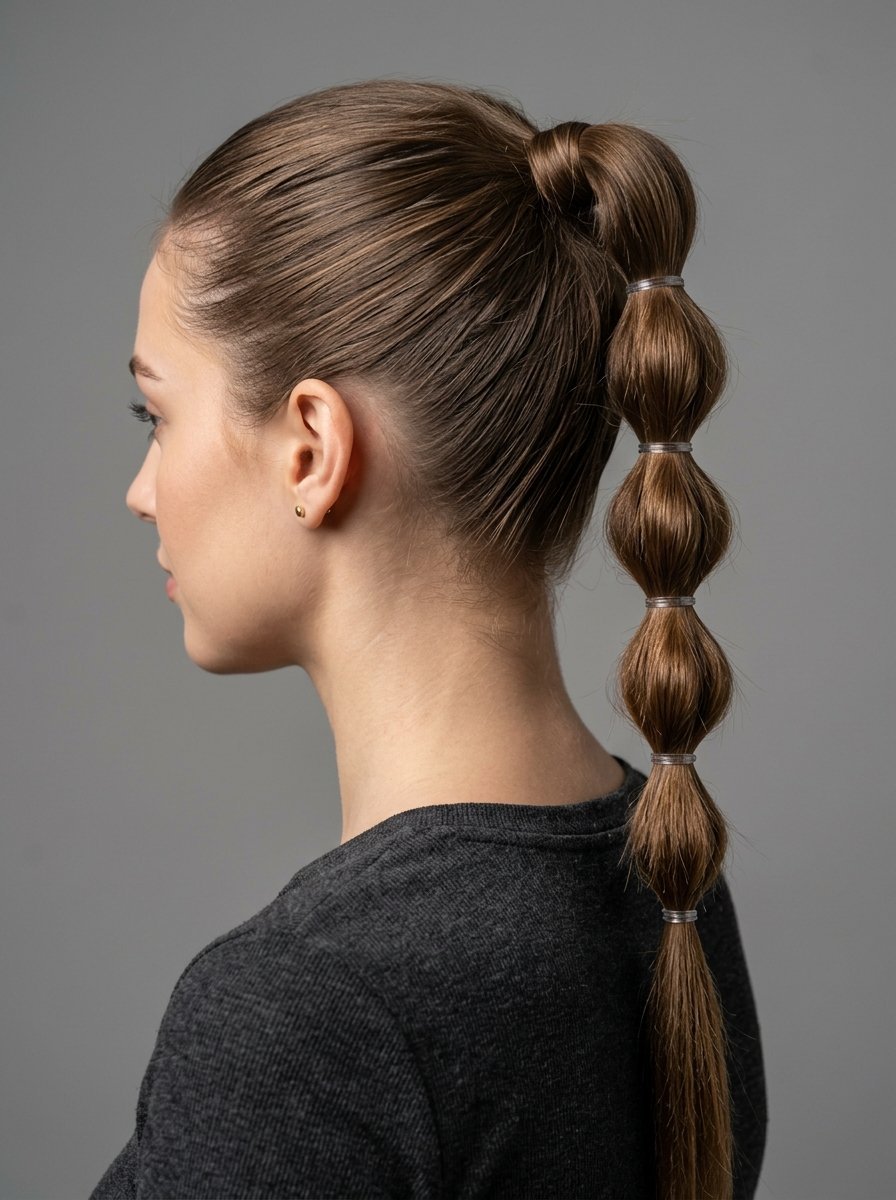
Loose ponytails are a prime target for static because the individual hairs rub against your winter coat collar. The bubble ponytail solves this by segmenting the hair.
Pull your hair into a mid-height ponytail at the back of your head. Use a small nylon elastic that matches your hair color. Move down three inches and place a second elastic. Gently pinch the section between the two bands, pulling the hair outward to create a rounded bubble shape. Repeat this process every three inches until you reach the ends.
- It offers complete containment while creating the illusion of thick, voluminous hair.
- Spray each elastic with a light thermal protectant before applying. The silicone content in the spray prevents the rubber from snapping fine strands during removal.
2. The Tailored French Twist with a Claw Clip
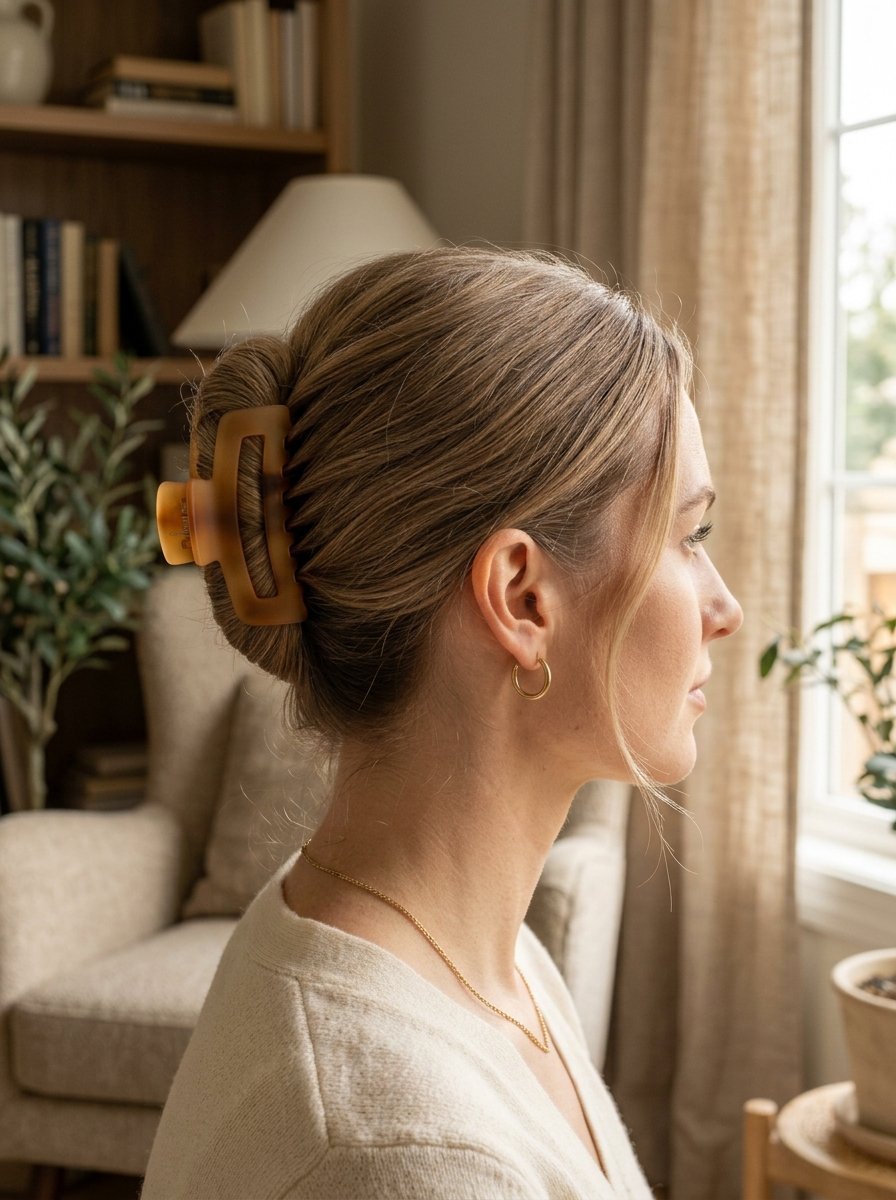
Traditional French twists use metal pins that can slice through delicate hair fibers. Replacing them with a lightweight resin claw clip distributes pressure evenly.
Gather your hair into a low ponytail position but do not secure it. Twist the length of the hair upward against the back of your head, keeping the tension firm but not tight. As you twist, the hair will naturally form a vertical roll. Fold the remaining loose ends down inside the pocket of the roll. Secure the structure by clamping a wide-toothed claw clip over the center of the twist.
- The clip lifts the hair away from your neck, preventing friction from sweaters.
- I have seen this work best when you skip washing your hair for one day. The natural oils provide the necessary grip to hold the twist without slipping.
4. The Half-Up Top Knot with a Velvet Ribbon

Leaving all your fine hair down in winter guarantees a halo of static electricity. Pinning the top section back reduces the surface area exposed to sweaters.
Separate the hair from the temples up to the crown of your head. Secure this top section into a tight ponytail on top of your head. Twist the length of this ponytail around its base until it forms a compact knot. Secure it with two long bobby pins inserted horizontally. Tie a small piece of velvet ribbon around the base of the knot.
- Velvet acts as a natural static dampener, unlike polyester or nylon hair ties.
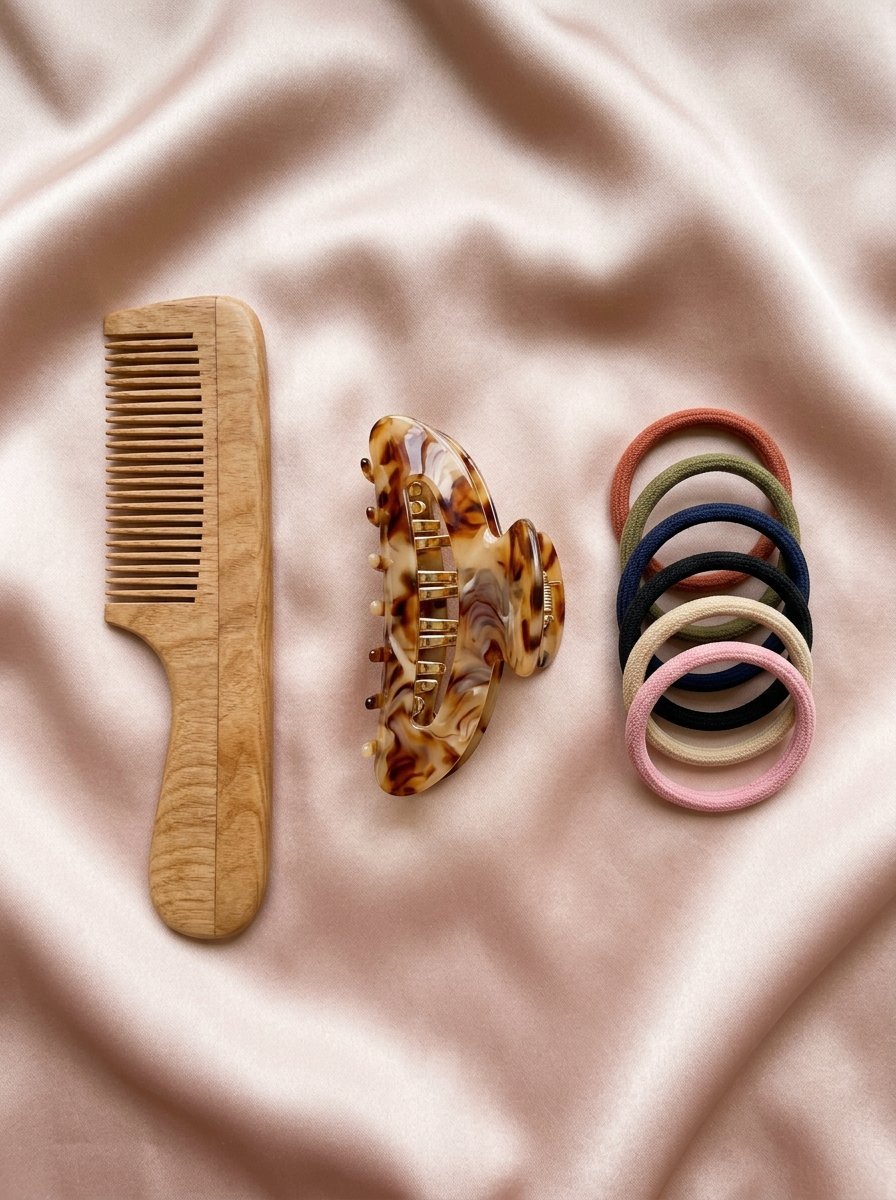
- Keep the bottom section of hair completely smooth by running a wooden comb through it. Wood does not conduct electricity, keeping strands calm.
5. The Inside-Out Dutch Side Braid
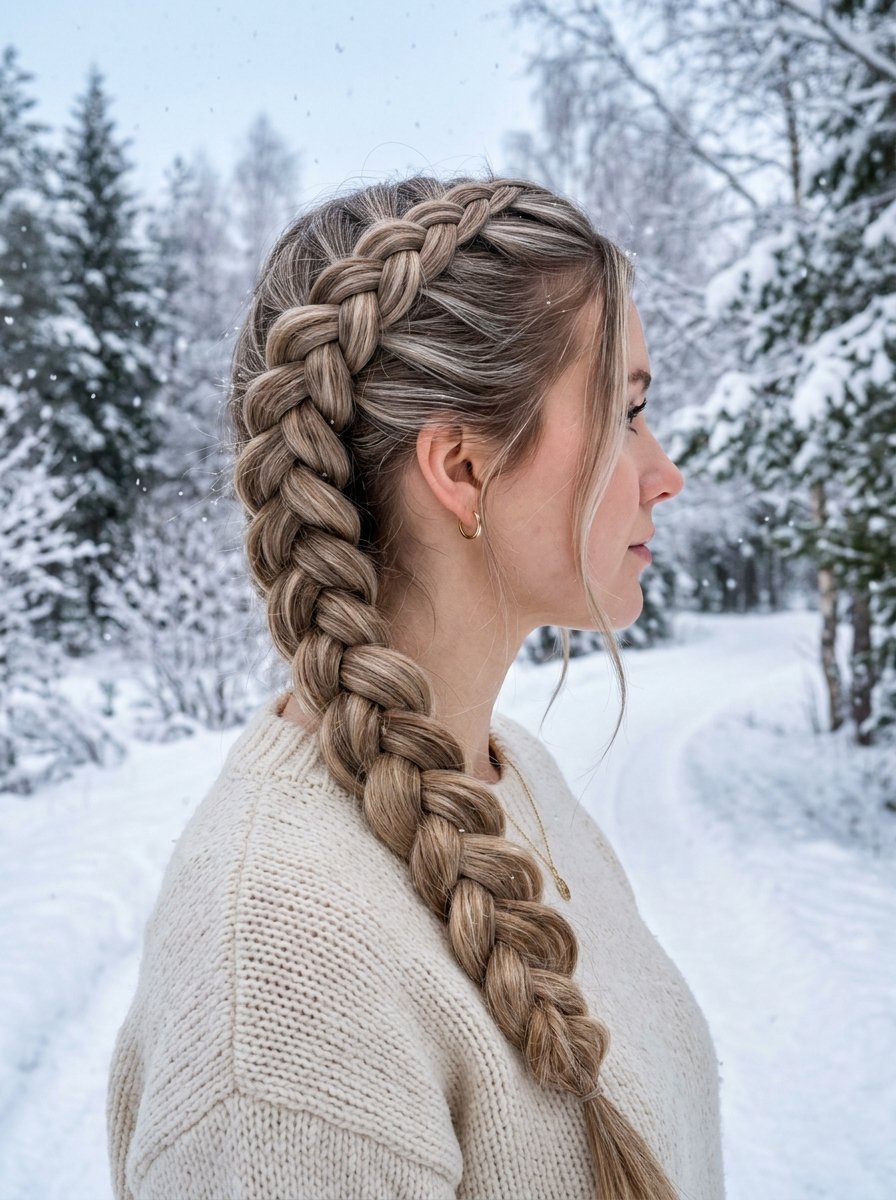
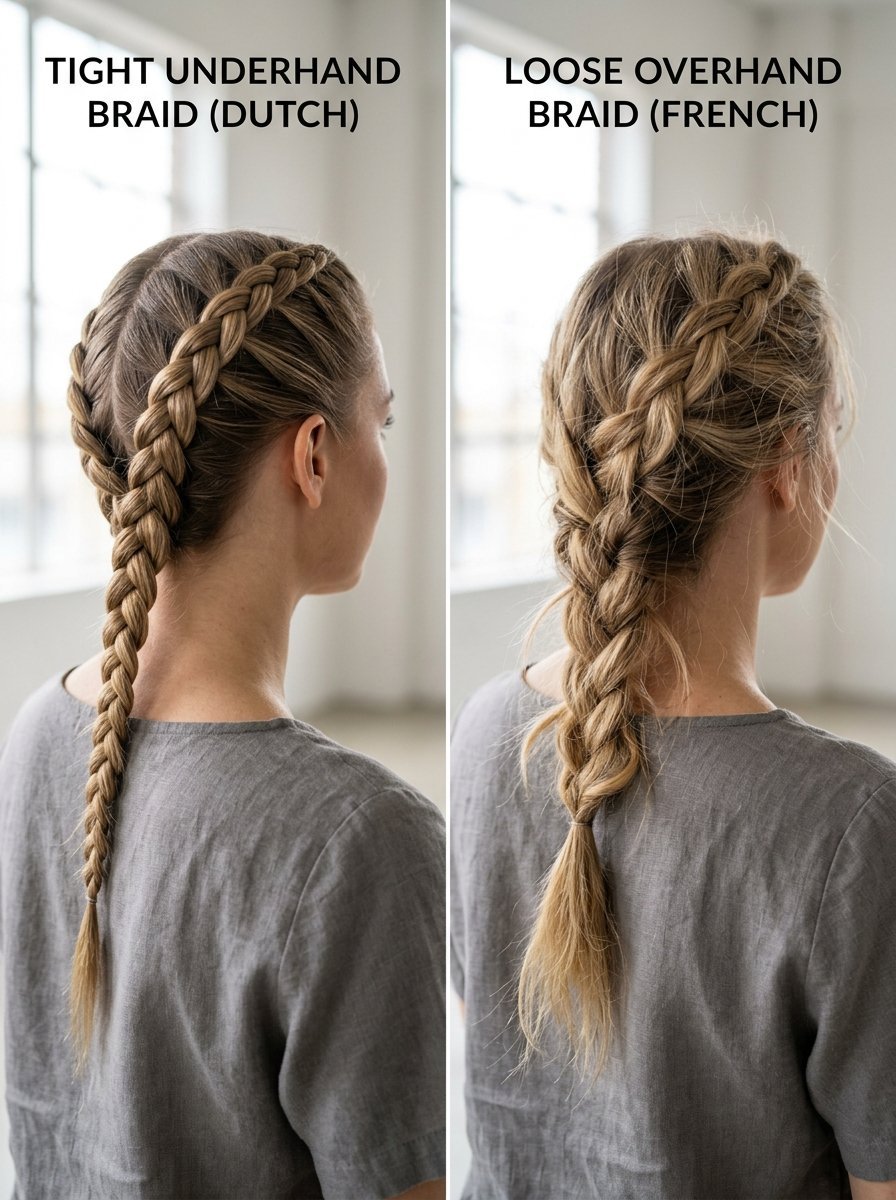
Standard three-strand braids let fine layers slip out, creating a messy texture that traps static electricity. The Dutch method crosses strands underneath, locking them down.
Gather all your hair to one side, starting just behind your left ear. Divide the section into three equal parts. Cross the right strand under the middle strand, then cross the left strand under the new middle strand. As you move down, pick up small pieces of loose hair and integrate them into the braid. Secure the bottom with a silicone band.
- The under-over weaving pattern compresses fine strands, making the braid look twice as thick.
- I always recommend running a silk scarf over the finished braid to smooth down any tiny baby hairs.
6. The Triple-Stacked Tucked Ponytail
This approach breaks your hair into three controlled zones, stopping the friction that builds up when fine hair swings freely against heavy winter coats.
Divide your hair horizontally into three equal sections: top, middle, and bottom. Secure the top section into a ponytail at the crown. Take the tail of that first ponytail and combine it with the middle section, securing them together with an elastic. Finally, take that combined tail and merge it into the bottom section at the nape of your neck. Tuck the final tail under the bottom elastic to hide the ends.
- It distributes the weight of your hair evenly across your scalp, which naturally boosts root volume.
- Use seamless nylon bands instead of rubber ones. Nylon reduces the physical stress on fine hair cuticles during cold weather.
7. The Slicked-Back Ballerina Bun with Leave-In Conditioner
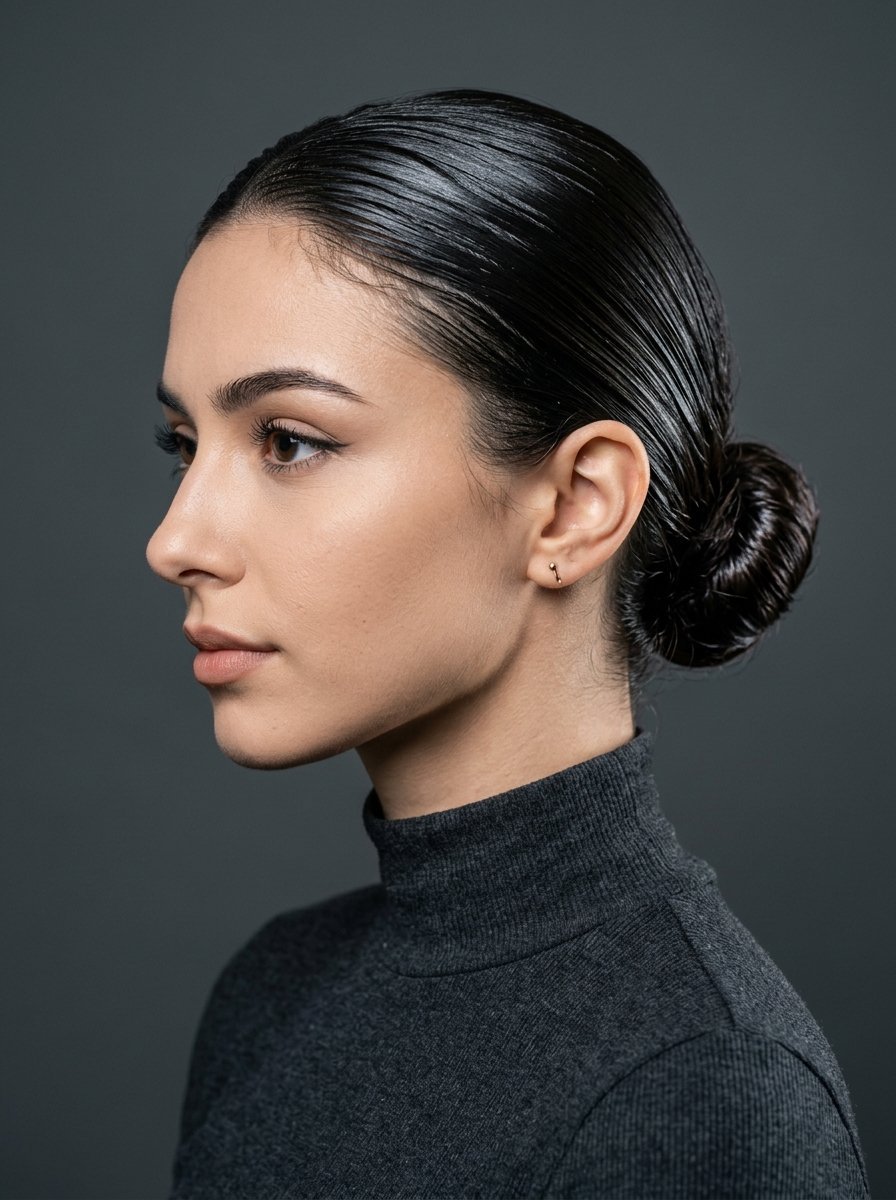
This style uses styling products as a functional shield against environmental dryness, keeping fine hair perfectly managed.
Apply a nickel-sized amount of water-based leave-in conditioner to damp hair, focusing on the roots and mid-lengths. Brush your hair back into a clean ponytail at the exact center of the back of your head. Twist the ponytail tightly until it coils around itself. Secure the outer edges with flat u-pins, ensuring no loose ends escape.
- The wet-look styling keeps every strand locked in place, making static generation physically impossible.
- Avoid alcohol-heavy hairsprays for this look. Alcohol strips moisture, which accelerates static electricity once the spray dries.
8. The Twisted Halo Headband Roll
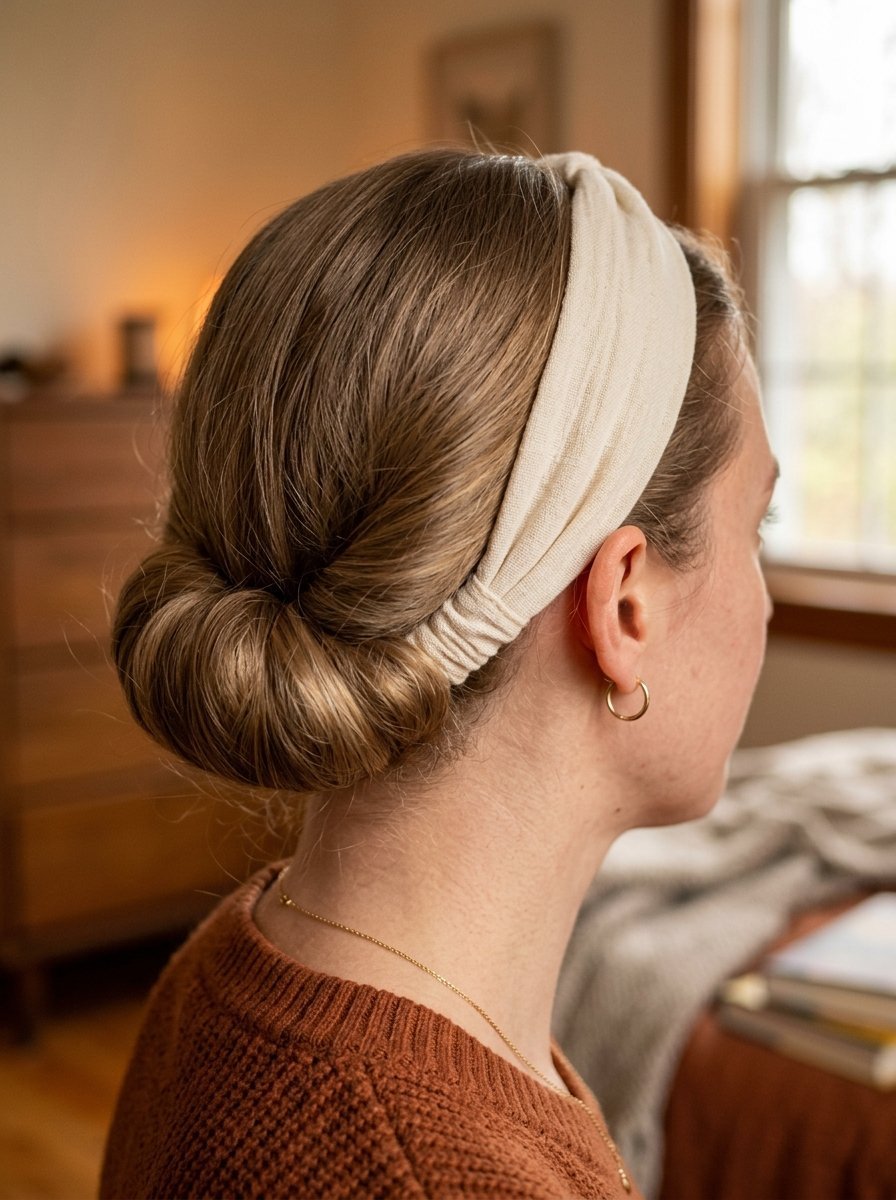
This classic look utilizes an elastic headband to support fine hair, removing the need for tight elastics that cause winter breakage.
Place a soft, elastic fabric headband completely over the top of your hair, sitting just above your ears. Start at the front right side, taking a two-inch section of hair and looping it over and under the headband. Move backward, adding more hair to the section with each loop. Repeat on the left side until all hair is wrapped around the back of the band.
- It protects your ends by rolling them completely inside the fabric loop.
- Pick a headband made of cotton or silk. Synthetic polyesters generate static electricity when rubbed against fine hair.
9. The Faux-Hawk Segmented Updo
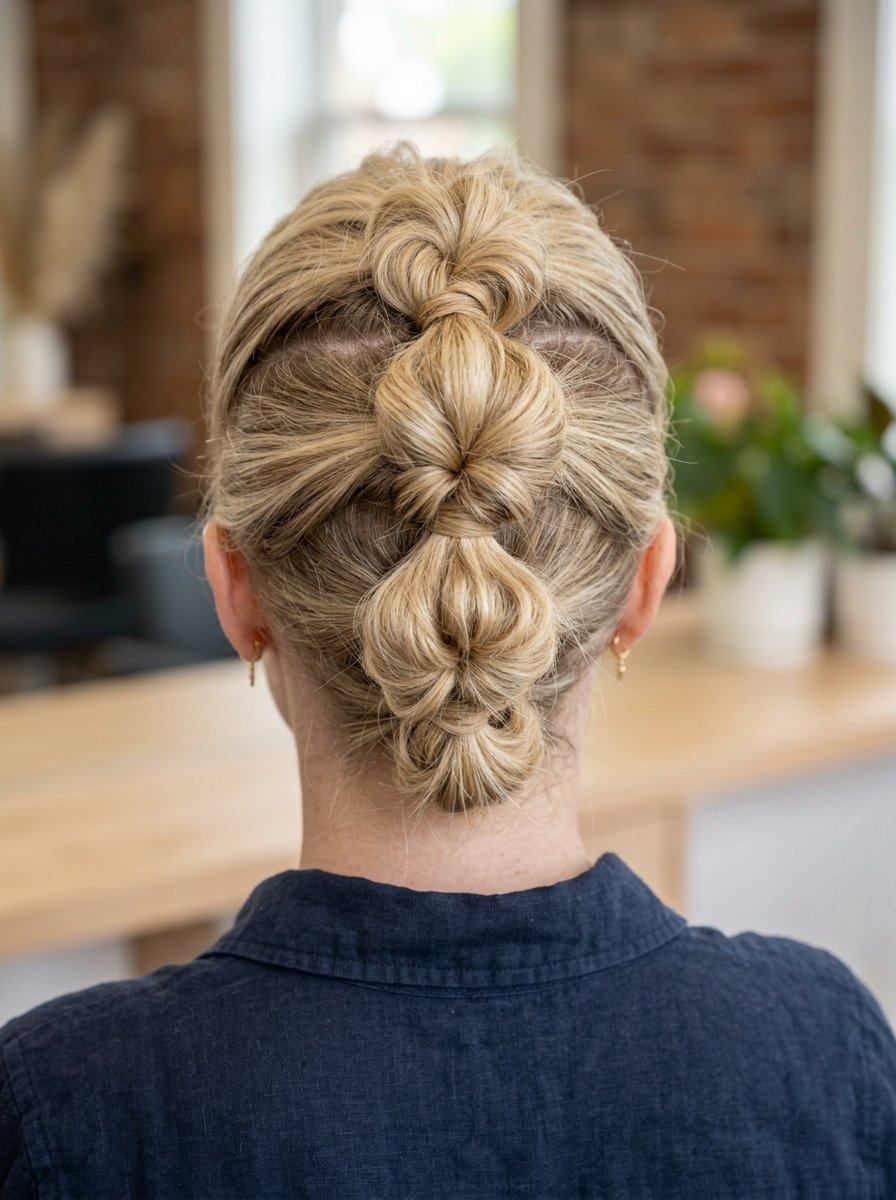
Fine hair often looks sparse in standard updos. This sectioned approach creates height and volume while keeping strands secure.
Divide your hair vertically into four small ponytails running down the center of your head, from front to back. Twist each individual ponytail into a small, messy knot. Secure each knot to your scalp using two crossed bobby pins. Gently tug the hair between the knots upward to create a continuous, textured ridge.
- The multiple anchor points prevent the style from sagging, even in high winter winds.
- Mist the finished look with a lightweight static-control spray designed for fine textures.
10. The Asymmetrical Side Roll

This style shifts your hair away from the high-friction zone at the back of your coat collar, placing it safely on one shoulder.
Part your hair deeply on the right side. Gather all your hair to the left side of your neck. Starting from the right ear, roll the hair inward toward the scalp, creating a continuous horizontal roll across the nape of your neck. Secure the roll every two inches with bobby pins pushed upward into the base of the hair. Let the remaining length hang smoothly over your left shoulder.
- Shifting the weight to one side reduces the rubbing action that causes flyaways.
- Keep a wooden pocket comb handy to touch up the smooth side throughout the day without creating static.
11. The Double French Braid Low Pigtails
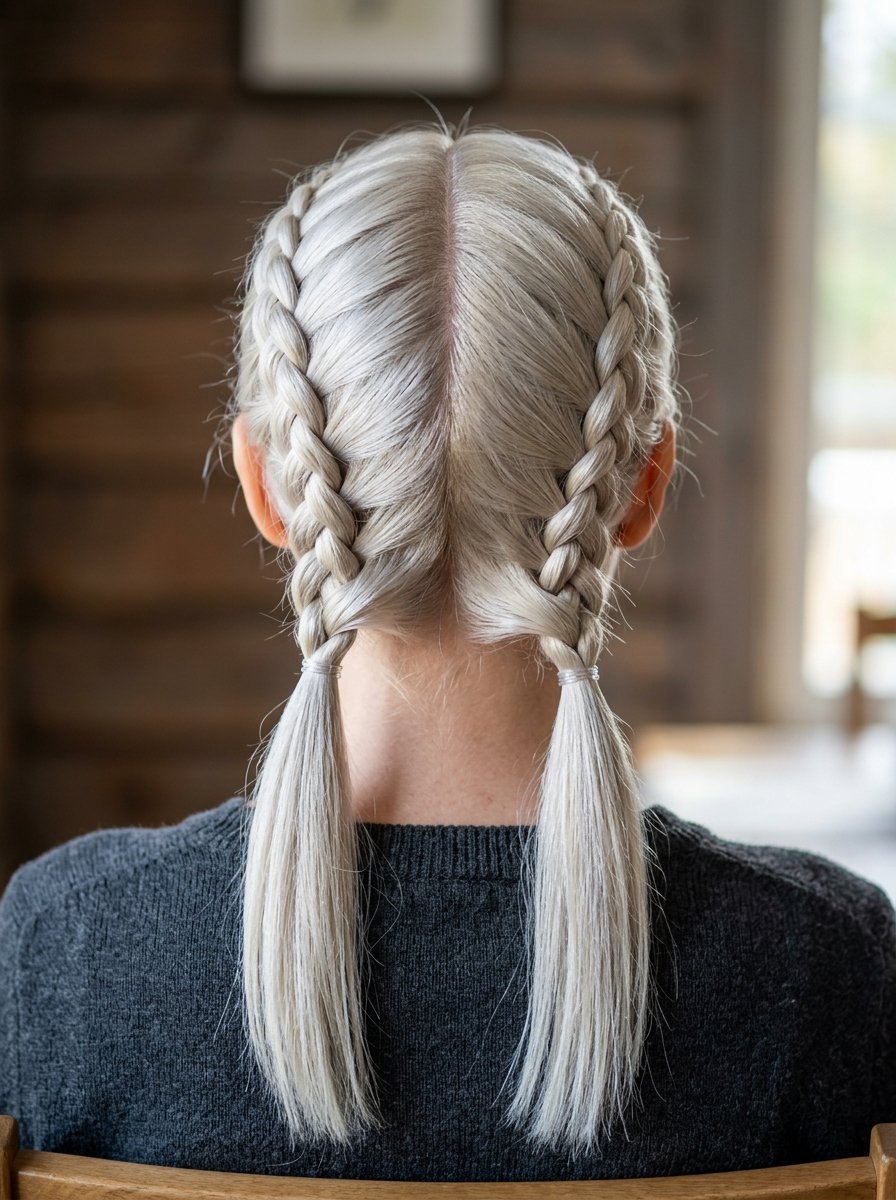
Pigtails are often dismissed as youthful, but tight French braids kept close to the nape of the neck look modern and functional.
Part your hair cleanly down the center from your forehead to the base of your neck. Secure the left side with a clip. On the right side, start a traditional French braid at the hairline, keeping the tension tight. Braid all the way down to the nape, then finish with a regular three-strand braid. Repeat on the left side.
- It distributes hair evenly, preventing flat spots from developing on the back of your head.
- Rub a drop of jojoba oil over your fingertips before starting. Jojoba mimics natural scalp oils, providing weightless protection.
12. The Wrapped Gibson Tuck
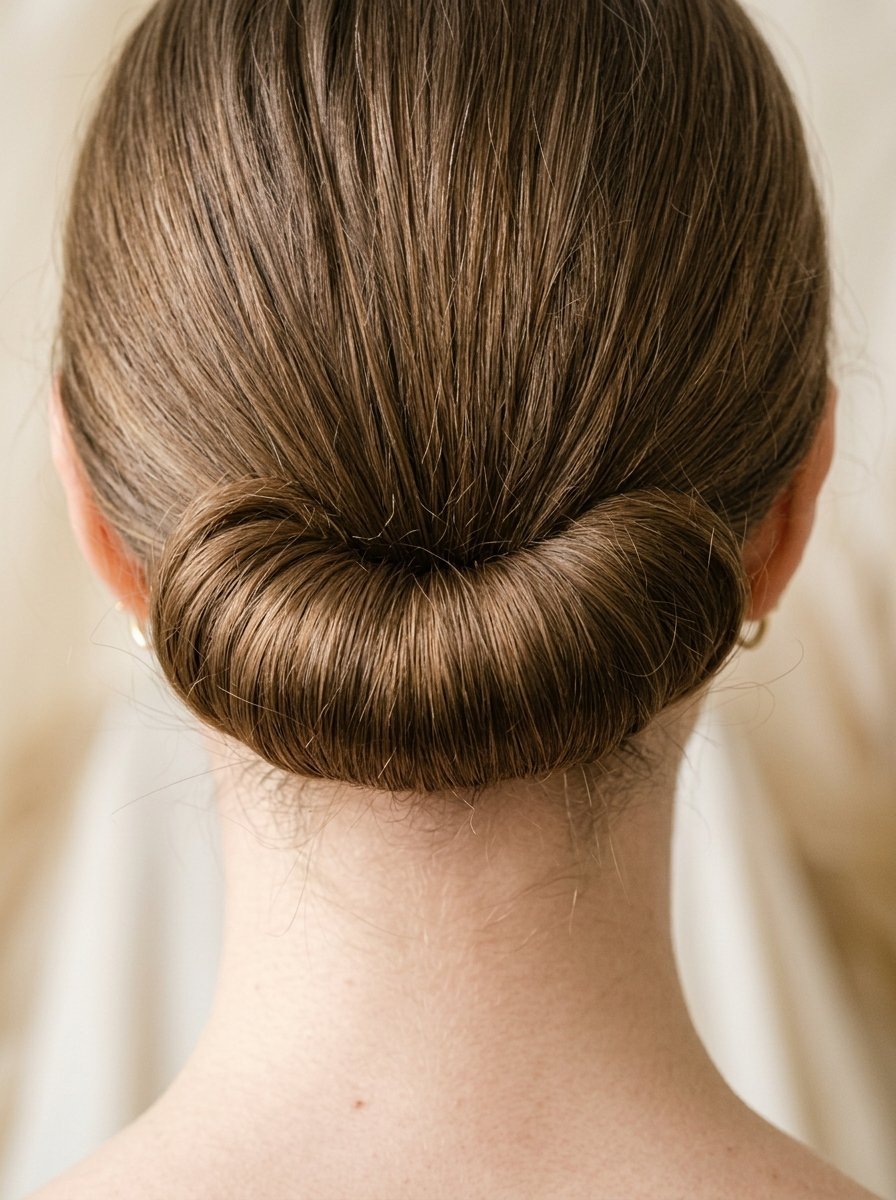
This historic style is highly effective for fine hair because it uses a hidden pocket to hold and protect delicate strands.
Pull your hair into a loose low ponytail at the nape of your neck. Slide the elastic down two inches. Create an opening in the hair just above the elastic, then loop the ponytail up and through that opening. Roll the remaining length of the ponytail upward, tucking it completely into the pocket you created. Secure the top flap with horizontal bobby pins.
- It encloses your hair ends entirely, preventing the split ends caused by cold, dry air.
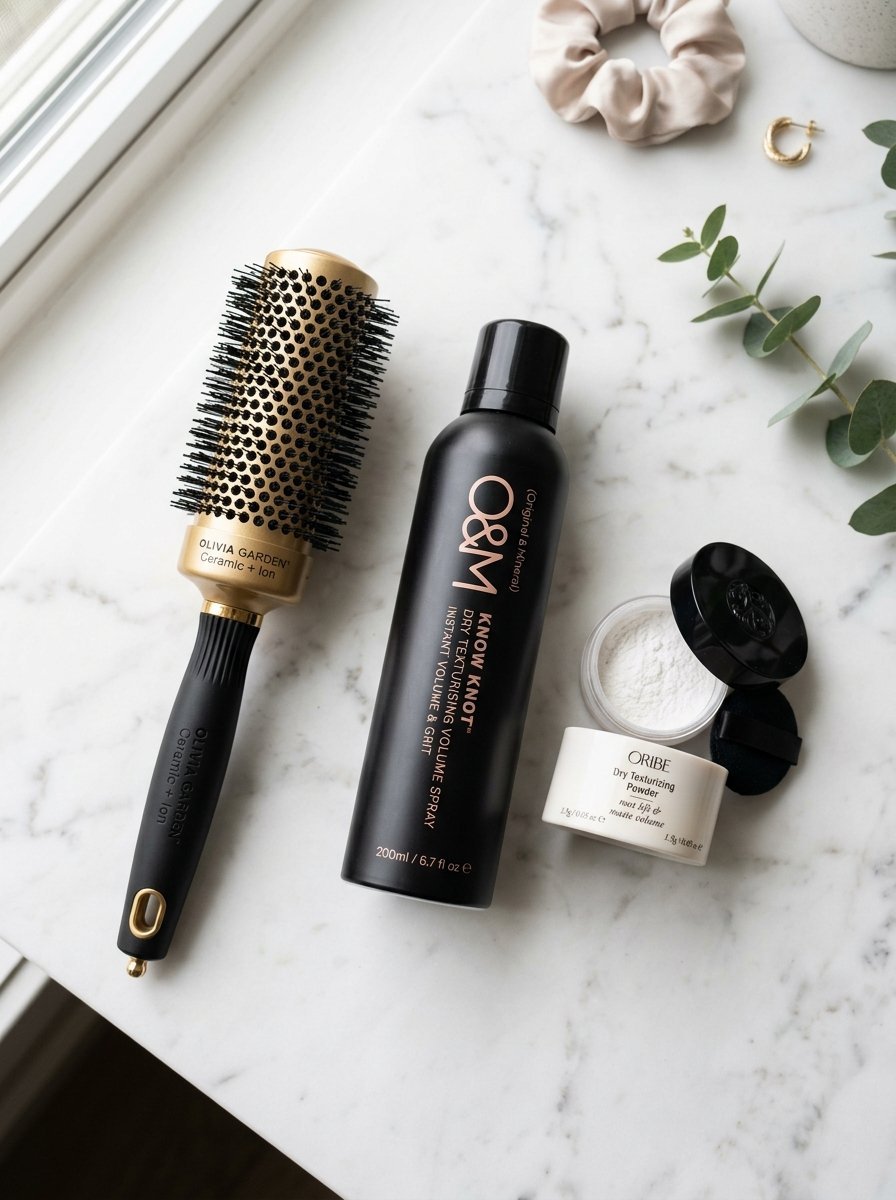
- I have seen this work beautifully on fine hair that has been treated with a dry volume powder at the roots.
13. The Criss-Cross Half-Up Barrette
If you prefer keeping your hair down, this minimal style controls the front sections that usually fly around your face.
Take a one-inch section of hair from above your right ear and pull it straight back across the center of your head. Secure it temporarily. Take an identical section from above your left ear, pull it back, and cross it directly over the first section. Secure both pieces together at the center using an architectural metal barrette.
- It keeps the hair away from your mouth and face, preventing product transfer from lip balms or moisturizers.
- Wipe the inside of the barrette with a dryer sheet before using it to neutralize existing static charges on the metal.
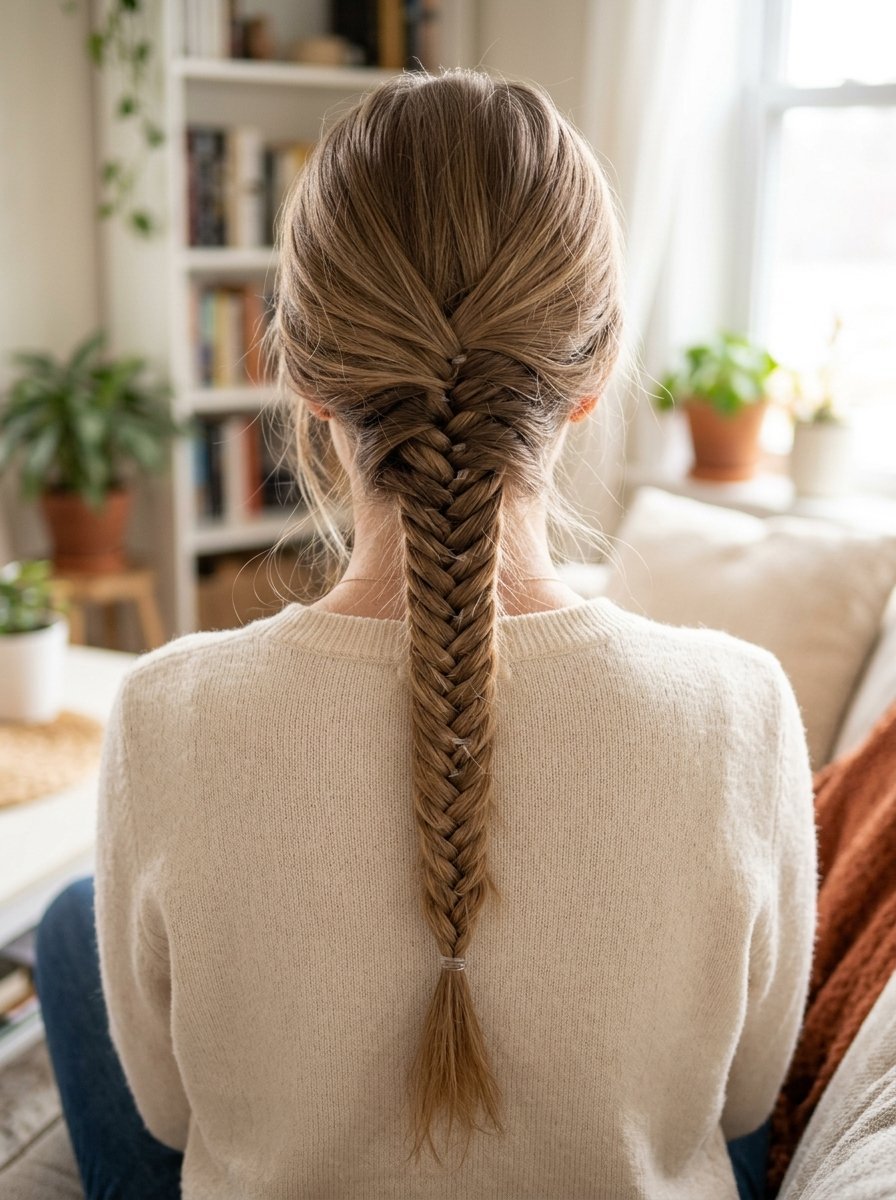
14. The Loose Fishtail with Controlled Elastic Anchors
A classic fishtail braid can fall apart on fine hair, but adding hidden elastics creates a stable structure that resists winter wind.
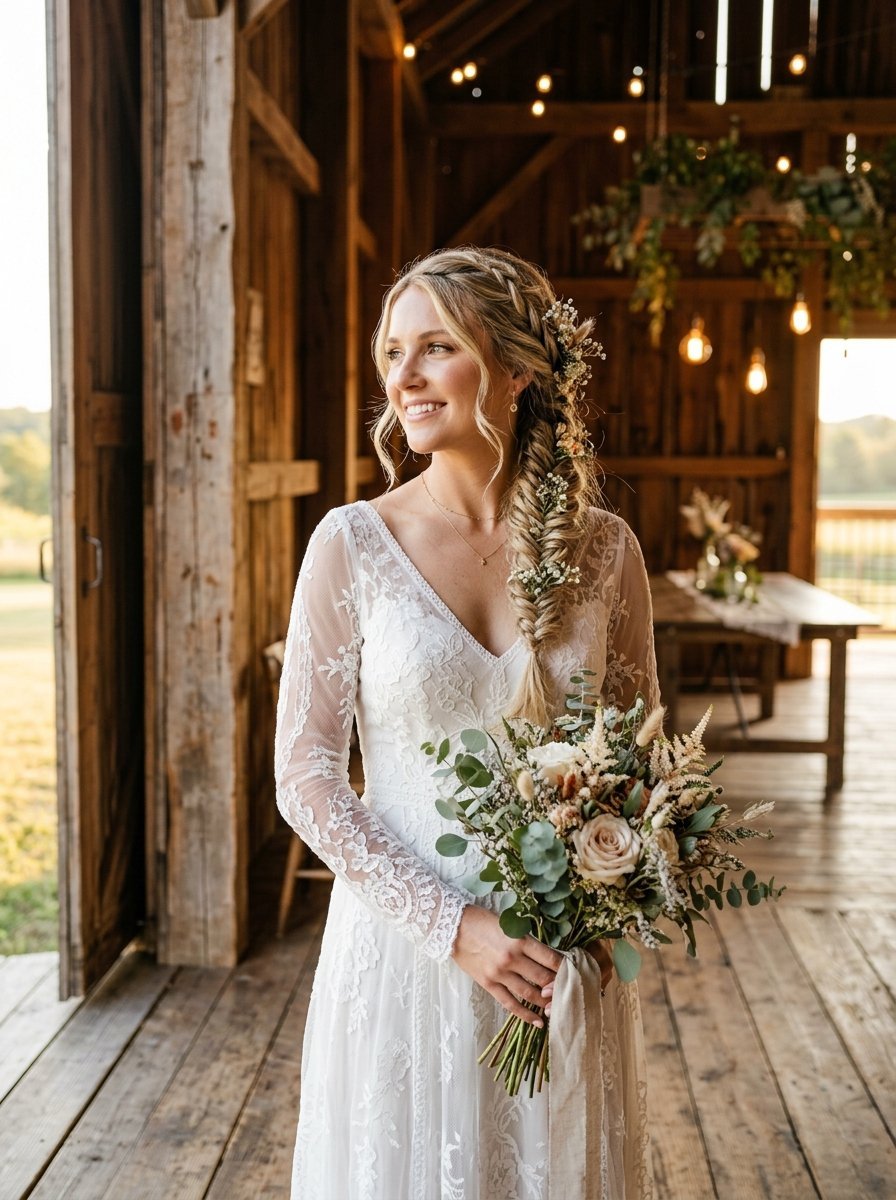
Place a clear silicone elastic every four inches down your hair length to create a stable base. Work between these elastics, dividing the hair into two sections and crossing small outer pieces over to the opposite side to build the fishtail pattern. The hidden elastics keep the fine strands from slipping out of the weave.
- It provides the textured look of a loose braid without the structural weakness that leads to friction frizz.
- Avoid pulling the braid too wide, as fine hair needs density to resist the static charge of cold air.
15. The Volumizing Topside Top Knot
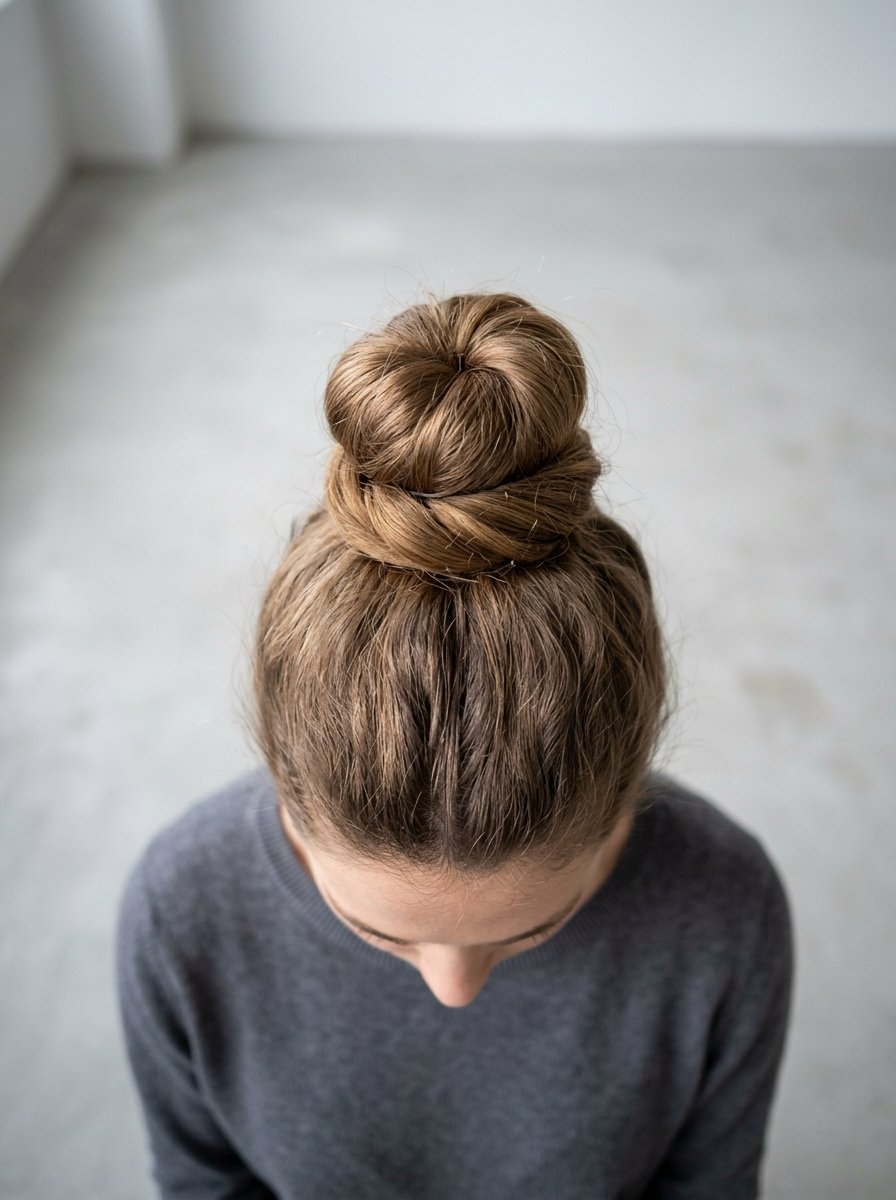
Placing a bun directly on top of your head keeps it completely away from winter clothing layers, hats, and scarves.
Flip your head upside down and brush all your hair to the highest point of your crown. Secure it into a tight ponytail. Flip your head back up, twist the ponytail loosely, and wrap it around the base. Secure the edges with long u-pins, keeping the center of the bun relatively loose to preserve the appearance of volume.
- It lifts your entire silhouette, ensuring zero contact with high-collar winter coats.
- Wrap your head in a silk scarf while sleeping to preserve the root lift for the next morning.
Static-Defying Winter Haircare Comparison
| Hairstyle | Primary Protection Mechanism | Ideal Fine Hair Subtype | Best Tool Partner |
| Crown-Braided Low Chignon | Encloses hair ends inside the bun structure | Cuticle-damaged or color-treated | Long metal u-pins |
| Multi-Elastic Bubble Pony | Divides length into small, low-friction sections | Ultra-fine, slippery hair | Seamless nylon bands |
| Tailored French Twist | Lifts hair off the high-friction neck zone | Low-density, straight hair | Resin wide-tooth claw clip |
| Half-Up Top Knot | Reduces loose hair surface area by half | Medium-length fine hair | Soft velvet ribbon |
| Inside-Out Dutch Side Braid | Compresses layers into a tight side-slung weave | Layered or uneven fine hair | Wooden smoothing comb |
Frequently Asked Questions
Why does my fine hair get so much more static in winter compared to thick hair?
Fine hair lacks structural density. Thick hair has a heavy cortex that weighs it down, helping it resist the tiny electrical forces created by friction. Fine hair is highly responsive to static charges because individual strands are incredibly light. Dry winter air lacks humidity, meaning moisture cannot disperse these electric charges naturally. As a result, fine hair lifts and separates instantly when exposed to the friction of hats or winter jackets.
Can I use regular laundry dryer sheets on my fine hair to stop static flyaways?
You can use them, but you must be careful. Many commercial dryer sheets contain heavy tallow-based fats designed to soften fabrics. These heavy compounds can easily coat fine hair, leaving it looking greasy and flat within hours. Instead, wipe your hair brushes and combs with a dryer sheet, or look for specialized hair sheets that use weightless cosmetic-grade silicones rather than heavy fabric softeners.
How often should I wash fine hair in winter to prevent static without losing volume?
In my experience, washing fine hair three times a week is optimal during cold weather. Washing every day strips away the natural sebum your scalp produces to protect hair from drying out. When your hair lacks these natural oils, it becomes highly susceptible to static electricity. Use a weightless, sulfate-free volumizing shampoo on your roots, and apply a rich, silicone-free conditioner strictly from the mid-lengths to the ends to maintain bounce.
Will wearing a silk-lined winter hat completely eliminate my fine hair static issues?
A silk-lined hat reduces friction significantly compared to wool or acrylic alternatives, but it will not completely eliminate static if your hair is already dry. Silk allows the hair cuticles to slide smoothly without generating massive electrical charges. However, the dry air inside heated buildings can still trigger static later in the day. For best results, combine your silk-lined hat with one of the contained hairstyles listed above, like the Crown-Braided Low Chignon.
What ingredients should I avoid in winter styling products if I have fine hair?
Avoid products with high concentrations of isopropyl alcohol, denatured alcohol, or ethanol. These alcohols evaporate quickly to provide a fast dry time, but they strip vital moisture from fine hair fibers. This structural dryness makes your hair far more vulnerable to static electricity. Look for water-based formulas that feature lightweight humectants, such as glycerin or panthenol, which lock in moisture without weighing down your roots.
How do I fix a sudden explosion of static hair when I am out in public?
If static strikes while you are out, do not look for heavy hand creams, as they will instantly flatten your fine hair. Instead, find a restroom, run a tiny amount of plain water over your hands, and hold them an inch away from your hair without touching it. The moisture in the air between your hands will help ground the static charge. Alternatively, carrying a small wooden comb in your bag allows you to smooth your strands safely without generating new electricity.

Sarah Mitchell — Founder & Editor-in-Chief
Sarah Mitchell is the founder and editorial voice behind Hair Level Up. A licensed cosmetologist with more than 15 years of experience, she has styled A-list celebrities for editorial shoots and red carpets, with work featured in Vogue, Elle, and Harper’s Bazaar. Early in her career, she trained under the legendary hairstylist Oribe in New York, an apprenticeship that still shapes her editorial eye today. Sarah founded Hair Level Up in 2020 after one bad haircut convinced her that women deserved a destination that felt like a magazine, taught like a stylist, and inspired like an art gallery. She oversees every story from concept to publication, guided by a simple belief: a good story teaches you something, but a great one makes you feel beautiful while it does.