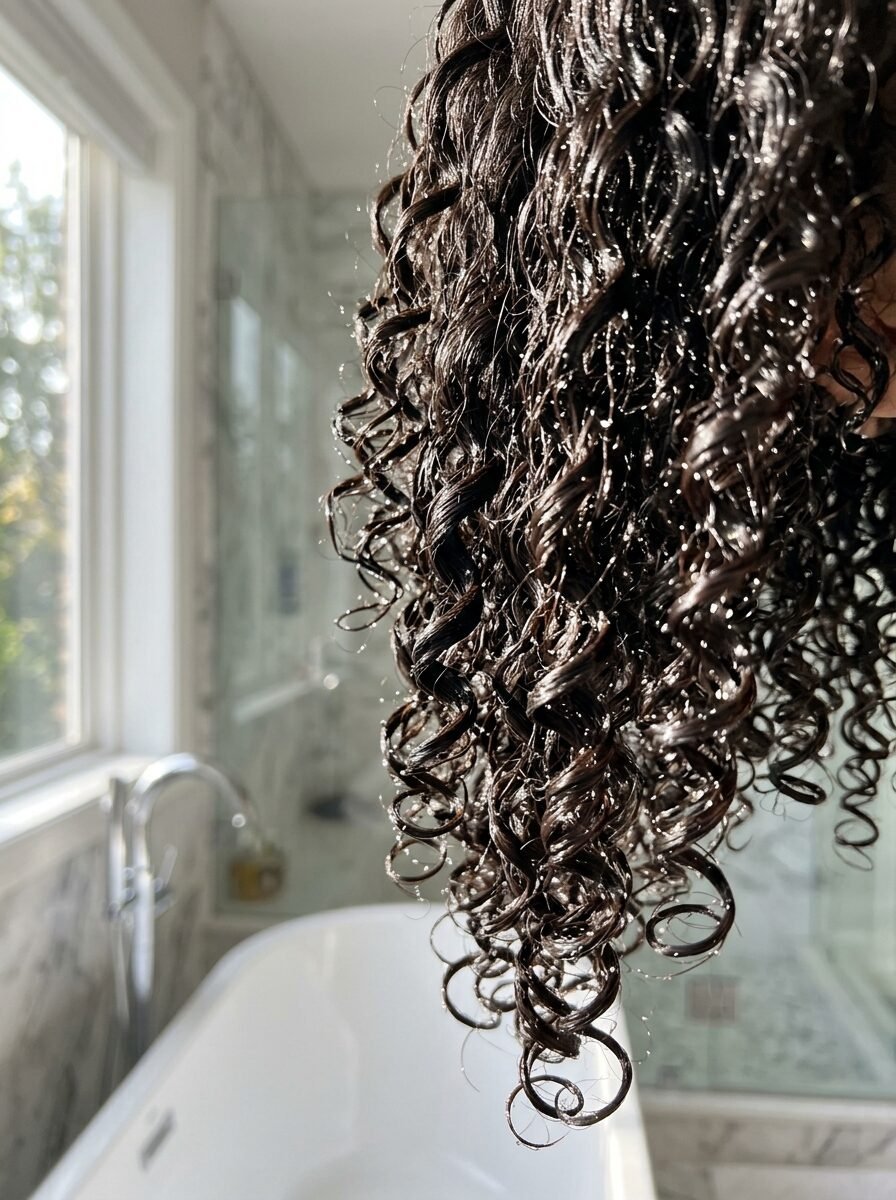
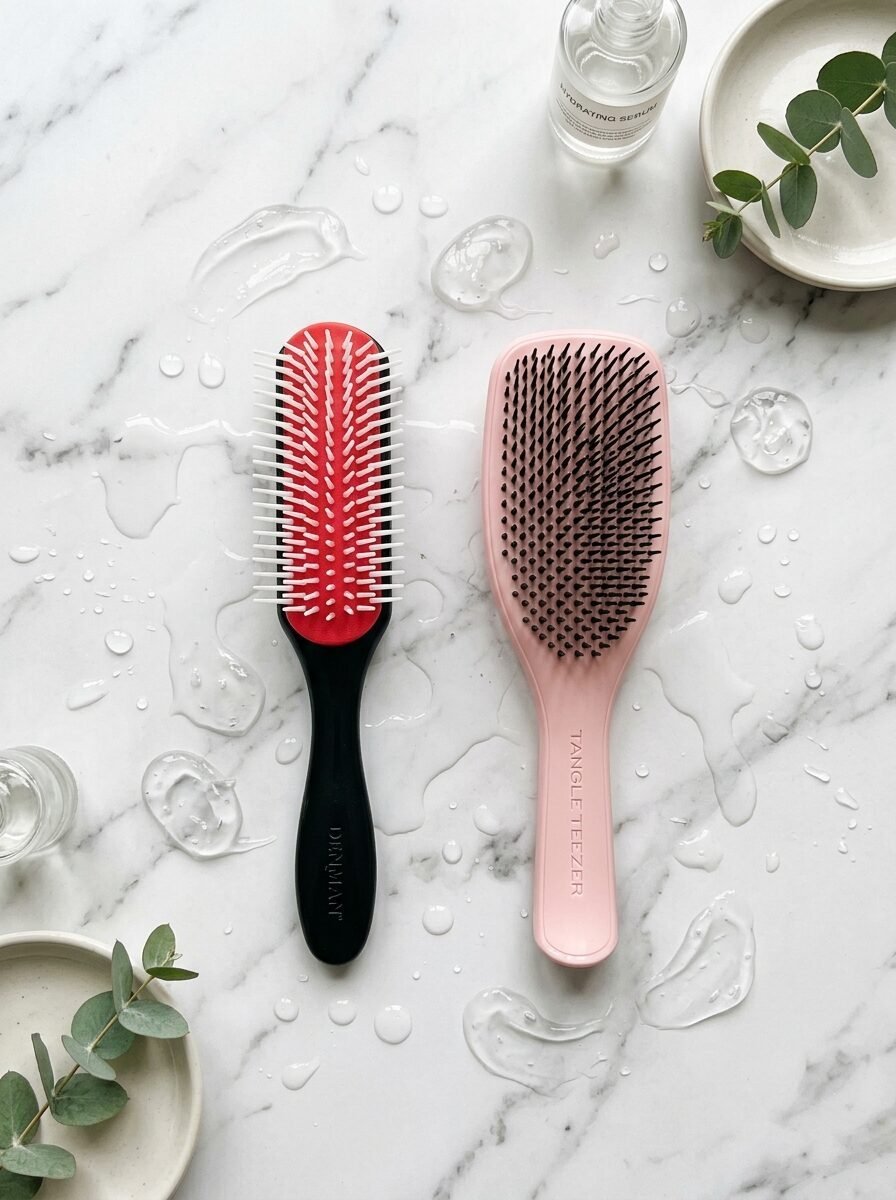
Denman Brush vs Tangle Teezer: Which Works Better for Curly Hair
Standing in the hair care aisle feels like a battle. You see the classic Denman D3 sitting next to the bright Tangle Teezer Wet Detangler. Your curls are currently a knotted mess from a long week. You wonder which plastic tool will actually save your wash day without snapping your strands. I remember my first time trying to style my curls with a standard drugstore paddle brush. It was a disaster that ended in frizz and tears. Choosing between these two icons is not just about a brand name. It is about understanding how your specific curl pattern reacts to tension and teeth.
You want defined curls that last for days without the painful tugging of a traditional comb. This guide breaks down the functional differences between the Denman Brush and the Tangle Teezer for every curly hair type. You will see why the Denman is a styling powerhouse for definition while the Tangle Teezer wins the prize for safe detangling. I share my personal results using both tools on high porosity hair and fine waves. We look at the exact costs, row removal techniques, and why your current brush might be causing breakage. By the end, you will know exactly which one to pack for your next trip.
Why Detangling Is the Most Important Part of Your Routine
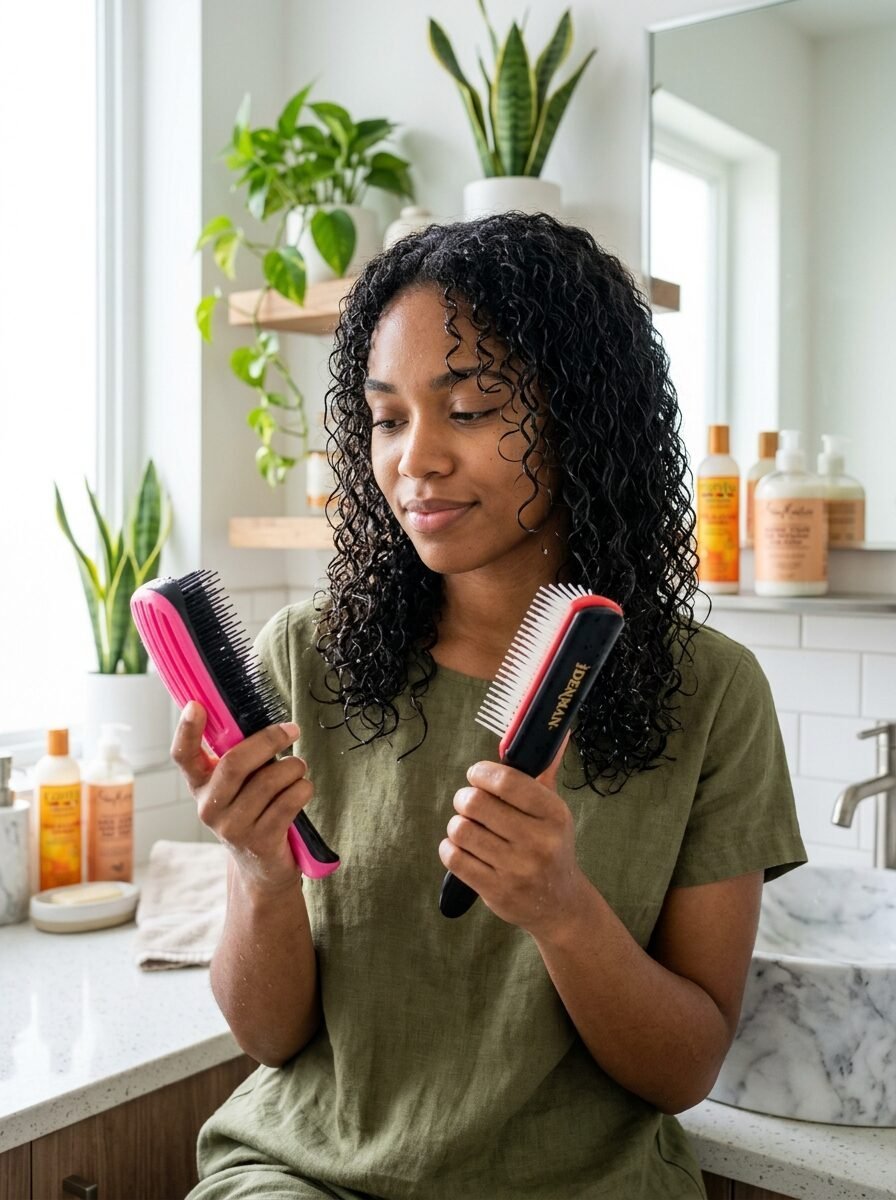
I spent years thinking my hair just grew slowly. In reality, I was breaking it off every single morning with the wrong brush. Detangling is the foundation of curl health. If you rip through knots, you destroy the cuticle. The Tangle Teezer uses patented two-tier teeth technology. The long teeth remove knots while the short teeth smooth the hair. When I switched to the Tangle Teezer Wet Detangler, my shedding decreased by half within three weeks. It flexes when it hits a snag instead of pulling the hair from the root.
Many people try to detangle on dry hair. This is a massive mistake for anyone with a curl pattern. You must work on soaking wet hair saturated with a slippery conditioner like Maui Moisture or Shea Moisture. I noticed that the Tangle Teezer glides through 4C coils much easier than a wide-tooth comb. It separates the hair into smaller sections without the harsh tension that leads to split ends.
1. The Denman Brush for Maximum Definition
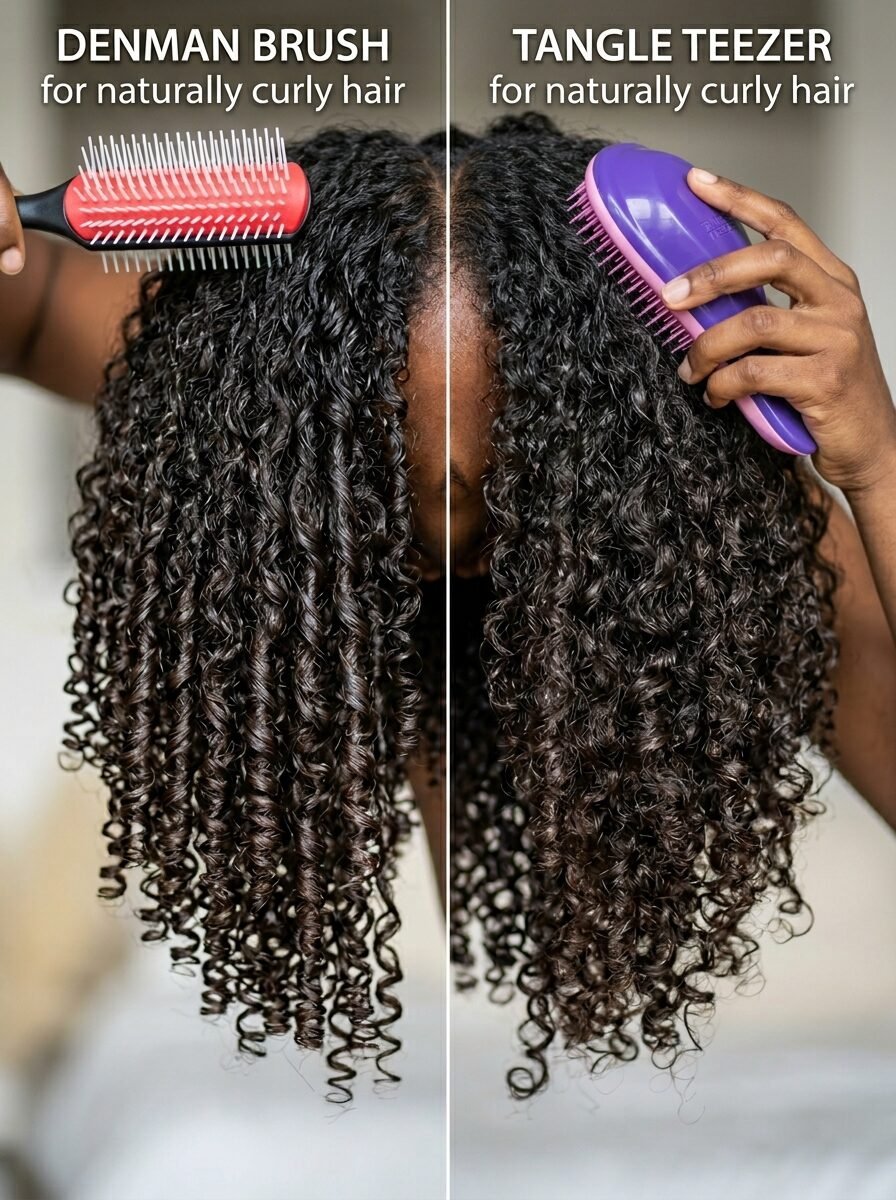
The Denman D3 or D4 is not really a detangling brush. It is a styling tool. Think of it as a way to “ribbon” your hair. When you pull the brush through a section of wet hair, the rubber base creates tension. This tension forces the hair to curl around itself. In my experience, this creates the kind of ringlets you see in professional hair commercials. I used the Denman D3 on a client with 3B curls last month. The difference in her clumping was immediate.
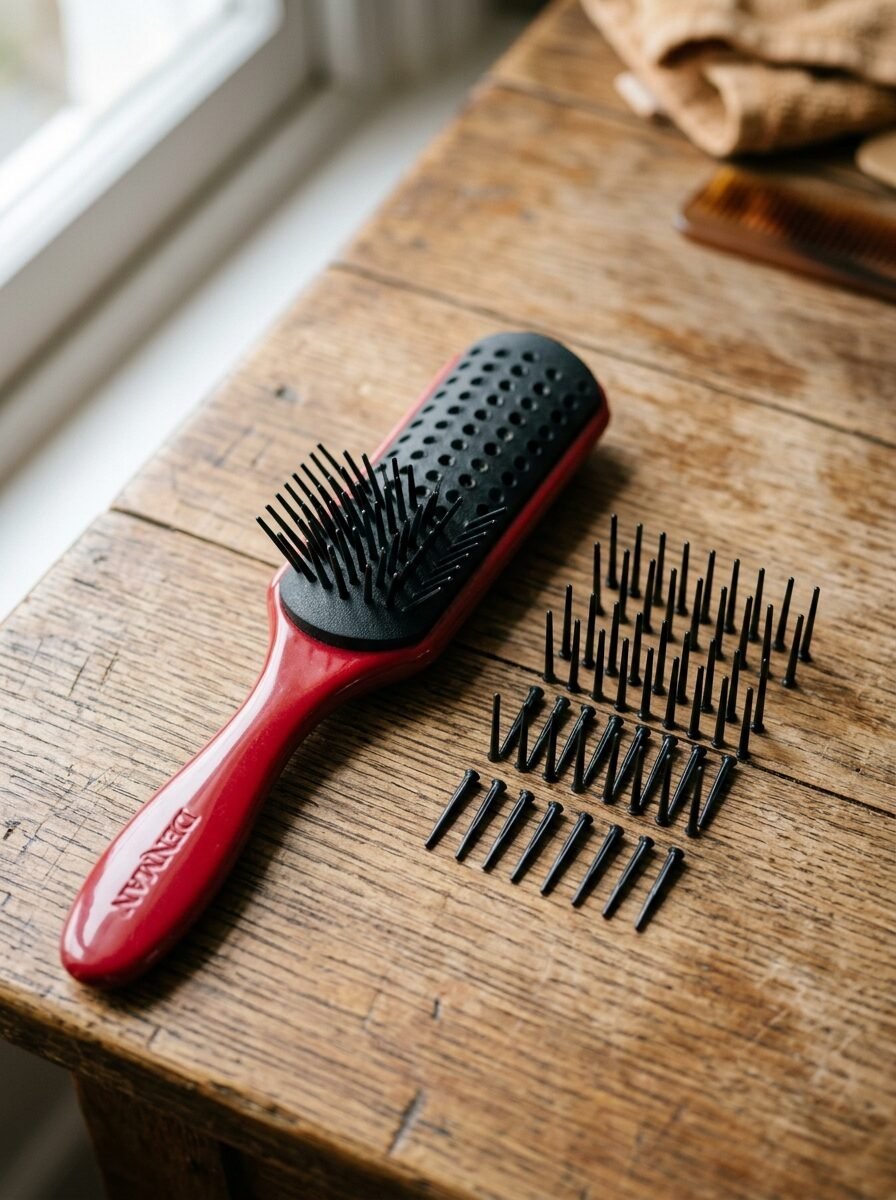
You can modify this brush to fit your hair density. This is a secret many beginners miss. You can slide the red rubber pad out and remove every other row of pins. Removing rows reduces tension. If you have thick hair, fewer rows help the brush move through without getting stuck. If you have fine hair, keep all the rows in to get the most grip. This customization makes the Denman a versatile choice for people who want to control their curl size.
2. Tangle Teezer for Pain-Free Knot Removal
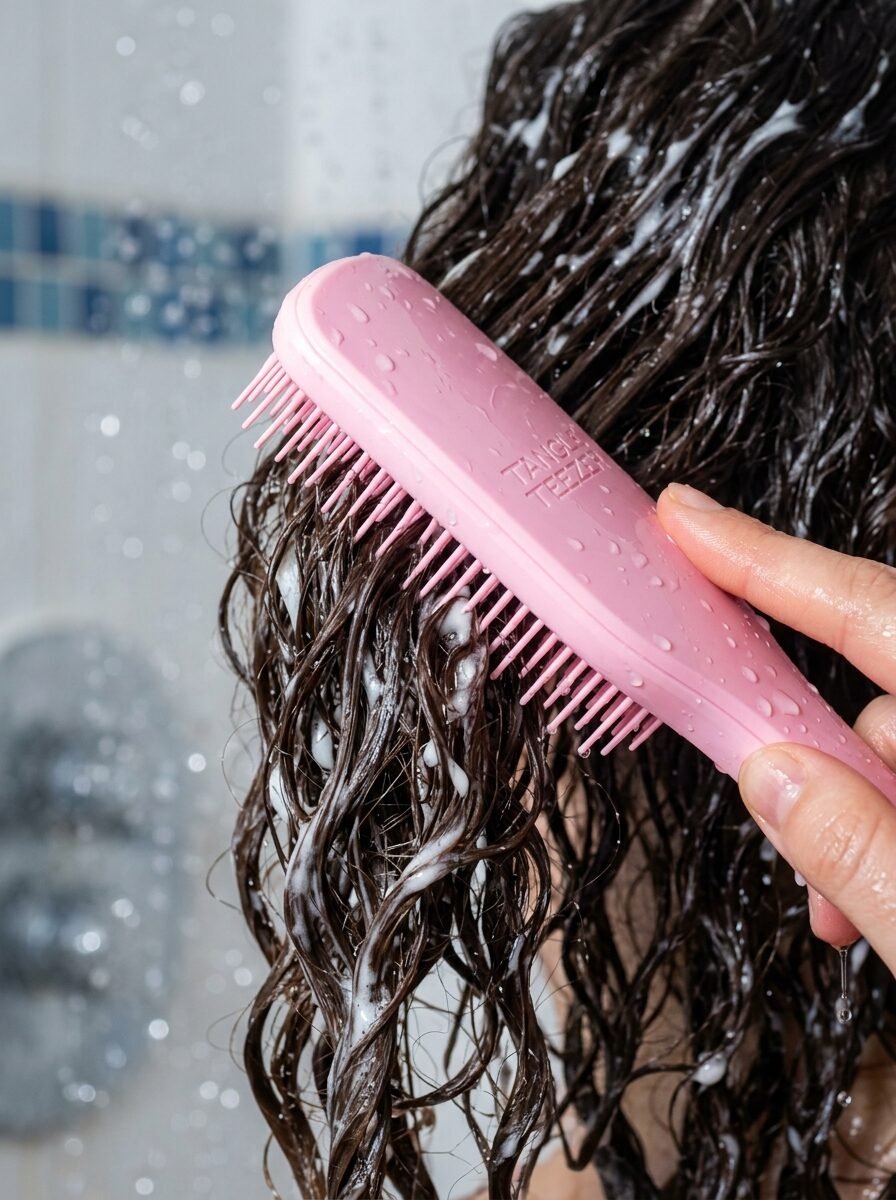
If your main goal is getting through a wash day without crying, buy a Tangle Teezer. The teeth are made of a soft plastic that bends easily. Last summer, I went swimming in the ocean and my hair became a literal bird nest. A standard brush would have required cutting the knots out. I used the Tangle Teezer with a heavy dose of leave-in conditioner. It took forty minutes, but I saved every strand.
The Tangle Teezer does not have a handle in its original design, but the Wet Detangler version does. I highly suggest the version with a handle for shower use. Wet hands and slippery conditioner make the palm-style brush hard to hold. The teeth layout is designed to hit knots from different angles simultaneously. This prevents the “zipper” effect where a knot just gets pushed further down the hair shaft until it becomes impossible to remove.
3. Comparing the Results on Different Curl Types
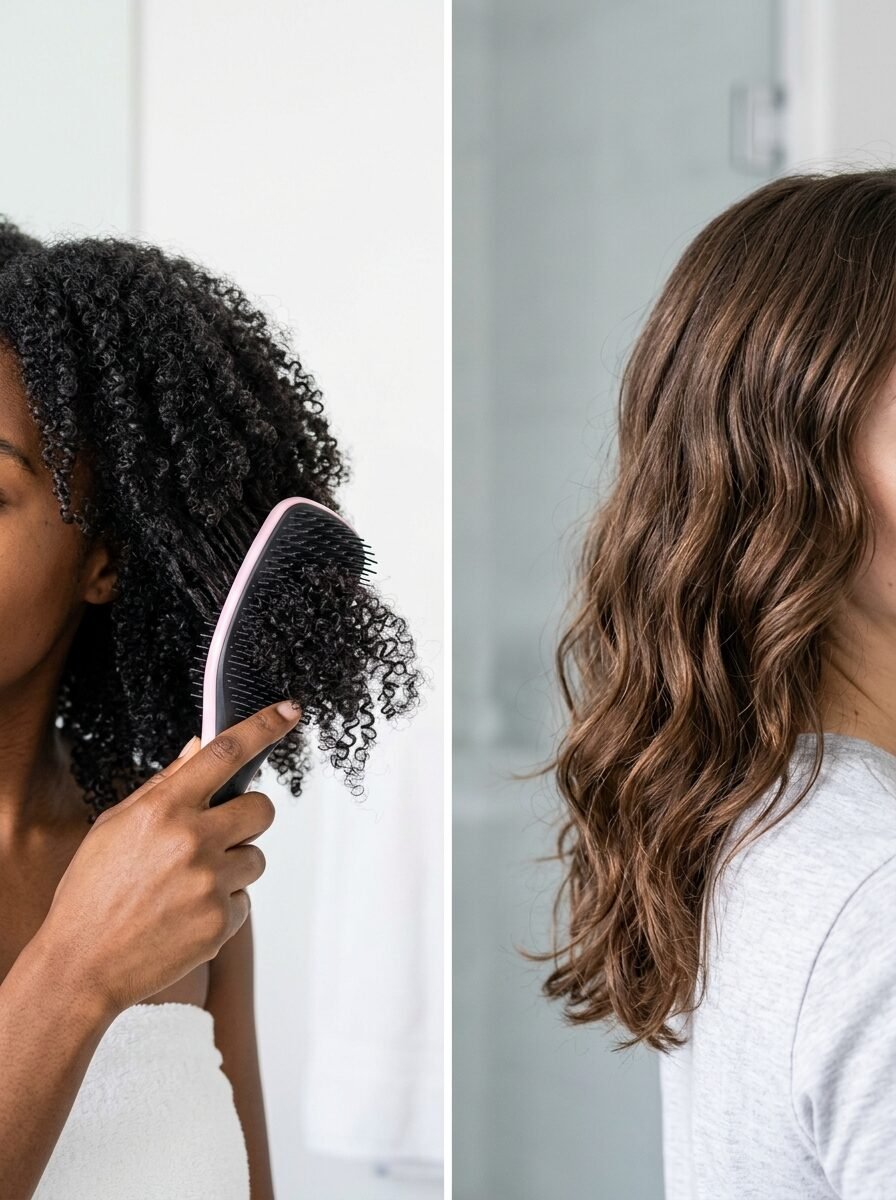
Curls are not all the same. A 2A wave has different needs than a 4C coil. For wavy hair, the Denman can sometimes be too heavy. It might stretch out the waves and make them look limp. In my experience, wavy girls prefer the Tangle Teezer because it keeps the volume while removing frizz. It gives a more “boho” and natural look.
For 3A to 4A curls, the Denman is usually the winner for Sunday styling. It creates tight, bouncy curls that hold their shape even after the hair dries. However, for 4B and 4C hair, the Tangle Teezer is often safer. The high density of kinky hair means tension can easily lead to breakage. I have seen many 4C creators use the Tangle Teezer to gently stretch their hair before a braid-out or a bun. It provides a smooth surface without the risk of the rubber base snagging the hair.
4. How to Use the Denman for the Ribbon Method
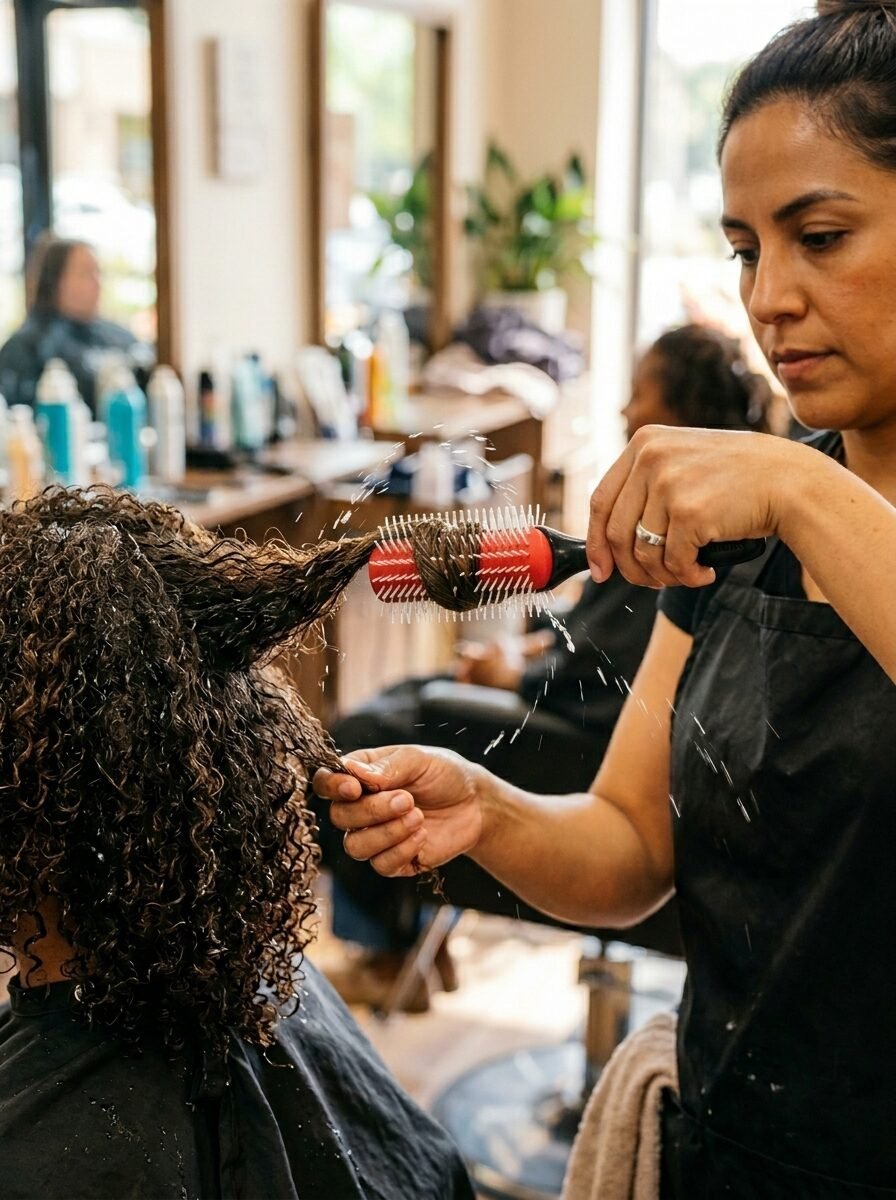
To get the best results, your hair must be soaking wet. Apply your gel or mousse first. Section your hair into four parts. Take a small sub-section and tension it against the brush. Turn the brush slightly outward as you pull down toward the floor. This is like curling a ribbon with scissors. I tried this on my cousin who has 3C hair, and her curls lasted five days without needing a refresh.
If you see frizz while using the Denman, you likely need more water. Keep a spray bottle nearby. The brush works best when the hair is “slippery.” If the hair is only damp, the bristles will create friction. Friction is the enemy of a smooth curl. I always tell my readers to listen for the “squish” sound. If your hair doesn’t squish when the brush goes through, add more product or water.
5. Cleaning and Maintenance of Your Tools
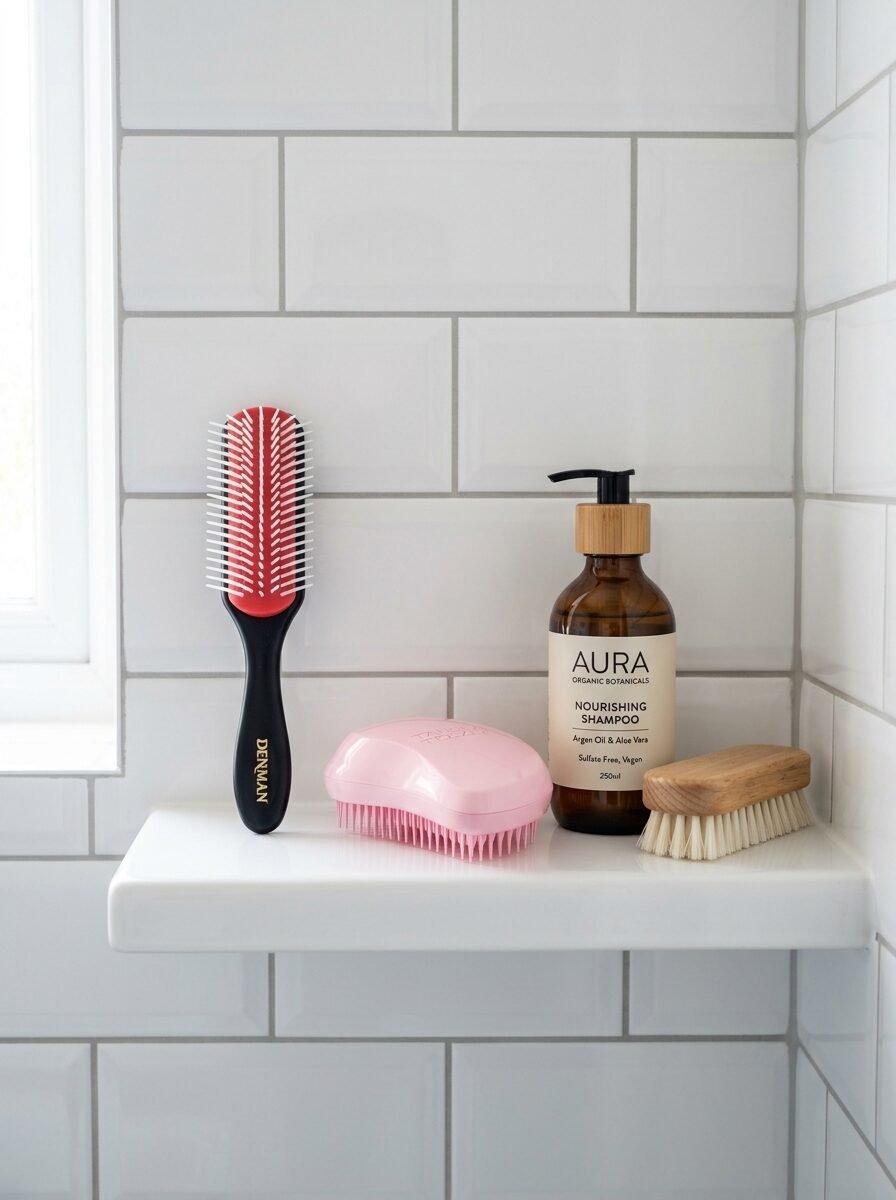
Hair brushes collect oil, dead skin, and product buildup. This buildup can make your hair look dull. The Denman is easy to clean because it comes apart. You can wash the rubber pad and pins in warm soapy water. I do this once a week to keep my tools hygienic. The Tangle Teezer is a bit harder to deep clean because it is a solid piece of plastic. You need a small cleaning brush or an old toothbrush to get between the teeth.
I once left my Denman in a gym bag for a month without cleaning it. When I finally used it, my hair felt greasy immediately after washing. Now, I use a mixture of baking soda and gentle shampoo to soak my brushes once a month. This removes the stubborn silicone buildup from heavy conditioners. Your tools will last for years if you treat them with a little care.
6. The Cost Factor and Longevity
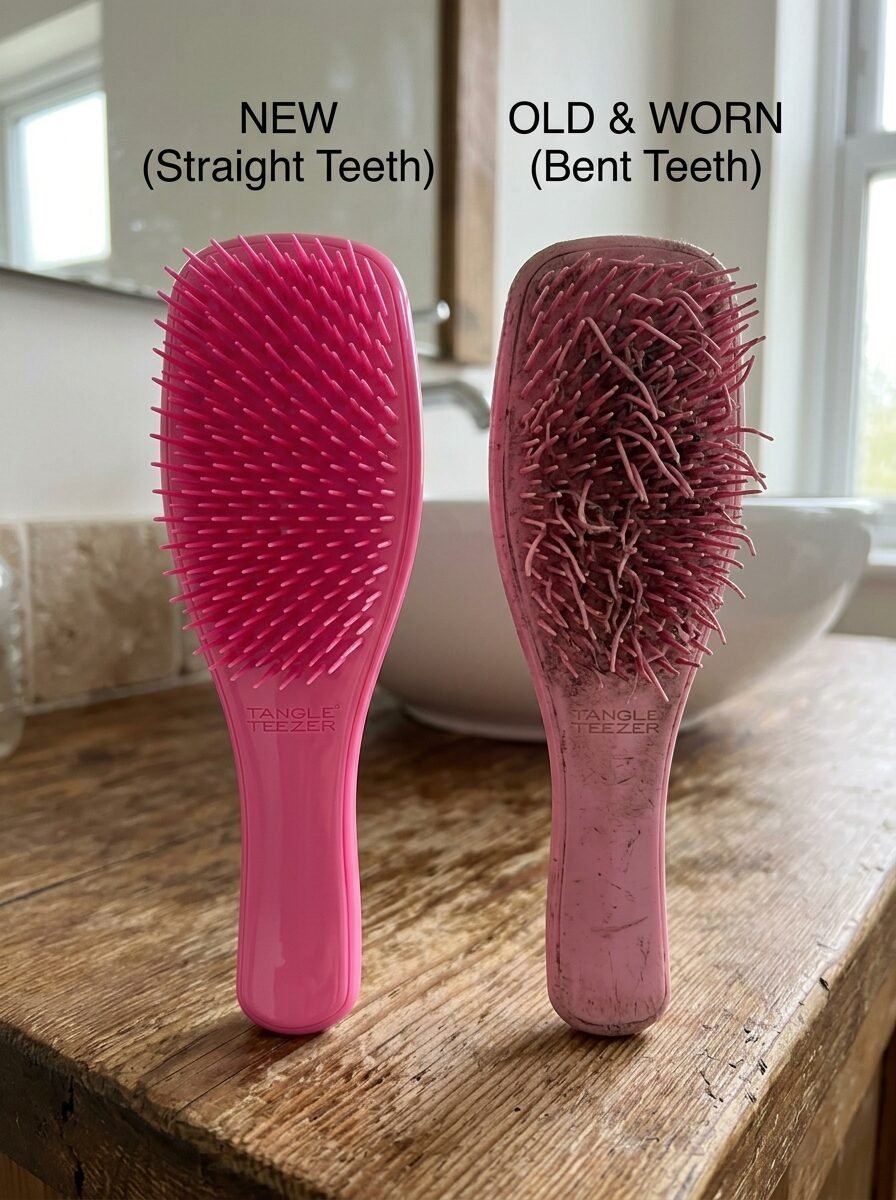
The Denman D3 usually costs around twenty dollars. The Tangle Teezer Wet Detangler is roughly fifteen dollars. These are both affordable compared to high-end boar bristle brushes. In terms of longevity, the Denman is the clear winner. Because you can replace the rubber pads or pins, a single handle can last a decade. The Tangle Teezer teeth eventually start to splay out and bend permanently after about a year of heavy use.
In my experience, the Tangle Teezer is a recurring purchase. Once the teeth lose their shape, they start to snag the hair instead of gliding. You will notice the tips of the teeth becoming sharp or rough. That is your signal to buy a new one. I keep a back-up Tangle Teezer in my travel kit because I cannot imagine detangling without it after a long flight.
7. When to Choose the Denman Over the Tangle Teezer
Choose the Denman if you want your curls to look “done.” If you love a polished, frizz-free look, this is your tool. It is perfect for special events or when you want your style to last the whole work week. I use it when I am doing a sleek ponytail or a defined wash-and-go. It gives a level of precision that a detangling brush simply cannot match.
If you are a beginner, the Denman has a learning curve. You have to learn the right angle and the right amount of tension. I failed the first three times I tried the ribbon method. My hair looked stringy and weird. Don’t give up. Watch a few videos and practice on the sections of hair near your face where you can see what you are doing.
8. Why the Tangle Teezer Is Better for Children

If you are a parent of a curly-haired child, the Tangle Teezer is a life saver. Children have sensitive scalps and very fine hair that tangles easily. The lack of tension makes the process much faster and less painful. I used to help my neighbor with her daughter’s hair every Sunday. Switching from a comb to a Tangle Teezer turned a two-hour ordeal into a twenty-minute session.
The bright colors of the Tangle Teezer also make it feel less like a medical tool and more like a fun accessory. Children are more likely to let you brush their hair if it doesn’t hurt. I recommend the “Mini” version for small hands if they want to try brushing their own hair in the shower. It builds confidence and teaches them how to care for their curls early on.
9. Common Mistakes with the Denman Brush
The biggest mistake is trying to detangle dry hair with a Denman. The rubber base will pull and snap your hair. Another mistake is using too much pressure. You don’t need to press the brush against your scalp. Just glide it through the mid-lengths and ends. I have seen people get the brush stuck in their hair because they took a section that was too large. Keep your sections small, no wider than two inches.
If your hair feels flat at the roots after using a Denman, try brushing the hair upward away from the scalp. This creates volume while still defining the ends. I noticed that if I brush straight down, my hair sticks to my head. Brushing at a 90-degree angle from the scalp gives that “big hair” look that many curly girls crave.
Pros and Cons Comparison
| Feature | Denman D3/D4 | Tangle Teezer Wet Detangler |
| Primary Use | Styling and Definition | Detangling and Smoothing |
| Tension Level | High (Adjustable) | Low (Flexible teeth) |
| Ease of Cleaning | Easy (Removable parts) | Moderate (One-piece design) |
| Durability | Very High | Moderate (Teeth can bend) |
| Price Point | $20 – $25 | $12 – $16 |
| Best For | 2C to 4A Curls | All hair types, especially 4C |
Frequently Asked Questions
Can I use the Denman Brush on 4C hair?
Yes, you can use the Denman on 4C hair, but you must be careful. I recommend removing every other row of pins to reduce the tension. This prevents the brush from getting caught in tight coils. Use plenty of leave-in conditioner and work in very small sections. It is great for defining the ends of your hair for a puff or a twist-out.
Does the Tangle Teezer cause frizz?
If you use it on dry hair, yes, it will cause a frizz cloud. However, on wet hair with product, it actually helps smooth the cuticle. The teeth are designed to align the hair strands. This alignment is what reduces frizz as the hair dries. I find it much better for frizz control than a standard wide-tooth comb.
Which brush is better for thick hair?
The Denman D4 is better for thick hair because it has more rows and a larger surface area. The Tangle Teezer is also great, but you might find you need to go over the same section twice to get all the knots. If your hair is very dense, the Denman provides the “grip” needed to manage the bulk.
How often should I replace my Tangle Teezer?
In my experience, you should replace it every 8 to 12 months. Watch the teeth carefully. If they start to lean to one side or feel sharp, it is time for a new one. Using a worn-out Tangle Teezer can actually cause more damage than a regular brush because the bent teeth can snag the hair.
Is the Denman Brush worth the money?
Absolutely. It is a one-time investment that changes the way your curls look. If you struggle with frizz and lack of definition, the Denman is the most effective tool you can buy. It replaces the need for hours of finger coiling. It is a classic for a reason.
Can I use these brushes on dry hair?
I strongly advise against using either brush on dry curly hair unless you are planning to blow-dry it straight. Brushing dry curls destroys the curl pattern and leads to massive frizz. It can also cause mechanical breakage because the hair is less elastic when dry. Always mist your hair with water first.
Summary of the Best Tool for Your Hair

Choosing between the Denman Brush and the Tangle Teezer depends on your daily goals. If you want a quick, painless detangling session in the shower, the Tangle Teezer is your best friend. It is gentle, efficient, and perfect for preventing breakage. I always keep one in my shower for the initial detangling phase. It is the most “human-friendly” tool for those with sensitive scalps or a lot of knots.
However, if you want your curls to look like a work of art, you need the Denman. It provides the tension and control necessary for perfect ringlets. Many people, including myself, actually use both. I detangle with the Tangle Teezer first to remove all the knots. Then, I go back in with the Denman to style and define the sections. This “power duo” approach ensures your hair is healthy and your style is professional. Experiment with removing rows in your Denman and see how your curls respond. Every head of hair is a unique puzzle, and these tools are the best ways to solve it.

Sarah Mitchell — Founder & Editor-in-Chief
Sarah Mitchell is the founder and editorial voice behind Hair Level Up. A licensed cosmetologist with more than 15 years of experience, she has styled A-list celebrities for editorial shoots and red carpets, with work featured in Vogue, Elle, and Harper’s Bazaar. Early in her career, she trained under the legendary hairstylist Oribe in New York, an apprenticeship that still shapes her editorial eye today. Sarah founded Hair Level Up in 2020 after one bad haircut convinced her that women deserved a destination that felt like a magazine, taught like a stylist, and inspired like an art gallery. She oversees every story from concept to publication, guided by a simple belief: a good story teaches you something, but a great one makes you feel beautiful while it does.