Summer Heatless Hairstyles That Survive Pool Days and Sweat
The thermometer in my car read 104 degrees last Tuesday, and my scalp felt exactly like a frying pan. If you have long hair, summer is not a breezy rom-com montage of sun-kissed waves. It is a relentless battle against humidity, sweat, and chlorine that turns a pristine blowout into a tangled bird’s nest within five minutes of stepping outside. Most standard summer hair advice tells you to throw your hair into a messy bun and hope for the best. I used to do that until I realized that trapping sweat against my nape was breaking my hair strands and causing a persistent scalp itch.
You need styles that look intentional on your Pinterest board but function like military gear against the elements. After years of testing different setups during humid East Coast Augusts and weekend pool sessions, I found a handful of formulas that actually stay secure. We are bypassing the standard, loose boho braids that unravel the second a splash hits them. This guide walks through the exact structural techniques, product combinations, and step-by-step styles that keep your hair off your face, protected from chemicals, and looking sharp from morning swim to evening dinner.
Executive Summary
This guide delivers actionable, sweat-proof, and water-resistant hair styling systems designed to protect long hair during high-heat and high-humidity conditions. You will discover the exact mechanics of creating stable braided architectures that do not shift when wet, alongside specific product layering routines that block chlorine and saltwater absorption. We examine eight real-world hair tools and product formulations, highlighting the precise pros and cons of items like clear silicone elastics versus silk scrunchies.
The content provides specific step-by-step blueprints for four core heatless styles, troubleshooting protocols for common failure points like loose napes or friction breakage, and a comprehensive cost-benefit breakdown of high-end versus drugstore protective formulas. By applying these structural wrapping and braiding techniques, you can eliminate heat styling entirely while maintaining a polished appearance that transitions seamlessly from active outdoor swimming to formal social settings.
How Does Chlorine and Sweat Damage Your Hair Structure?
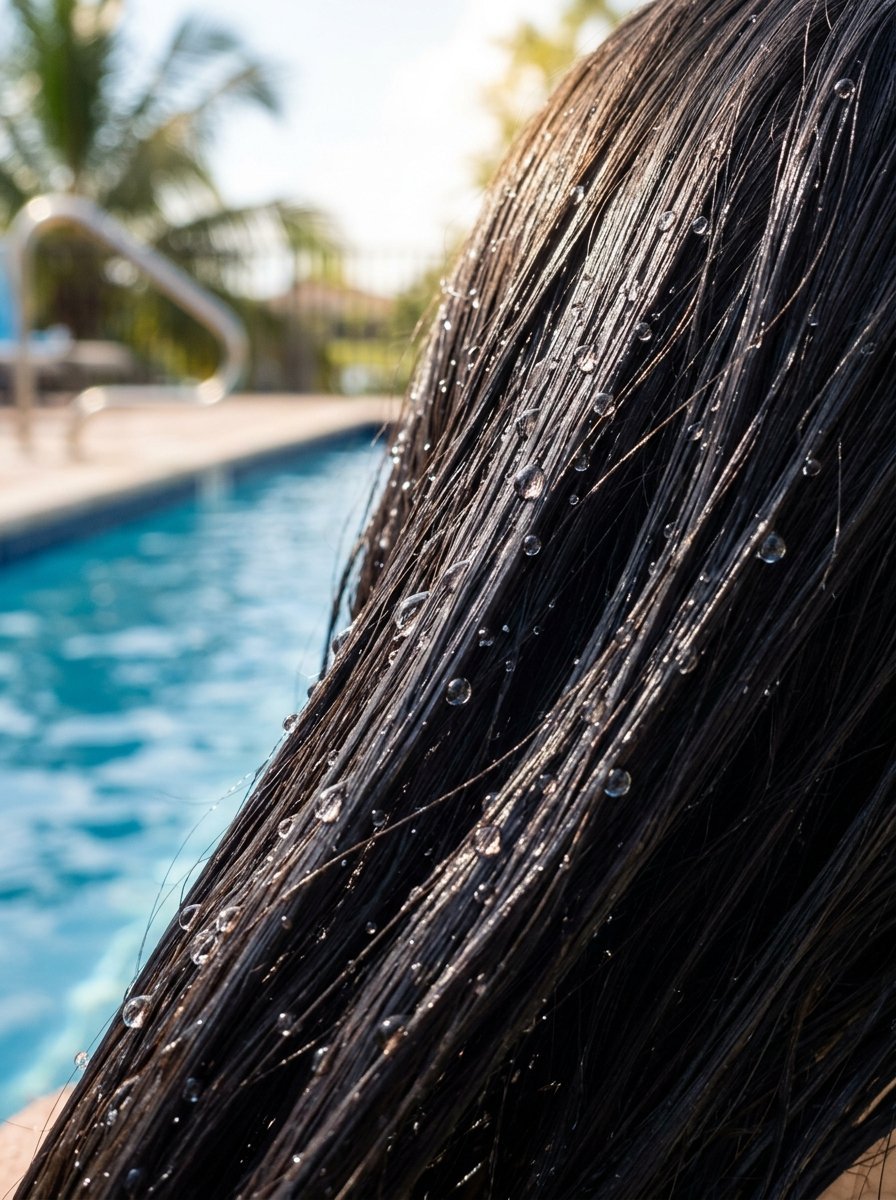
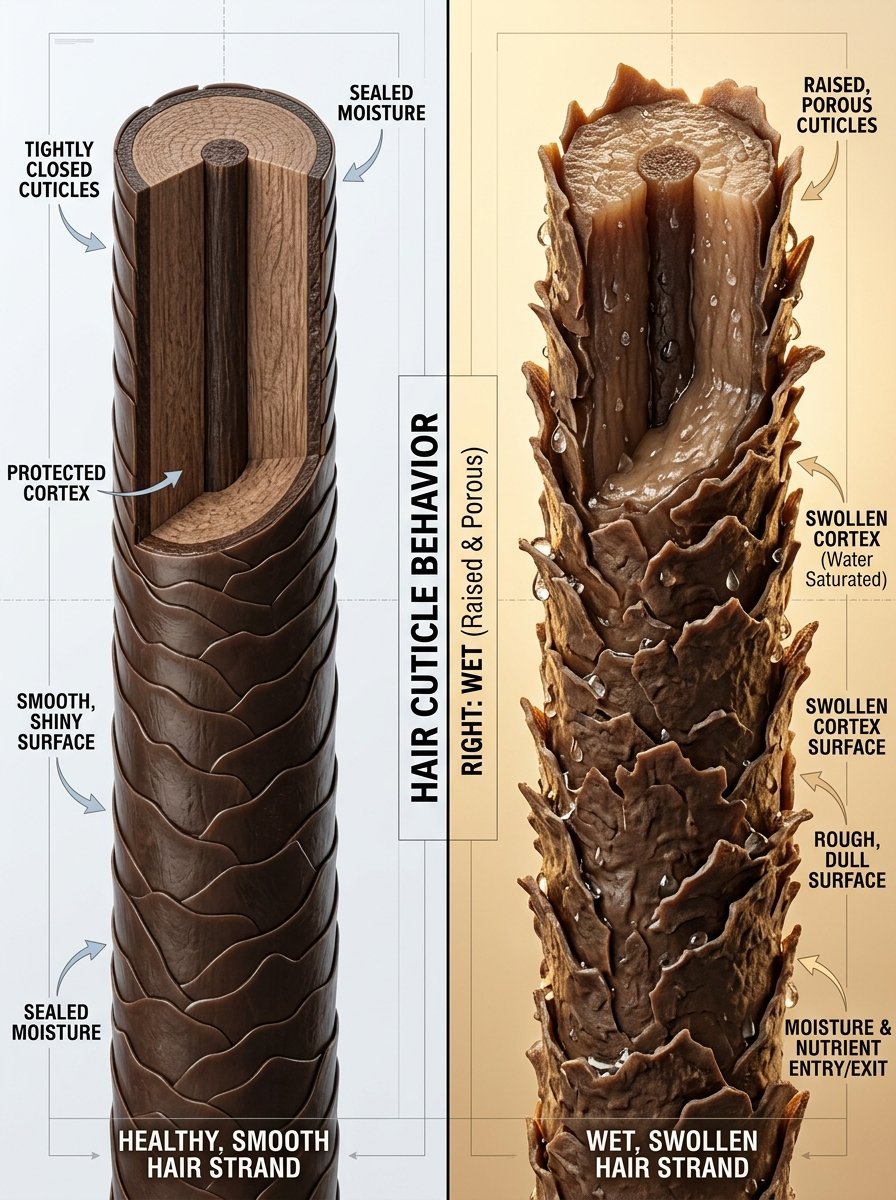
Swelling is the core problem when your hair meets water or sweat. Your hair strand operates like a sponge. When dry, the outer layer of shingle-like cuticles sits flat, protecting the inner cortex. When you jump into a pool or sweat heavily from your scalp, water penetrates this outer shield, causing the cortex to swell. This lifts the cuticles. When the cuticles stay lifted, your hair loses its internal moisture, becomes highly porous, and feels like rough straw once it dries.
Chlorine acts as a harsh stripping agent. It actively dissolves the natural sebum oils that keep your strands flexible. Once that oil layer disappears, the chemical bond attaches to the hair protein, weakening the structure and causing color fading or brassiness.
Sweat presents a different challenge. It contains sodium chloride, which creates a gritty residue on your scalp as the water content evaporates. This salt crystallizes at your roots, pulling moisture straight out of your skin and hair bulb. In my experience, leaving sweat to dry completely in your roots causes a mechanical friction that leads to small fractures along the hair shaft when you try to brush it out later.
To prevent this, you have to create a physical and chemical barrier before your hair ever gets wet.
- Soak your hair completely with clean tap water before entering a pool. A strand already saturated with fresh water cannot absorb significant amounts of chlorinated water.
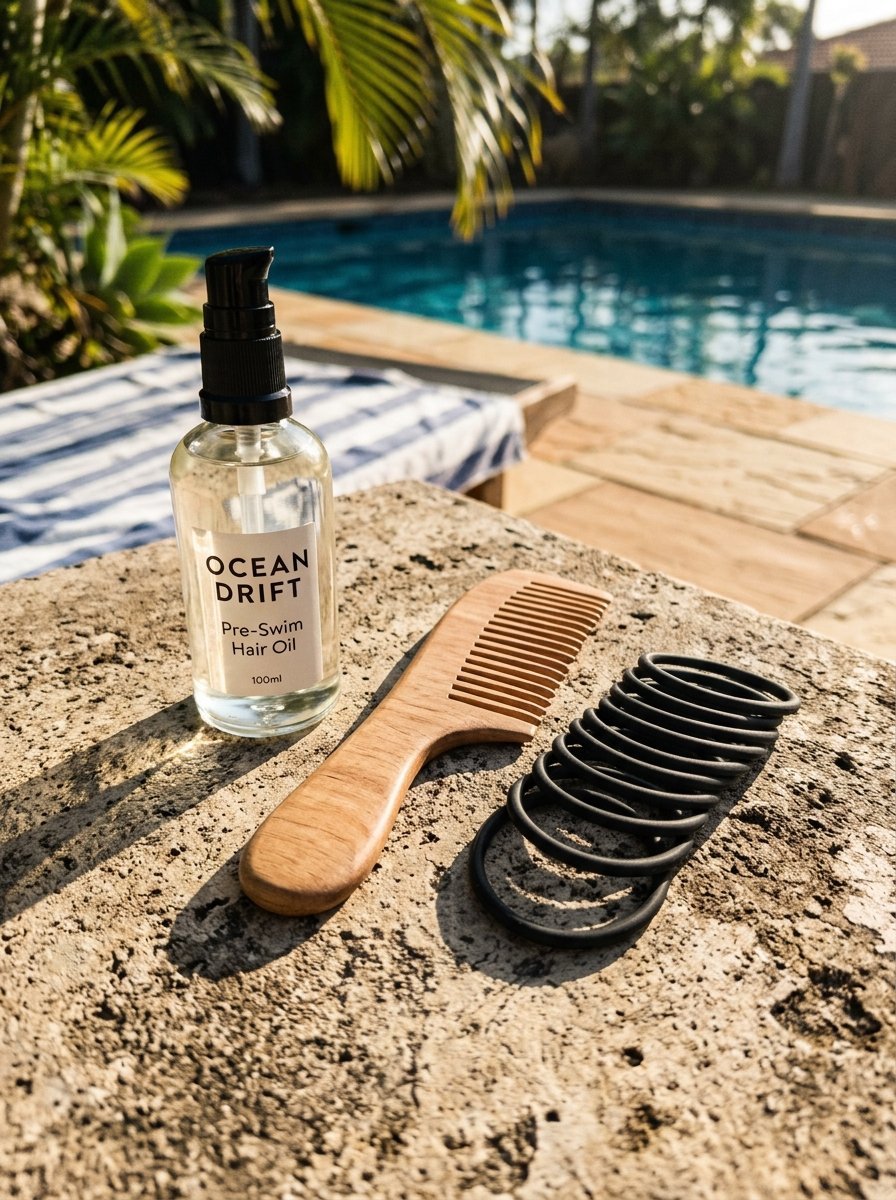
- Apply a lightweight, silicone-free barrier oil or a dedicated pre-swim balm from the mid-lengths down to seal the cuticle layer.
- Keep the hair pinned tightly to stop the individual strands from rubbing against each other when heavy with water.
1. The Quadruple Dutch Braid System
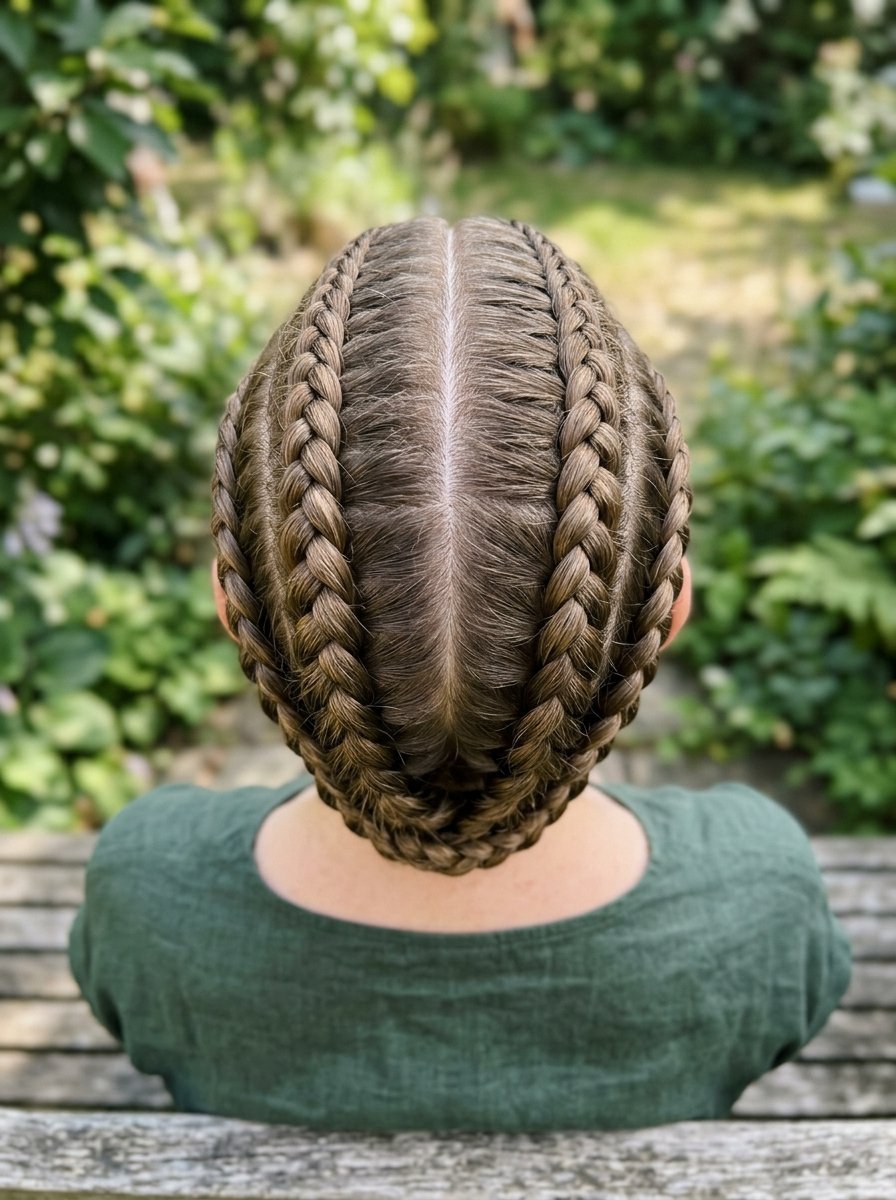
This system divides your hair density into four equal vertical channels instead of the standard two. By splitting the hair into smaller sections, you anchor the roots much closer to the scalp, which stops heavy water or wind from loosening the base of the style. I started using this method for water festivals and beach days because standard double braids always sagged at my nape after two hours.
To execute this, use a rat-tail comb to create a clean center parting from your forehead down to the nape of your neck. Secure one side with a heavy clip. On the free side, split the hair horizontally right behind your ear. This creates four distinct quadrants.
Start with the top-left section. Begin a standard Dutch braid at the hairline, crossing the strands under rather than over to make the braid sit prominently on top of the hair. Keep your finger tension tight against the scalp, pulling in micro-sections as you move back toward the horizontal parting line. Once you reach the end of that quadrant, secure it temporarily with a small clip. Repeat this for the top-right quadrant.
Now, combine the tail of the top-left braid into the lower-left quadrant hair and continue braiding flat against the scalp down to the nape. Do the same on the right. Secure the ends with clear silicone elastics. The result is an ultra-stable, skull-hugging matrix that distributes weight perfectly. It will not budge even if you dive straight into a wave.
2. The Multi-Tiered Bubble Ponytail
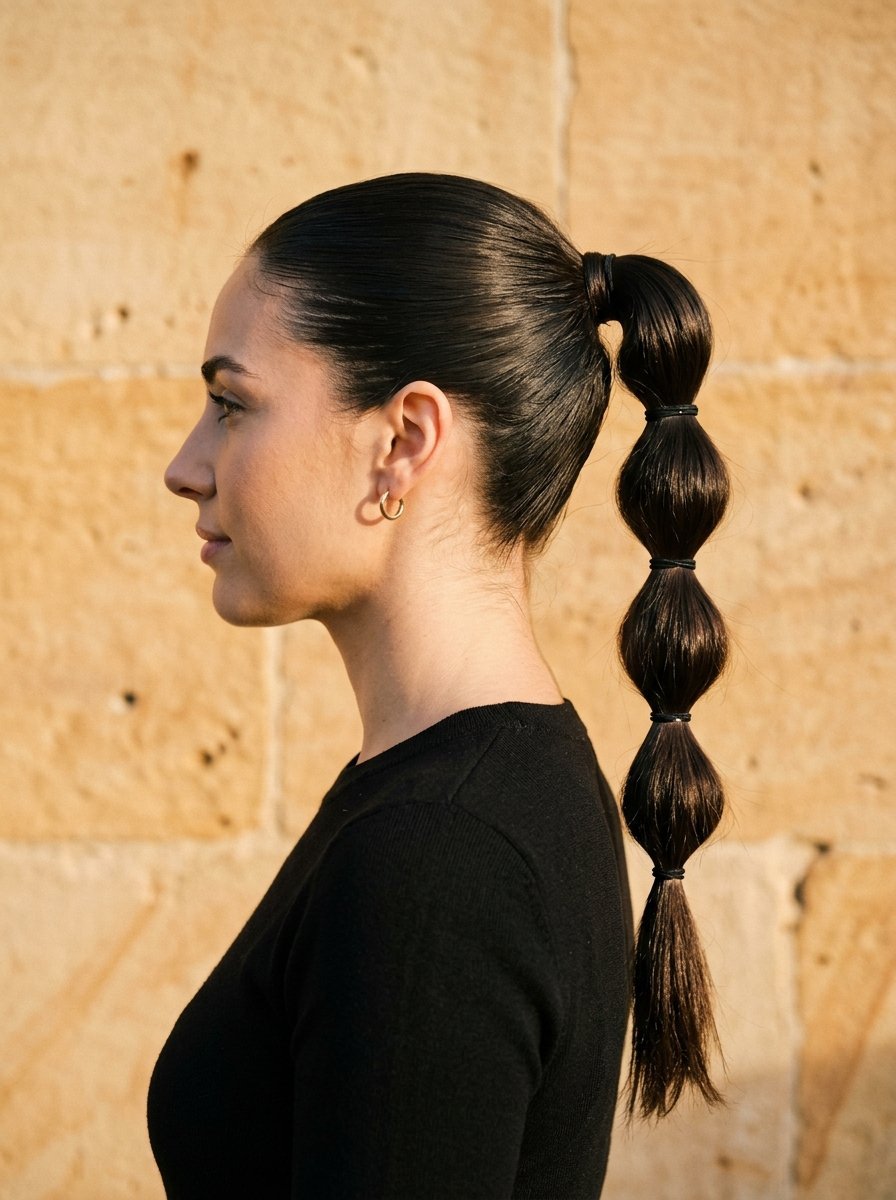
If you lack the coordination or patience for intricate braiding, this style offers the same level of security using simple mechanical placements. The multi-tiered bubble design prevents long hair from whipping around in the wind or matting into a solid knot when wet. I noticed this works incredibly well for active swimming because the water passes between the elastics without dragging the entire weight of your hair downward.
- Gather the top section of your hair from the temples up into a high half-up ponytail. Secure it tightly with a snag-free elastic.
- Take a second section of hair from just behind your ears, merge it with the tail of your first ponytail, and secure it with a second elastic roughly two inches below the first one.
- Use your thumbs to gently tug the hair between the two elastics outward, creating a rounded, full bubble shape.
- Repeat this progression down the length of your hair, gathering side strands until you reach the nape, then continue down the remaining tail.
The key to keeping this pristine during high activity is using quality elastics that do not snap under pressure. Cheap, brittle bands will melt or break in the sun, ruining the whole pattern. Keep the bubbles uniform in size so that no single section catches more water resistance than the others.
3. The Crown Rope Twist Wrap
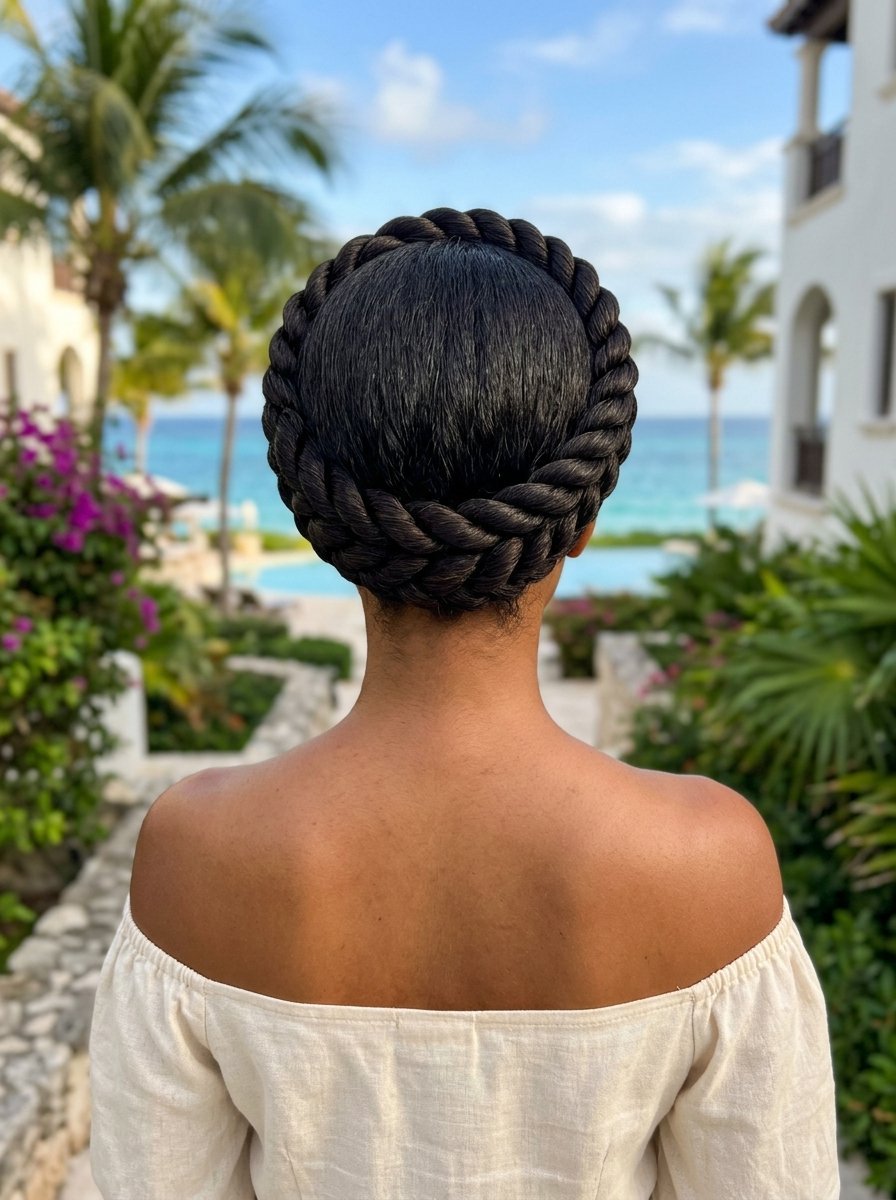
This style uses two-strand twists instead of three-strand braids, making it an ideal option for anyone with coarse, textured, or highly frizz-prone hair. Rope twists naturally lock into each other, creating a smooth surface that repels water drops rather than absorbing them. Wrapping the twists around your head keeps your hair completely out of the splash zone.
Start by splitting your hair down the center into two equal sections. Apply a heavy leave-in conditioner through the lengths to smooth down any flyaways. Take the left section and divide it into two equal parts. Twist both parts individually clockwise, then cross them over each other counter-clockwise. This opposing directional force is what keeps the rope from unraveling on its own.
Once you reach the end of the left side, secure it with an elastic and repeat the exact process on the right side. Take the left rope twist, pull it across the top of your head like a headband, and pin it securely behind your right ear using heavy-duty bobby pins. Take the right rope twist, track it behind the first one across your head, tuck the tail underneath, and pin it down. This creates a flat crown that protects your ends completely from shoulder friction.
4. The Secured Inverted Low Bun
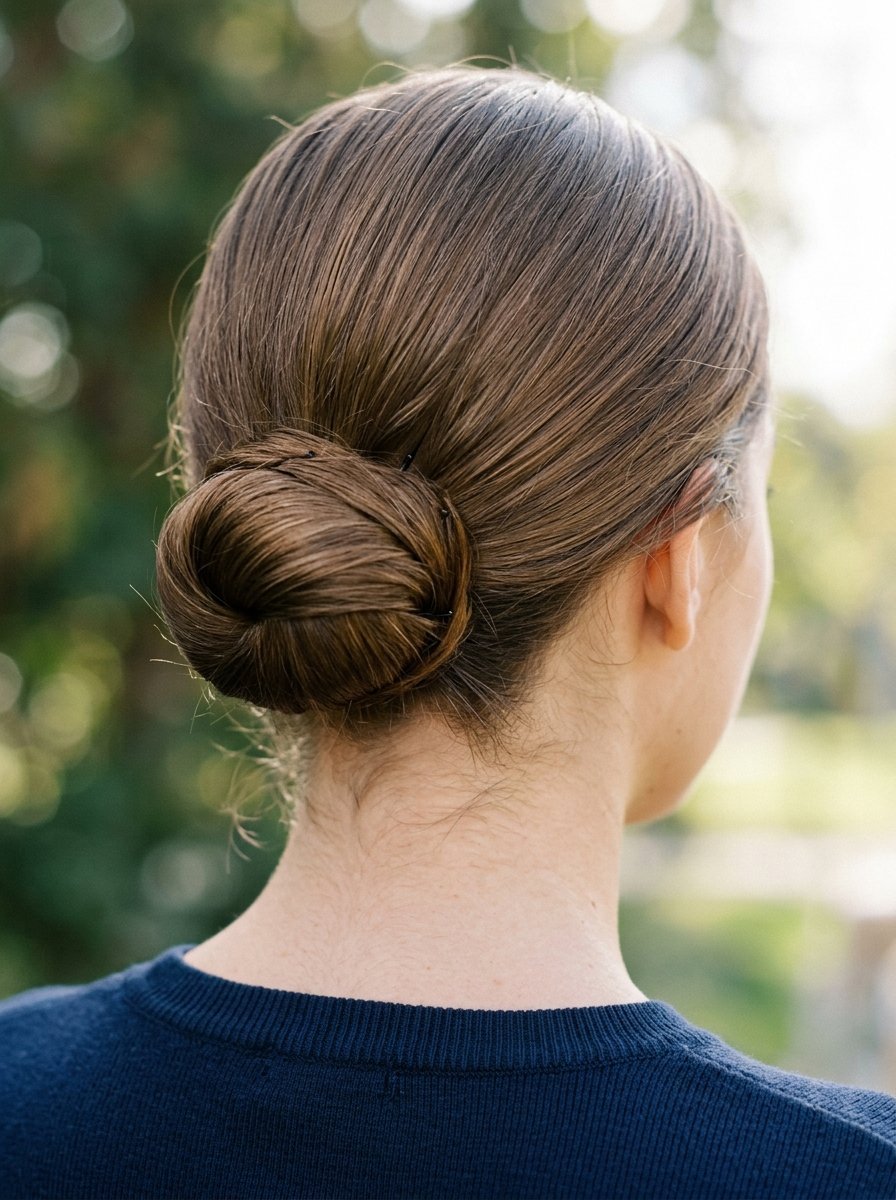
A standard low bun usually falls apart the minute it gets wet because the weight of the water pulls the center of gravity downward. This inverted method locks the base first, using an internal loop structure to distribute the mass horizontally across the tough skin of your lower skull.
Pull your hair into a low ponytail at the base of your neck. Slide the elastic down about an inch to create some slack. Using your index finger, poke a hole through the hair directly above the elastic, splitting the section into two parts. Flip your entire ponytail up and push it down through that hole, creating a clean inverted loop that tightens against your head.
For short or medium hair, you can leave the tail loose, but for long hair, take the remaining length and roll it upward into a compact cylinder. Nest the cylinder directly inside the hollow loop structure you just created. Insert long u-shaped hairpins from the top downward through the roll, catching the dense base elastic to anchor the bun flat. This style stays tight during light lap swimming and looks incredibly sophisticated for an outdoor dinner afterward.
Hands-On Product and Tool Comparison
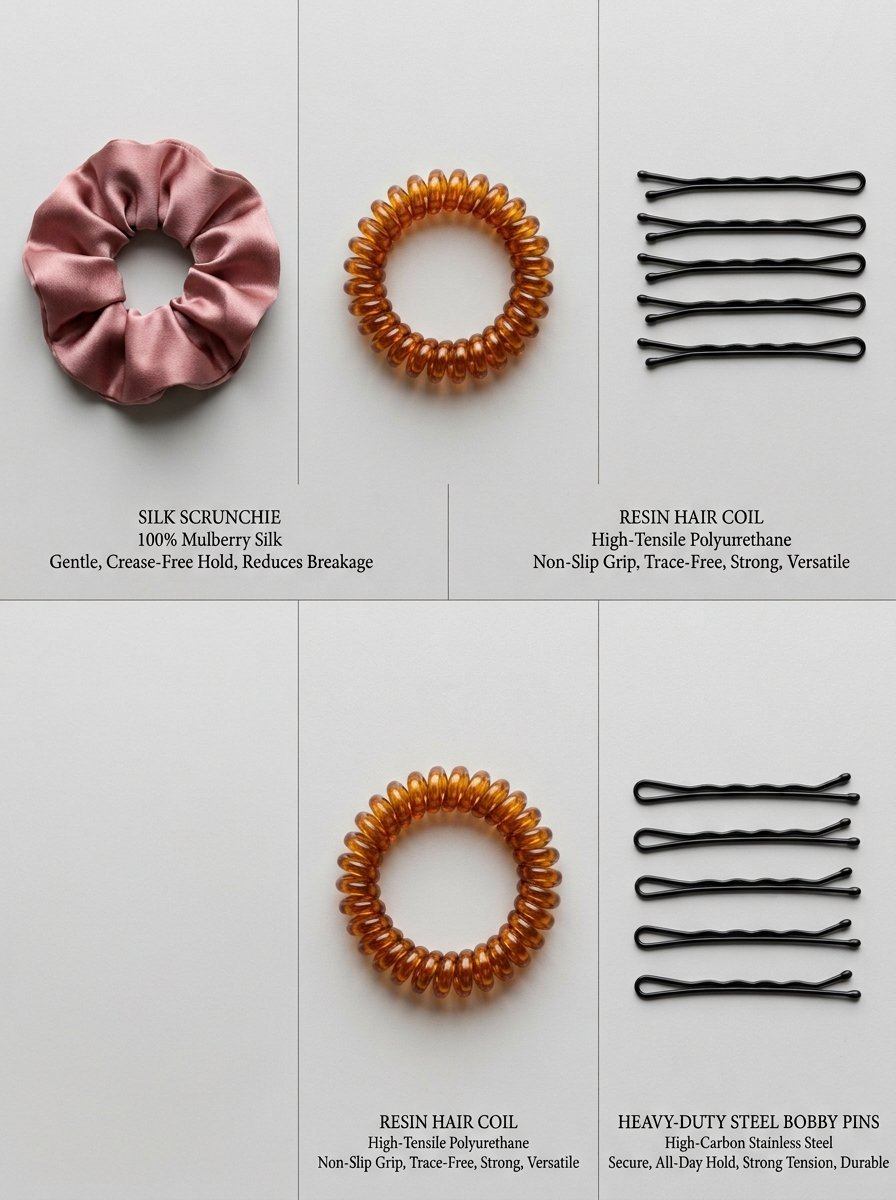
The tools you select determine whether your style survives the day or snaps mid-swim. I have tested these eight common market options across multiple summer seasons to evaluate their mechanical stability, hair safety, and ease of use.
| Tool / Product Name | Material / Base Type | Best Used For | Pros | Cons |
| Goody SlideProof Elastics | Silicone-lined rubber | Securing braid ends | Will not slip even in heavy saltwater | Can pull out delicate hairs if removed quickly |
| Garnier Fructis Sleek & Shine | Argan oil blend | Pre-swim coating | Provides an excellent barrier against chlorine | Can feel heavy on fine hair types |
| Slip Pure Silk Skinnies | Mulberry silk | Sectioning and buns | Zero friction damage on fragile ends | Loses grip completely when fully saturated |
| Invisibobble Power | Polyurethane resin | High ponytails | Waterproof, distributes pressure evenly | Can stretch out over time in hot sun |
| Diane Heavy Duty Bobby Pins | Matte coated steel | Securing crown twists | Massive clamping force that stays put | Coating flakes off after repeated pool exposure |
| Kérastase Soleil Crème UV | Coconut water cream | Sun protection | Filters UV rays, prevents color fading | Expensive per ounce for frequent use |
| Aveda Sun Care Hair Cleanser | Chelating shampoo | Post-swim recovery | Removes heavy chlorine and copper buildup | Can feel stripping if used daily |
| Wet Brush Pro Detangler | Flexible IntelliFlex bristles | Post-pool styling | Glides through wet knots without snapping | Cannot use with high-heat blow dryers |
Troubleshooting Common Summer Hair Failures
When styles fail in the heat, it usually comes down to tension loss, poor moisture control, or product evaporation. Here is how to fix those issues immediately before they ruin your look.
The Braid Loosens at the Nape
This happens because your head tilts forward while you braid, creating false slack when you look back up. To fix this, tilt your chin completely down to your chest while working on the final three inches of your scalp braid. This stretches the skin at the nape, ensuring that when you return to a natural upright position, the braid sits flush against your skin with zero sag.
Tiny Hairs Frizz Out Along the Parting Line
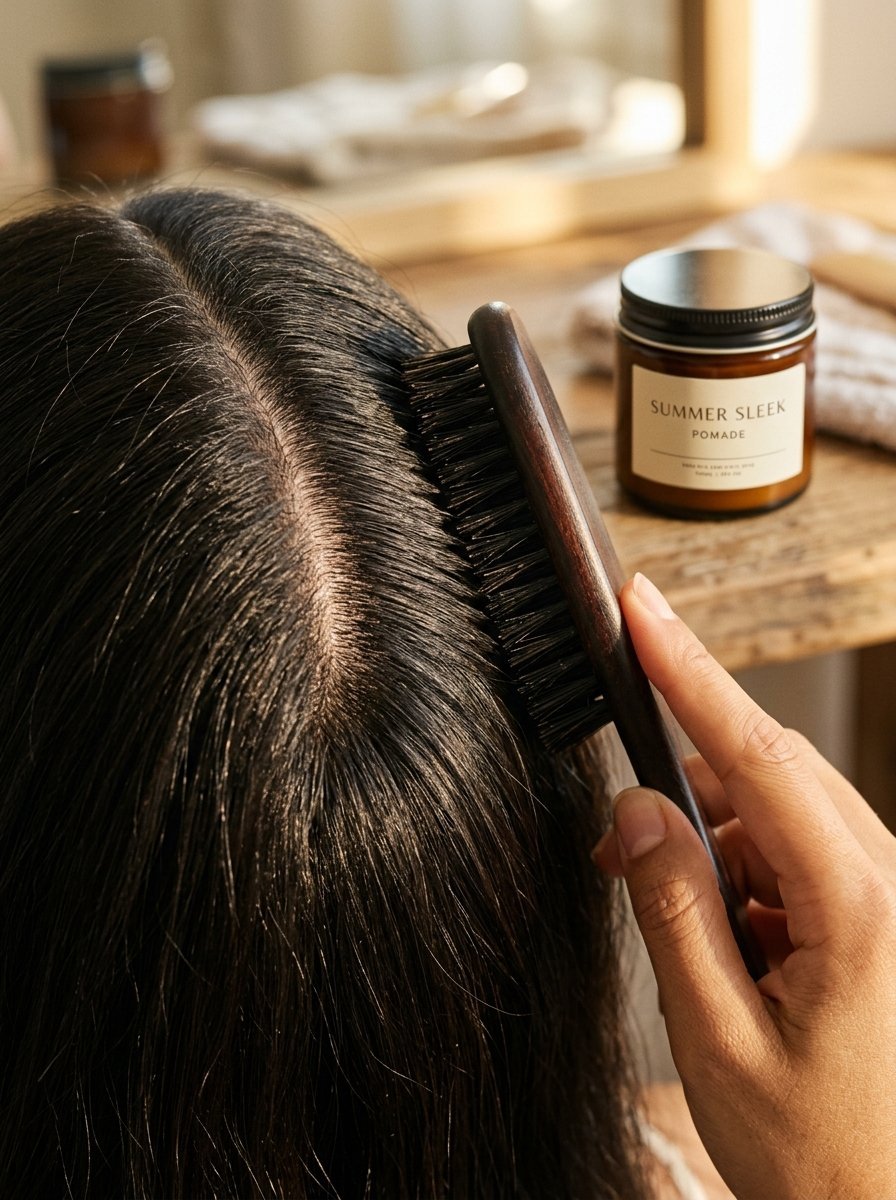
Sweat breaks down water-based gels, causing short baby hairs to pop straight up like antennas. Avoid heavy styling gels that crack when dry. Instead, load a clean spoolie brush with a thick, anhydrous pomade or a beeswax-based stick. Swipe the spoolie along your part in the direction of the hair flow to pin those stubborn flyaways flat without creating a crunchy texture.
The Elastic Snaps Mid-Afternoon
Heat causes cheap plastic bands to oxidize and become brittle, making them snap under the weight of wet hair. Stop using clear elastics that come in bulk jars of five hundred. Switch to fabric-covered elastics or high-density silicone bands. Always pre-stretch a new band before putting it in your hair to check for micro-tears in the material.
Cost-Benefit Analysis: Protective Routines
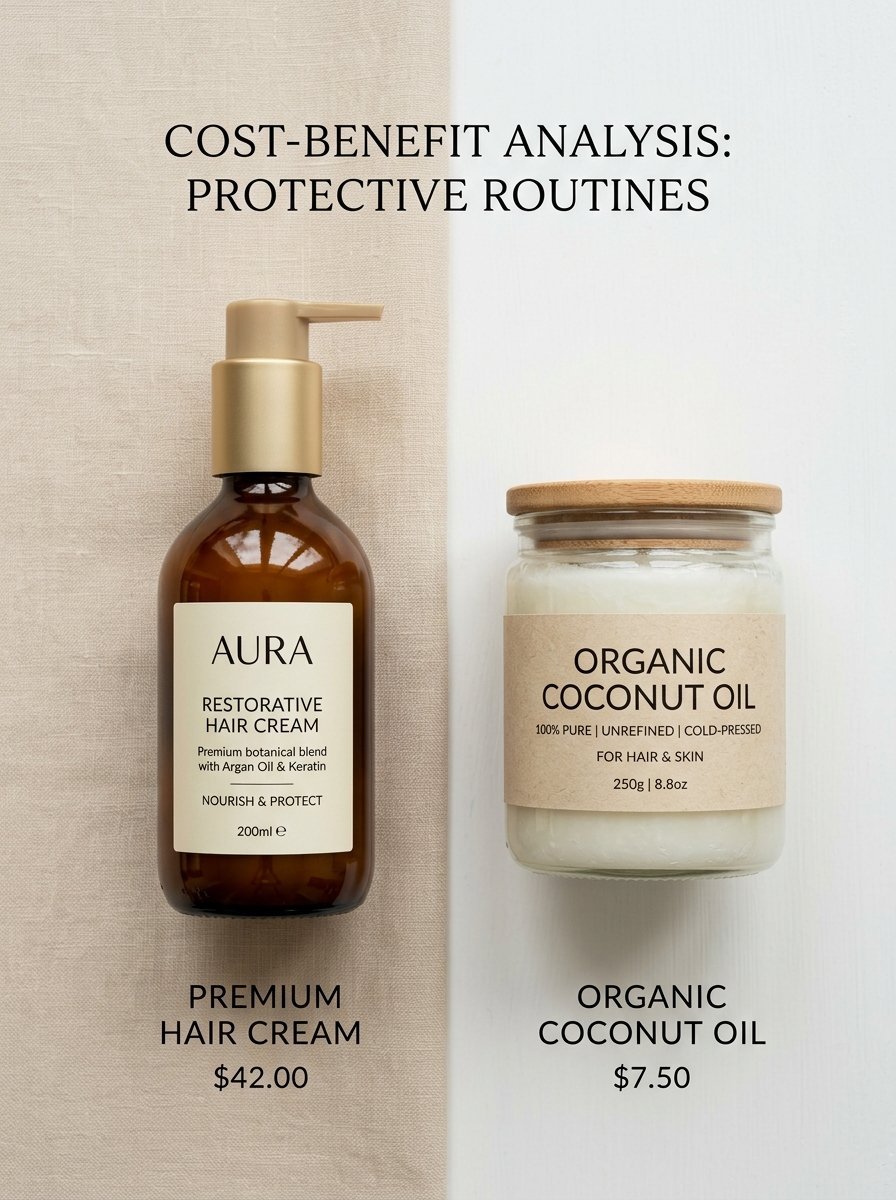
Managing summer hair requires balancing product performance against your actual budget. High-end salon systems offer specific chemical shields, while affordable drugstore routines rely on heavy mechanical protection.
High-End System (Total Investment: ~ $115)
- Premium UV Pre-Gel: $38
- Chelating Salon Shampoo: $42
- Silk Elastic Pack: $35
This approach provides maximum chemical defence. The specialized UV filters protect expensive salon color from oxidation, while the high-grade chelating shampoo removes heavy metals without stripping your natural lipids. However, the high price point makes it hard to sustain if you live in the pool all summer long.
Drugstore Alternative (Total Investment: ~ $18)
- Pure Coconut Oil: $6
- Deep Cleansing Sulfate Free Shampoo: $7
- Silicone Elastic Pack: $5
This budget-friendly routine relies on basic physical principles. Coconut oil has a high concentration of lauric acid, which penetrates the hair shaft deeply, blocking water molecules from entering the cortex. While it lacks chemical UV shields, the physical barrier it forms is incredibly effective at keeping chlorine out. The downside is that it takes two full shampoo washes to rinse the oil out entirely, which can add extra step time to your post-swim shower routine.
Frequently Asked Questions
Is it better to leave hair wet or dry in a summer braid?
Never braid bone-dry hair if you plan on swimming or working out hard. Dry hair acts like a hungry sponge that will absorb every drop of sweat or pool chemical it touches. Always damp your hair with clean tap water first, apply a protective cream, and then lock it into your braid pattern.
How do I wash out stubborn pool chlorine without drying out my ends?
Standard shampoos cannot break the stubborn chemical bond that chlorine forms with hair proteins. You need a dedicated chelating shampoo that uses phytic acid or vitamin C to neutralize the chemical residue. Apply this formula strictly to your scalp area, letting the suds wash over your mid-lengths down without scrubbing the fragile ends.
Can I use regular rubber bands if I run out of hair elastics?
Do not use raw stationary rubber bands under any circumstances. Office rubber bands lack the smooth protective coating found on hair elastics. The raw rubber melts under hot sun and glues itself to your cuticles, requiring you to physically cut the band out of your hair later.
What is the fastest way to dry hair after a long day at the pool?
Avoid the temptation to blow dry your hair immediately after washing out chlorine. Your cuticles are already stressed from the water exposure. Instead, squeeze excess moisture out using a soft microfiber towel or a clean cotton t-shirt. Let your hair air dry while down to give your scalp skin room to breathe.
How often should I reapply hair sunscreen during a beach day?
Treat your hair exactly like your skin. UV rays degrade hair proteins continuously while you sit in the sun. Reapply a lightweight UV protectant spray every two hours, or immediately after a deep swim session where your hair is completely submerged.
Will braiding wet hair cause mold or scalp rot in high humidity?
Leaving hair tightly bound and wet for more than twenty-four hours can create a damp environment where bacteria thrive. If you braid your hair wet for the pool, take the style down that evening, rinse your scalp thoroughly, and let it dry completely before styling it again the next day.
Why does my hair feel sticky after sweating in a high bun?
When sweat evaporates from your head, it leaves behind a concentrated mix of salt and dead skin proteins. If you have styling products like gel or hairspray already in your hair, the salt mixes with those polymers, forming a tacky, glue-like paste. Always stick to clean oils or light conditioners during high-sweat days to prevent this buildup.
Summary and Next Steps
Beating the summer heat requires working with the physical structure of your hair instead of fighting it. By prioritizing heatless wrapping, proper fresh-water saturation, and secure braiding systems, you can preserve your length and color through the hottest months of the year.
Start by auditing your current beach bag. Swap out brittle plastic clips for sturdy u-shaped pins, throw in a bottle of clean tap water for pre-soaking your roots, and choose one of the structured styles above for your next pool day. Your scalp will feel cooler, your styles will stay intact, and your hair will remain healthy and undamaged well into the autumn season.

Sarah Mitchell — Founder & Editor-in-Chief
Sarah Mitchell is the founder and editorial voice behind Hair Level Up. A licensed cosmetologist with more than 15 years of experience, she has styled A-list celebrities for editorial shoots and red carpets, with work featured in Vogue, Elle, and Harper’s Bazaar. Early in her career, she trained under the legendary hairstylist Oribe in New York, an apprenticeship that still shapes her editorial eye today. Sarah founded Hair Level Up in 2020 after one bad haircut convinced her that women deserved a destination that felt like a magazine, taught like a stylist, and inspired like an art gallery. She oversees every story from concept to publication, guided by a simple belief: a good story teaches you something, but a great one makes you feel beautiful while it does.